








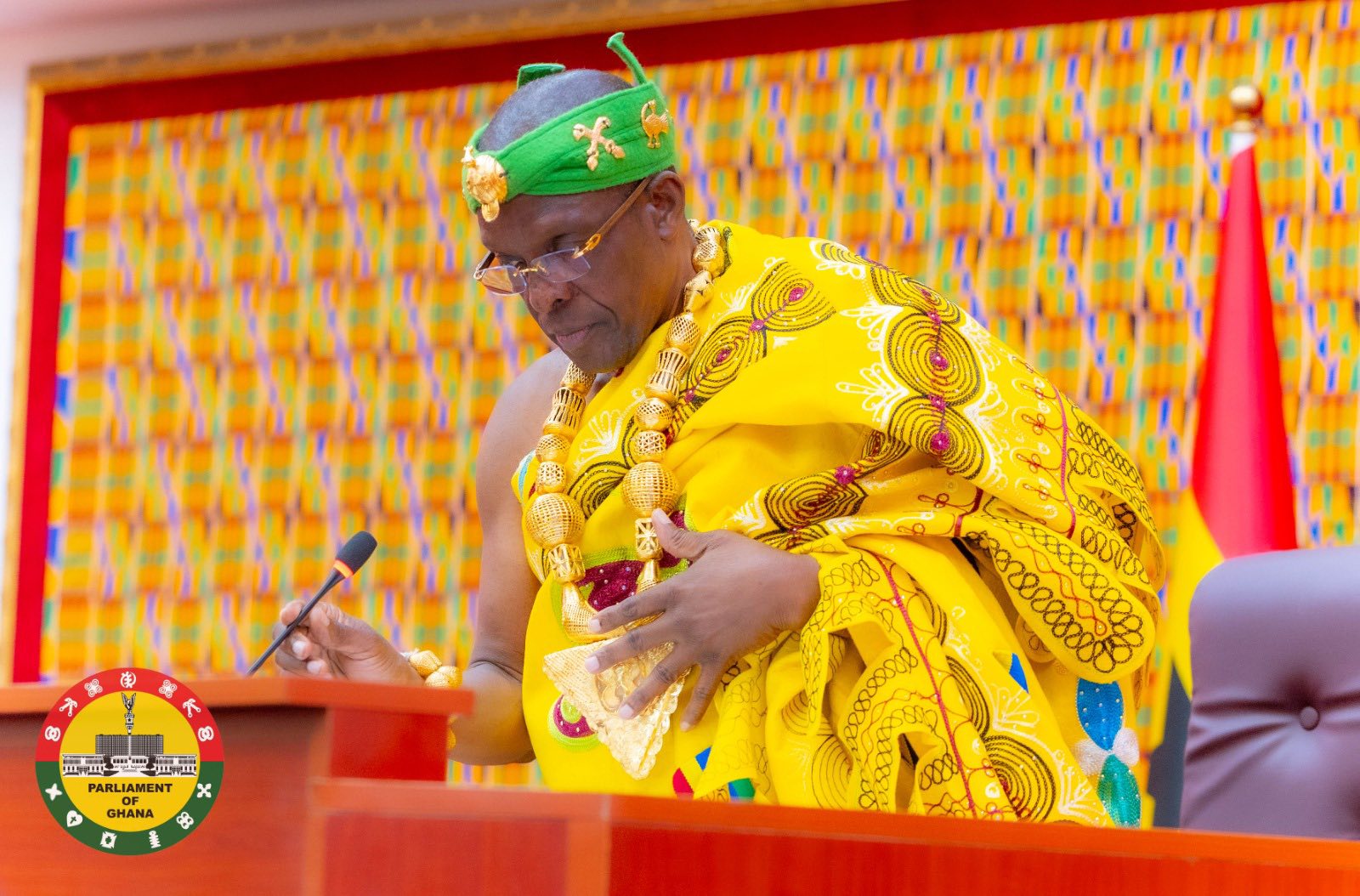
On Thursday, 19th February 2026, the Member of Parliament for Buem, who doubles as the Minister for Sports and Recreation, wanted to make a statement on the floor of Parliament on the newly created Sports Fund and its relevance for the upcoming World Cup.
The Minority Chief Whip, Annoh Dompreh, challenged the decision, citing that the Statement of the Sports Minister was not advertised on the Order Paper.
He added that there was a backlog of statements unread on the Order Paper, which were equally important. 20 statements were advertised on the Order paper of 15th February 2026.
This generated a whole debate before the Minister was allowed to read the statement. What led the Parliament of Ghana here? What has changed? Why is there a backlog of unread statements advertised on the Order paper? What is the way forward?
Statements are one of the tools available to members of Parliament to bring to the attention societal ills and other developmental challenges in their constituents or in the country.
They cover a variety of urgent national issues from agricultural development to human rights, socio-economic issues, etc. They could also take the form of solidarity messages, celebrating the life of a statesman or speeches on national issues. They are delivered directly on the floor of the House during statement time
Through statements, ministers and public office holders account for government actions and decisions. MPs raise concerns in society, thereby making statements an important tool for parliamentary oversight of the Executive. It also provides a structured way for Parliament to respond quickly to national emergencies, crises, or matters of urgent public interest (such as security threats, disasters, or economic challenges), without waiting for bureaucratic legislative processes.
MPs use statements to draw attention to issues affecting their constituencies or the nation, such as development needs, social problems, or injustices. This strengthens representation and links Parliament directly to the people. Statements help maintain effective communication between the Executive and Parliament, reducing misinformation and fostering cooperation in governance.

A parliamentary statement is time-sensitive by nature. When it is not read at the appropriate time, it often loses much of its value and effectiveness. Statements are intended to address live national or constituency issues. When delayed, the issue may be overtaken by events (government action taken, crisis resolved, or public attention shifted).
This will position Parliament then as reacting late and not proactive, weakening the statement’s significance. Statements can prompt ministerial accountability and institutional response. When timing is lost, ministers may already have acted, or moved on. Statements help shape debate and policy direction. Timely statements can define the frame of national discourse.
Late statements only echo what has already been discussed in the media or Executive circles, reducing Parliament’s leadership role. A delayed statement receives little coverage because it is no longer current. Without media amplification, the statement’s ability to influence public opinion declines sharply.
In the 8th Parliament, statements to be read on the floor of the House were not advertised on the Order Paper.
The process involves a member drafting his statement and transmitting it to the Chief Whip. The Chief Whip scrutinized the content of the statement and ensured that it met the guidelines of statements. If the Chief Whip is satisfied with the contents of the statement, it is transmitted to the Speaker, who finalizes it and allows the said statement to be read. It was basically an issue of consensus-building among leadership in the House.
In the 9th Parliament, under the new Standing Orders, Order 93 borders on Statement. Order 93(6) states that the speaker shall cause to be transmitted to the clerk, statements admitted to be made on a particular day to be advertised on the Order Paper for the purpose of notice.
An MP who intends to make a statement must give prior written notice to the Speaker of Parliament through the Whips. The notice must clearly state the subject and purpose of the statement. The Speaker determines whether the matter is urgent, relevant, and of public interest.
The Speaker examines the request to ensure it complies with the Standing Orders of Parliament. If approved, the statement is scheduled under “Statements” on the Order Paper. The Speaker may disallow statements that are repetitive, misleading, prejudiced, or partisan.
According to Order 67, which list the order of business, Statement time should last one hour. During proceedings, the Speaker formally calls the MP to make the statement. Pursuant to order 93(5) When statements are read on the floor of the House, members can comment on it for a period not exceeding five minutes, and they shall not provoke a debate. Just as the comments should not generate debate, so the statement shouldn’t provoke debate. The statement must be factual and concise, avoid offensive, defamatory, or unparliamentary language.
It is clear that the backlog of statements on the floor of Parliament is a result of the new process of advertising in the Order Paper. This challenge was not experienced in the 8th Parliament when consensus-building between leaders was the process for taking statements.
The way forward is for Members of Parliament to file their statements far ahead of time in anticipation of a particular event, for example, the International Day for Access to Information. MPs must also make sure their statements are on topics that are relevant and of national interest. It shouldn’t just be because you want constituents to see that you are vocal in the chamber. In my considered view, a glass ceiling can be placed on the number of statements a Member can make in every Meeting. All sorts of administrative delays in the transmission of the Statement to the clerk should be eliminated to ensure the timely advertisement of statements on the Order Paper. The rules shouldn’t be adhered to “hook, line, and sinker” as enshrined in order 93(6). Consensus-building is the way to deal with the challenge of a backlog of unread statements in the Parliament of Ghana.
Nartey Prosper Kwame, Columnist