





The profound truth articulated by Theodore Roosevelt—“To educate a man in mind and not in morals is to educate a menace to society”—is no longer a theoretical caution for Ghana; it is a chilling, tangible reality.
Our nation currently presents a staggering, heartbreaking paradox: we are a country simultaneously overflowing with faith institutions (churches, mosques) and educational institutions (schools, colleges, universities), yet we are bleeding out from endemic corruption, bribery, and the calculated plunder of public resources.
The problem is not a deficit of knowledge, nor is it a lack of religious fervor.
The problem is the compartmentalization of the soul.
The evidence is not whispered on the streets; it is thundered from official documents. The Auditor General’s Reports and the subsequent PAC sittings do not merely catalogue financial irregularities; they serve as tombstones marking the burial of public trust.
The culprits behind these sophisticated acts of misappropriation and stealing are seldom the uneducated.
They are often the products of our finest institutions: the lawyers who draft the cunning contracts, the accountants who juggle the figures, the administrators who devise the loopholes. Their intellect has not been tempered by morality; it has been honed into a specialized weapon aimed squarely at the national purse.
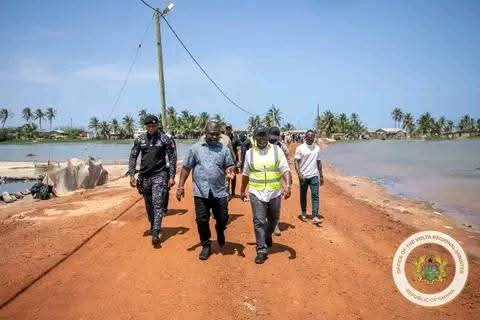
Nowhere is this moral rot more visible than in the fight against galamsey (illegal mining). The devastation of our water bodies and forests—the poisoning of our national inheritance—is not the work of simple desperation. It is sustained by highly-placed, highly-educated citizens: political figures, security chiefs, and business elites who possess the logistical acumen to facilitate such ecological suicide.
Their degrees taught them how to extract the minerals efficiently; their lack of character allowed them to do so mercilessly. This is the hyperbole brought to life: we are paying to educate the very architects of our environmental ruin.
Ghana, by any metric, is a deeply religious nation. Churches multiply like cellular division; universities churn out thousands of graduates annually. This presents our greatest cognitive dissonance: How can a nation so saturated with centres of worship and learning be simultaneously drowning in sin and systemic theft?
The answer lies in our distorted definition of education and piety. We have treated education as a purely transactional exercise—a means to a salary, not a preparation for ethical citizenship. We teach students to pass exams and secure jobs, but we have failed to instill in them the understanding that knowledge without integrity is merely highly-efficient avarice.
Our universities have become factories for credentials, not crucibles for character.
For many, faith has been relegated to a Sunday ritual, a magnificent allegory that does not translate into Monday’s ethics. The proliferation of temples and mosques masks a frightening spiritual emptiness. If the fear of God does not prevent the stealing of funds meant for hospitals or schools, then that faith is a hollow chime—loud but signifying nothing.
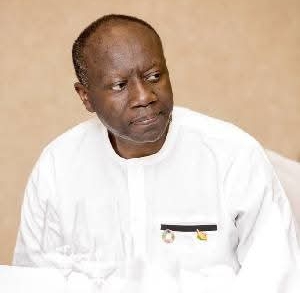
We are producing a society of people who can quote scripture while simultaneously signing off on corrupt tenders. Ken Ofori-Atta, former Finance Minister, and cousin of Former President Akufo-Addo readily comes to mind with his sanctimonious face in white gown parroting Scriptures with awesome eloquence. Today, he’s an announced fugitive running away openingly from accountability without shame.
This endemic corruption is not just an economic concern; it is a corrosive acid eating away at the Kente cloth of the Ghanaian social fabric.

It fosters a deep, poisonous cynicism among the youth, who observe that success is achieved not through merit, but through connection and corruption. It teaches them the most damaging lesson of all: that morality is for the naive.
When a nurse cannot get medicine for her clinic because the funds were stolen by an official, or a farmer drinks poisoned water due to galamsey, the entire society is betrayed.
This crisis of the soul transforms potential pillars of the community into cynical survivors, prioritizing self-preservation over national development.
To avert the total destruction of our society, the remedy cannot be a simple application of more laws or more police—that is treating the symptoms of a spiritual and educational disease. We need a revolution in pedagogy that unifies the mind and the moral centre.
Ethics, and civic stewardship must cease being standalone, forgotten subjects. They must become the lens through which all disciplines are taught in our schools, colleges and universities.
For engineering, you must not just build a structurally sound road; you must build one that respects the full budget. For economic stewardship, you must not just understand market forces; you must understand how to use public wealth for the greatest public good. For public administration, this must be taught as a form of sacred, civic duty, not a fast-track to wealth.
Entry into all critical public service roles should not be based solely on academic degrees, but on demonstrable commitments to service, accountability, and ethical conduct, perhaps through mandatory national ethical service or rigorous integrity checks.
Faith leaders must shift the focus from the theology of prosperity—which often implicitly sanctifies wealth gained by any means—to the theology of stewardship, accountability, and social justice.
The pulpit and the mosque must be the nation’s primary moral accountability partners, demanding integrity from their congregations, especially those in positions of power.
The menace is already educated.
Our task now is to ensure the next generation is not only educated in mind, but anchored in morals. We must ensure that the great Ghanaian intellect is forever tethered to the compassionate Ghanaian heart.
This holistic cultivation of the complete self is the only vaccine against the ongoing plague of corruption, and the only hope for a future where our brilliance serves our people, and not just our pocket.
By Raymond Ablorh