






The cold, hard mathematics of corruption offers a stark lesson: the plunder of public trust is a transaction denominated in betrayal.
When the head of the National Food and Buffer Stock Company—a custodian of national survival—treats his office as an open vault, the true price is not merely measured in currency, but in the degradation of the republic.
The list presented is not an investment portfolio; it is the trophy wall of greed, detailing the exact architecture of a colossal ethical failure.
A Former CEO’s duty was to safeguard the food security of the nation, to hold a buffer against lean times. Instead, the evidence unveils a private feast:
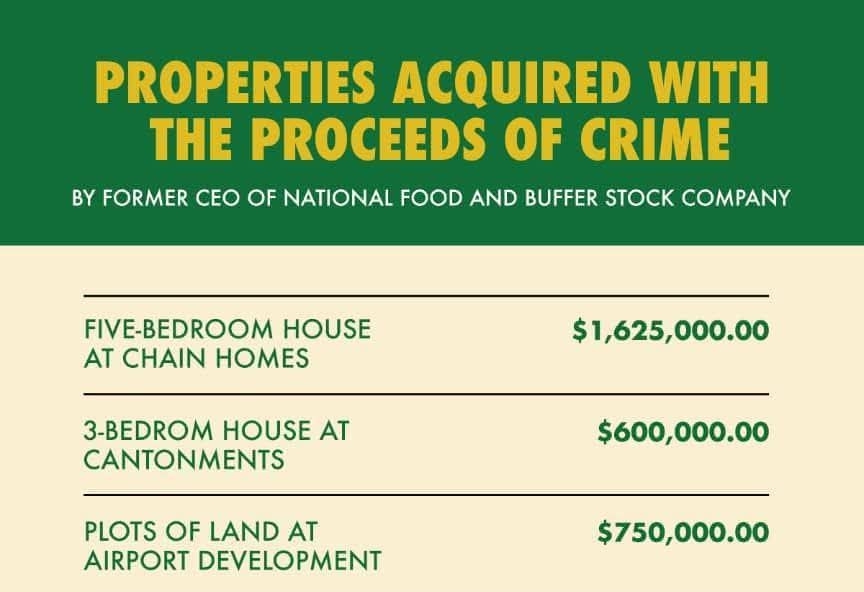
Five-Bedroom House at Chain Homes: $1,625,000.00
3-Bedroom House at Cantonments: $600,000.00
Plots of Land at Airport Development: $750,000.00
17-Bedroom Boutique Hotel in Tamale: $250,000.00
These dollar figures represent properties acquired with the demonstrable proceeds of crime. They stand as monuments to a perverse efficiency, where the public good was systematically converted into private luxury.
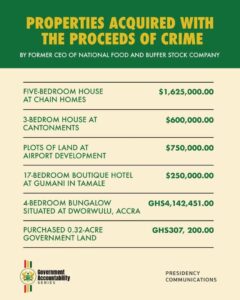
But the avarice did not end at the foreign exchange market. The scale of local acquisition—the GHS4,142,451.00 Dworwulu bungalow and the illicit purchase of GHS307,200.00 in government land—underscores a brazen belief in impunity. The Buffer Stock, intended to hold grain for the people, became the golden seed for the CEO’s personal empire.
This is not a civil dispute; it is a crime against the constitutional mandate of service. Public office is not a licence for enrichment; it is a covenant with the citizenry.
When the steward of national provisions begins to accumulate boutique hotels and high-end mansions, the moral language must merge seamlessly with the legal. The question ceases to be if laws were broken, and shifts to: What is the cost of this moral bankruptcy to the national soul?
Every dollar stolen, every cedi diverted, represents an immediate and tangible subtraction from national development—a road unpaved, a hospital unequipped, a student left unfed. The properties listed are not just addresses; they are the physical manifestation of resources denied to the ordinary citizen.

This single case, highlighted by the Presidency Communications’ Government Accountability Series, serves as a searing metaphor for the systemic cancer that erodes trust in governance.
The wealth of one man, built on illicit gains, becomes the poverty of the many. It is an aphorism worth etching in stone: The true measure of a society is not how it feeds its poor, but how it treats those who starve the people for profit.
The action required is clear, decisive, and unforgiving. The assets must be traced, seized, and returned to the public purse with relentless application of the law. The fight for accountability is not a political exercise; it is the necessary defence of the republic itself.
Justice must not only be done, but it must be seen to strip the spoils from the predator. When the former servant builds a fortress, the state must demonstrate that it is armed with the constitutional authority to tear it down and restore the people’s inheritance.
The golden chain of illicit wealth must be replaced by the unbreakable chain of accountability.
By Raymond Ablorh