








Ghana stands at a critical crossroads in the fight against environmental degradation. The alarming rate of illegal mining, deforestation, and river pollution has evolved from an environmental concern into a full-blown national security crisis. Yet, while some voices call for a declaration of a state of emergency, the more measured and just approach is to classify all forest and river zones as national security zones. This approach better balances justice, ecology, and community welfare without inflicting collective punishment on innocent citizens.
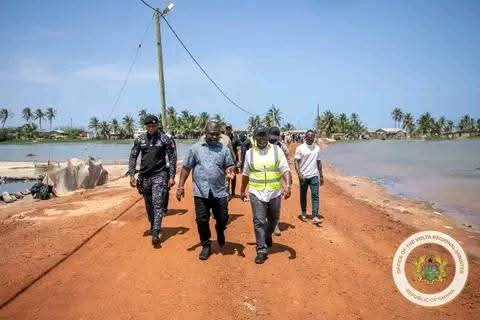
Across the country, the signs of destruction are unmistakable. Major rivers such as the Pra, Offin, Ankobra, Birim, Bonsa, and Ayensu have become heavily silted and chemically contaminated. In January 2025, Ghana Water Company Limited was forced to shut down the Tarkwa water treatment plant due to severe pollution of River Bonsa, making purification impossible. By September, the Kwanyako headworks faced the same fate because of upstream siltation, leaving thousands of residents without clean water (Bloomberg, 2025).
A detailed study by Scitech Journals (2025) reported visible pollution across all major river basins that serve as drinking and irrigation sources for communities in the Western, Central, Ashanti, and Eastern Regions. Similar reports from Le Monde (2024) and CitiNewsroom (2025) confirm that water scarcity in mining communities is not just environmental but a public health emergency. Households now depend on unsafe water sources, exposing millions to chemical poisoning and infectious diseases.
The destruction of Ghana’s forests and cocoa farmlands mirrors the tragedy in its rivers. According to the Research and Innovation Directorate (2024), approximately 19,000 hectares of cocoa farmland have been destroyed by illegal mining. The Forestry Commission (2023) documented over 4,700 hectares of degraded forest reserves, while Modern Ghana (2023) noted that satellite images reveal continuous encroachment even in protected areas. Toxic exposure compounds this crisis. A 2025 joint study by Pure Earth and Ghana’s Environmental Protection Agency, as cited by Reuters, found mercury concentrations in Konongo Zongo soils averaging 56.4 ppm—dangerously above the World Health Organization’s limit—while arsenic levels were high enough to cause kidney damage and developmental disorders in children. Environmental Health Perspectives (2024) further confirmed that mercury and cyanide pollution have contaminated fish and crops in mining zones, threatening both food security and public health.
These are not isolated events but symptoms of systemic environmental collapse. Rivers have turned brown, forests have become barren, and once-fertile farms have become toxic wastelands. Water-treatment plants like those at Tarkwa and Kwanyako cannot function, forcing communities to rely on unsafe alternatives. The environmental cost has now evolved into a human and economic burden, one that demands decisive yet compassionate action.
However, declaring a state of emergency is neither the fairest nor the most effective solution. Such a measure risks punishing innocent citizens alongside offenders, imposing curfews, restricting movement, and suspending civil liberties. Many rural dwellers in affected regions rely on forests and rivers for fishing, farming, and small-scale trade. According to Reuters (2025), fewer than 15 percent of residents in mining districts are directly involved in illegal mining. It would be unjust to penalize the remaining majority who depend on legitimate livelihoods.
By contrast, declaring forests and rivers as national security zones achieves targeted protection without mass disruption. It focuses law enforcement on critical ecological zones, isolating offenders while preserving the livelihoods of compliant citizens. Security agencies can act firmly within designated areas without curtailing the freedom of entire regions. This strategy strikes a balance between justice and ecology; it protects nature while respecting human dignity.
The security-zone approach also promotes cooperation rather than fear. Under a state of emergency, citizens often retreat from security agencies, perceiving them as instruments of oppression. But when people are treated as partners in environmental defense, they are more likely to cooperate. Chiefs, youth groups, religious leaders, and NGOs can help monitor illegal activity and report offenders. This community-based intelligence is vital, especially in dense forest zones where illegal miners often operate covertly.
Economically, the security-zone model sustains livelihoods. Declaring a state of emergency would freeze local markets and restrict farmers’ access to their lands, deepening poverty and food insecurity. Under the security-zone system, eco-friendly activities such as regulated farming, tourism, and afforestation can continue under strict environmental supervision. This sustains local economies while protecting the ecosystem.
Legally, the approach aligns with Ghana’s Constitution and statutory laws, the Environmental Protection Act (Act 490), Forestry Commission Act (Act 571), and National Security Council Act (Act 526). These allow the state to designate critical areas for protection without suspending civil rights. A nationwide emergency declaration, by contrast, could trigger constitutional challenges and accusations of political misuse. The security-zone framework respects due process while ensuring enforcement power.
Socially, this model strengthens national unity. Instead of stigmatizing mining regions as centers of illegality, it recognizes them as partners in national survival. It fosters environmental patriotism, a sense that protecting rivers and forests is a collective duty, not a government-imposed punishment. The approach builds social trust and shared ownership of natural resources.
Furthermore, this policy ensures long-term sustainability. Security-zone protection gives the state a continuous monitoring mechanism. It creates a standing ecological protection system where the police, military, and environmental agencies maintain a consistent presence. This is far more sustainable than the temporary crackdowns that typically follow emergency declarations.
The goal is not to militarize nature but to defend it intelligently. A security-zone framework safeguards ecosystems while preserving human freedoms, ensuring that environmental defense does not become social injustice. Ghana’s rivers and forests are not mere natural assets, they are the veins and lungs of national existence. Protecting them requires firmness guided by fairness, and law guided by compassion.
While a state of emergency may appear bold, it risks being blind and blunt. The security-zone approach is sharp, focused, and humane. It balances justice with ecology and transforms citizens from bystanders into guardians of the land. This is how Ghana can win the battle for her environment, by protecting nature without punishing her people.
By Curtice Dumevor — Public Health Expert and Social Analyst