






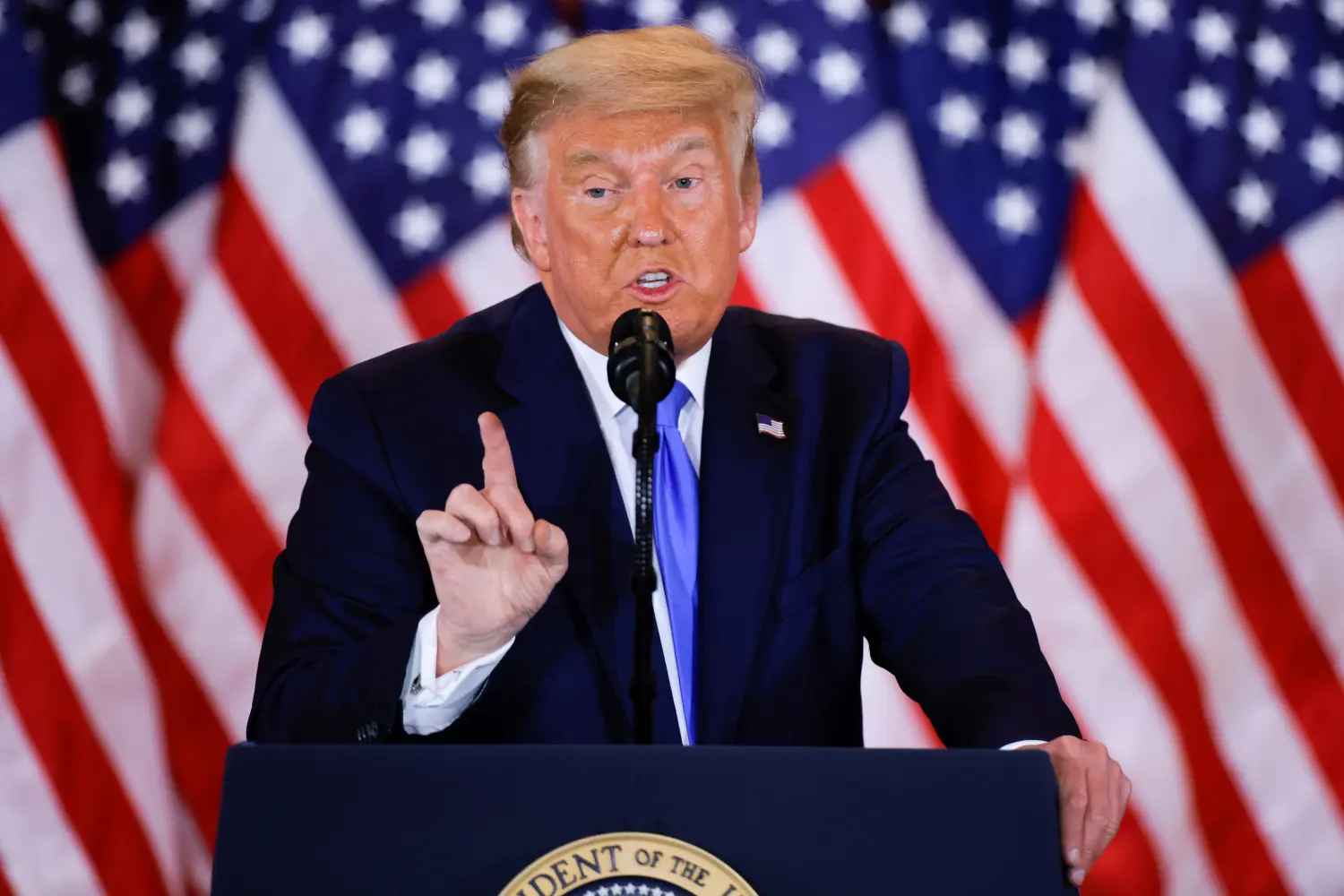
On January 3, 2026, the United States executed Operation Absolute Resolve, a military intervention in Venezuela resulting in the aerial bombardment of military infrastructure and the extrajudicial capture of President Nicolás Maduro and First Lady Cilia Flores. President Donald Trump has justified this action as a necessary law enforcement measure to combat narcoterrorism and restore democratic order, citing the 1989 invasion of Panama as a historical parallel.
However, when analysed through the lens of international law, specifically the United Nations Charter and established International Court of Justice (ICJ) jurisprudence, the operation presents a profound challenge to the post-1945 legal order.
It must be noted that while the capture may be justifiable under US domestic legal precedents such as the Ker-Frisbie doctrine, the military intervention itself constitutes a violation of Article 2(4) of the UN Charter and fails to meet the strict threshold for self-defence established in *_Nicaragua v. United States (1986)._*
The cornerstone of modern international law is Article 2(4) of the UN Charter, which prohibits the threat or use of force against the territorial integrity or political independence of any state.
The deployment of 150 aircraft and special operations forces into Venezuelan sovereign territory is, by definition, a use of force.
Unless the US can prove it was invited by a legitimate government, the breach of sovereignty is clear. Currently, the US has stated it intends to run the country temporarily, implying a non-consensual occupation.
Under Article 51 of the UN Charter, the use of force is only permissible in self-defence against an armed attack.
In the landmark case Military and *_Paramilitary Activities in and against Nicaragua (Nicaragua v. United States, 1986),_* the ICJ ruled that funding rebels or alleged cross-border trafficking does not constitute an armed attack justifying a full-scale military invasion.
The Trump administration cites drug trafficking as a threat to national security. However, international law generally treats drug interdiction as a law enforcement issue, not a casus belli. Unless Venezuela launched a direct military strike on the US, the invocation of Article 51 is legally tenuous.
Tritely, the Bush Doctrine of preemptive war, used in Iraq 2003 is not universally accepted in international law. Even under that disputed doctrine, the threat must be imminent. There is no public evidence that Venezuela posed an imminent military threat of invasion to the US on January 3, 2026.
The capture of Nicolás Maduro raises complex questions regarding the immunity of sitting heads of state.
In *_DRC v. Belgium,_* the ICJ held that incumbent foreign ministers (and by extension, heads of state) enjoy absolute immunity from criminal jurisdiction and arrest abroad, regardless of the gravity of the alleged crimes.
The US relies on the precedent of Manuel Noriega. In *_United States v. Noriega (1990),_* US courts ruled that Noriega was not a legitimate head of state and that the manner of his capture, even if illegal under international law, did not divest the US court of jurisdiction to try him.
While the US courts may convict Maduro based on domestic law, the international legality of the abduction remains unsupported. To the international community, this looks less like a police action and more like a violation of the sovereign equality of states.
The question as to whether the action of US is or not yields two different answers depending on the framework used.
1. *Politically/Domestically:* The US Executive Branch views this as a right and necessary action to protect American citizens from narcotics and assert strategic dominance, relying on the Noriega precedent.

2. *Legally (International)*: The operation is not right. It violates the prohibition on the use of force pursuant to Article 2(4) of the UN Charter and creates a dangerous precedent where powerful states can militarily depose the leaders of weaker states under the guise of domestic law enforcement.
Operation Absolute Resolve represents a triumph of hard power over the rule of law. While the US may successfully prosecute Maduro in the Southern District of New York, the invasion itself stands as a breach of the fundamental principles of the UN Charter.
By Samuel Saint-Ayisi