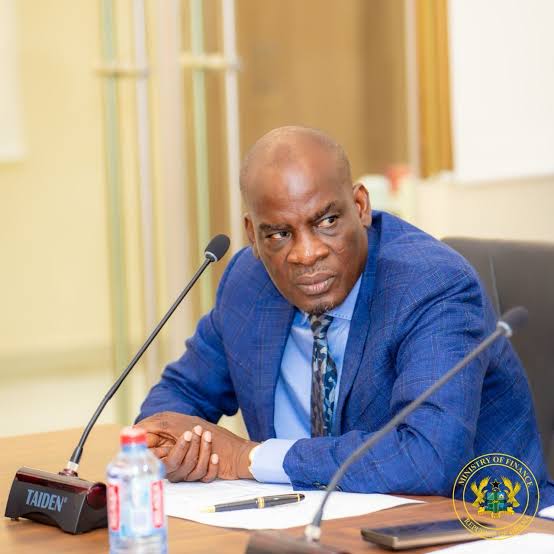









The Minister of Education’s recent directive that Ghanaian schools must now teach in the mother tongue has stirred both applause and apprehension.
Some hail it as a bold stride toward inclusive learning, while others view it as an experiment that might disadvantage children in a globalized,
English-driven world.
Yet, through the twin lenses of development communication and education, the policy holds remarkable promise if it is executed with clarity, commitment, and care.
Language is not merely a tool for communication; it is a bridge for participation and understanding.
From a development communication perspective, teaching in a child’s first language fosters confidence, inclusion, and engagement.
When learners comprehend the medium of instruction, they do not just memorize; they analyze, question, and contribute.
This aligns with the core of development communication, which enables people to participate actively in their own transformation.
Mother-tongue instruction also strengthens the partnership between home and school.
Parents who speak the local language can assist with homework, monitor lessons, and engage more meaningfully in their children’s education. In many rural communities, this approach turns education from a distant system into a shared cultural experience, building ownership, pride, and cohesion.From an educationist’s standpoint, research consistently affirms these benefits. UNESCO (2023) and the World Bank (2021) have shown that children taught in their first language during early schooling perform better in literacy, numeracy, and problem-solving.
The cognitive foundation built through familiar languages enhances critical thinking and prepares learners to acquire additional languages, including English, more effectively.
Still, Ghana’s linguistic diversity poses serious challenges. Which language should dominate in multilingual classrooms?
Are teachers adequately trained to teach in local languages? Are appropriate textbooks and assessment tools available? Many parents also fear that delayed exposure to English may hinder their children’s academic and professional competitiveness.
These concerns are legitimate and deserve thoughtful responses, not dismissal.Success will depend on strategic implementation. A phased rollout, beginning in lower primary, would allow gradual adaptation. Teacher training colleges must integrate bilingual education methods, while the Ghana Education Service collaborates with linguists, publishers, and media houses to produce standardized learning materials.

Equally important is a sustained public-awareness campaign to assure parents that mother-tongue education complements, rather than competes with, English proficiency.Ultimately, this is more than an academic reform.
It is a development strategy aligned with Sustainable Development Goal 4 (Quality Education) and Goal 10 (Reduced Inequalities).
If executed responsibly, mother-tongue instruction could narrow the learning gap between rural and urban schools, strengthen cultural identity, and nurture confident, critical thinkers.
The real question, then, is not whether Ghana should teach in local languages, but whether it has the will to implement the policy well. A nation that empowers its children to learn in the language they understand best is one preparing its citizens to think, innovate, and build together.
By Joseph Coffie Selorm Ahiabenu (Development Communicator & Educationist)