







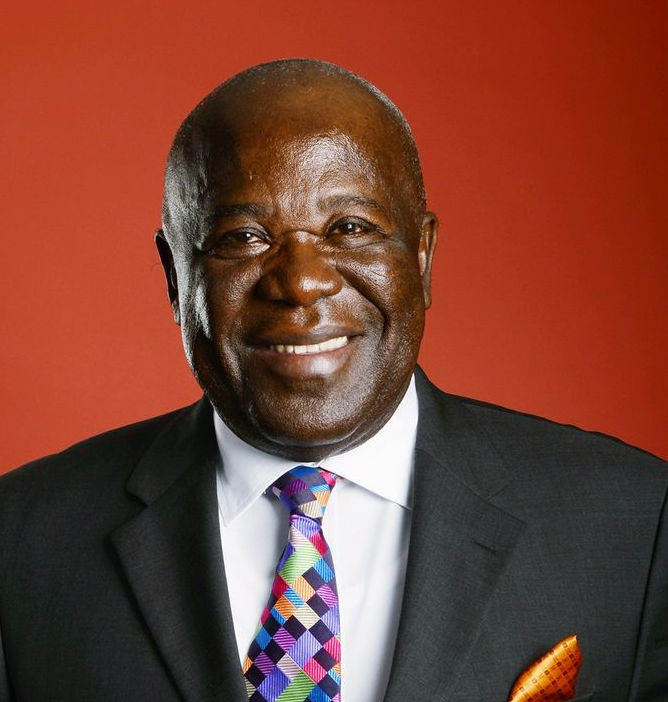
The pinnacle of global commerce is a solitary height, a mountain of achievement few ever summit. When a titan like Sir Sam Jonah descends from that rarefied air, his words are not mere opinion; they are an indictment rendered from a constitutional clarity of success.
To stand amidst the echo of his book launch, witnessing a man of such singular, material triumph express a profound, visceral unfulfillment at the sight of Ghana’s arrested development, is to confront a moral paradox. It is the realization that a gold medal rings hollow when the nation you represent is still wrestling with foundational scarcity. The success of the individual stands in jarring juxtaposition to the stasis of the collective.
His lament—that leadership has failed us for decades—is not an alarm bell; it is the somber clang of a funeral knell for squandered potential. It is a powerful message that transcends wealth.
The accusation against leadership is a righteous one, yet it is a half-truth, a comforting veil drawn over a deeper, more agonizing reality.
If the leadership is the failing organ, the electorate is the body that chose to nourish the disease. We point the finger, but the gesture folds back upon ourselves.
In the final analysis, we are not the victims of a rogue elite; we are the architects of our own acquiescence. The failure is less an act of betrayal by a few, and more a collective moral fatigue.
This fatigue permitted the rot to set in. To say “they failed us” is to surrender a constitutional right: the right to demand, to challenge, and to refuse the unacceptable.
We did not merely allow our leaders to fail; we often chose them despite clear evidence, sacrificing the long-term harvest for the short-term handout. This is the original sin of the governed.
Here lies the most chilling aphorism, the cold logic that shatters the fantasy of external salvation: Leaders are not aliens descended upon the populace; they are the distilled essence of the community itself.
To seek a profound, altruistic statesman from a citizenry content with mediocrity is a Sisyphean folly. The hope for a shepherd among wolves is a prayer that defies the immutable law of the political ecosystem.
You cannot expect gold to be refined from base metal without the requisite heat and pressure of civic demand. The leader drawn from our midst is our reflection in the political mirror—a sobering image of our own tolerated compromises, our own latent corruption, our own desperate pragmatism. The quality of the tap water reflects the purity of the source.
Sir Sam Jonah’s unfulfillment is a powerful symbol, a necessary burden passed to the next generation. It is the inheritance of shame that must be transformed into the catalyst of change.
0
The generation that built global empires abroad cannot afford to be the generation that stands mute while the home hearth crumbles. Our failure would not be a historical accident; it would be a conscious abdication of our solemn duty.
*The Mandate for the Young Guard*
The challenge is not merely to select better leaders, but to become a better populace. This burden falls squarely on the shoulders of the younger generations, the digital natives and the inheritors of this stalled promise. Their mandate for national salvation is clear and threefold:
*Demand Institutional Integrity:* The youth must become the vanguard of transparency. They 0must refuse the politics of personality and insist on constitutional clarity in all public dealings. This means mobilizing not just on social media, but at the ballot box and in the courts of public opinion, making corruption a politically terminal diagnosis.
*Forge an Ethical Economy:* Reject the easy path of parasitic opportunism. The younger generation must embody a new ethical code in business, rejecting shortcuts and embracing sustainable, value-creating enterprise. They must become the calloused hands that build durable wealth, not the golden handshake that enables quick plunder.

*Cultivate Active Citizenship:* They must move from spectatorship to engagement, transforming apathy into armour of civic vigilance. This means challenging local government, scrutinizing contracts, and volunteering to fill the governance gaps left vacant by failed leadership. They must understand that the republic is not a fortress to be protected, but a garden to be tended daily.
We must shed the sheepskin of complacency and put on the armour of civic vigilance. For, as the ancient wisdom dictates, “A people deserve the leaders they tolerate.” The time for casting blame is over. The time for the golden handshake with our past must give way to the calloused hand that rebuilds the future. This generation must not fail.
By Raymond Ablorh