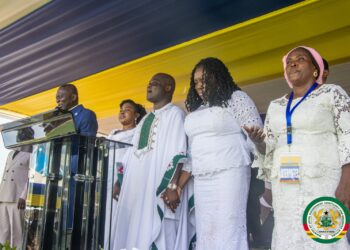








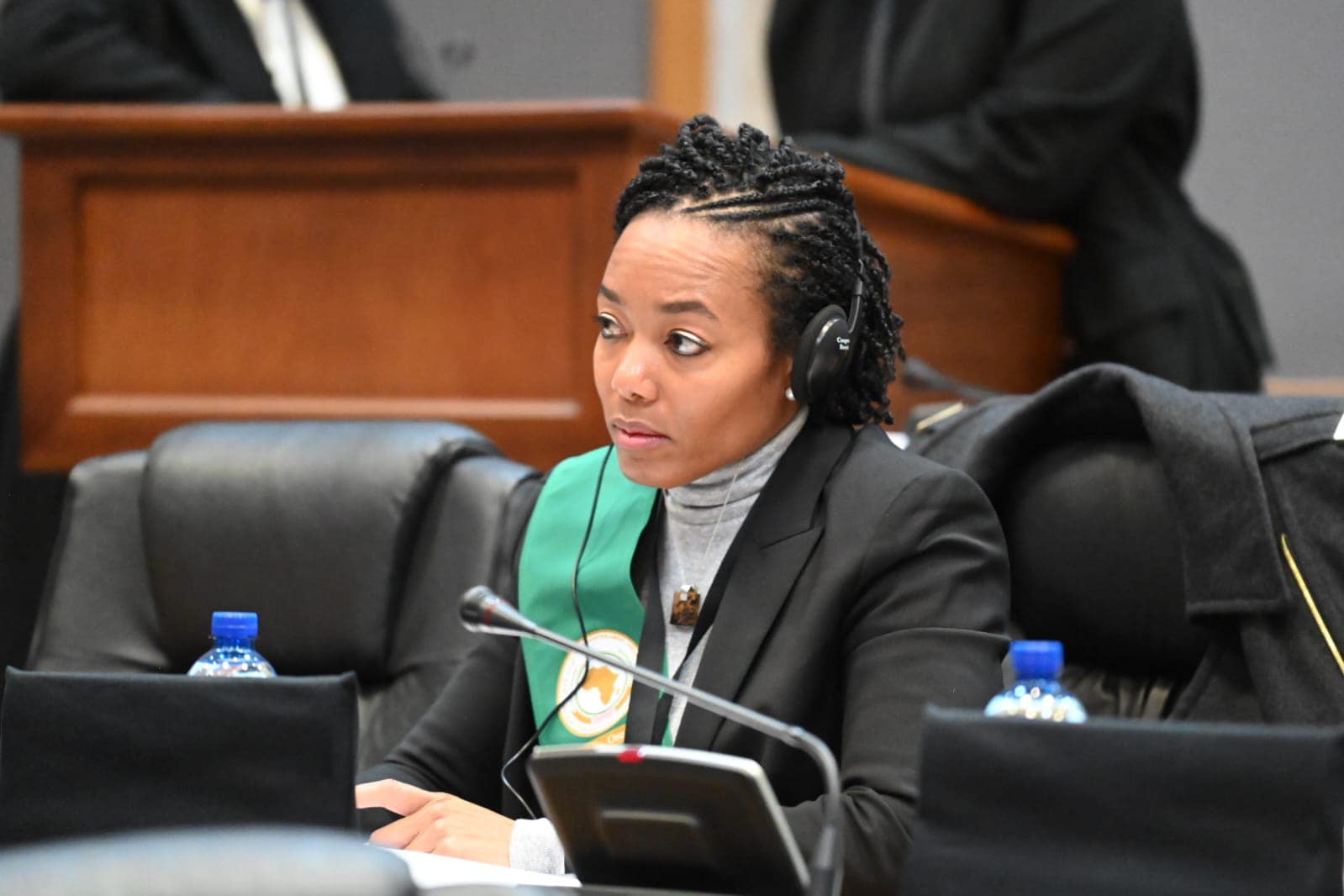
In a compelling call to action, the Member of Parliament for Korle-Klottey in 6the Greater Accra Region, Dr. Zanetor Agyeman-Rawlings, has emphasized the urgent need for a legislative instrument to safeguard Ghana’s maritime domain, suggesting that “the time has come for Parliament to take leadership in this area”.
She urged the house to prioritize legal reforms and foster bipartisan cooperation to defend the nation’s economic interests, particularly in the blue economy, as well as its territorial integrity and national security, making the case that “our maritime domain is not just a frontier”.
.
Making the statement on Piracy, Maritime Crime, Maritime Domain Awareness and the Need To Domesticate UNCLOS on the Floor of Parliament. Dr. Zanetor Agyeman-Rawlings, who is also the Chairperson of the Security and Intelligence Committee, highlighted the critical importance of Ghana’s seas, describing the maritime domain not merely as a frontier but as a vital source of trade, energy, nutrition, and sovereignty.
Her submission stressed that securing Ghana’s future hinges on protecting its seas, urging Parliament to demonstrate leadership in rising to this vital national responsibility.
Dr. Zanetor also urges the implementation of the National Integrated Maritime Strategy (NIMS) and its implementation plan, which were adopted a couple of years ago, and “they provide a very good framework for addressing maritime security and ocean governance in general”.
Below is the full statement:
STATEMENT ON PIRACY, MARITIME CRIME, MARITIME DOMAIN AWARENESS AND THE NEED TO DOMESTICATE UNCLOS BY HON. DR. ZANETOR AGYEMAN-RAWLINGS, HONOURABLE MEMBER OF PARLIAMENT FOR KLOTTEY-KORLE CONSTITUENCY AND CHAIRPERSON OF THE SECURITY AND INTELLIGENCE COMMITTTEE
Thank you, Mr. Speaker, for the opportunity to make a statement.
I rise today to make a statement to draw the attention of this august House to:
– the growing threat posed by piracy and maritime crime in the Gulf of Guinea,
– the urgent need to strengthen our maritime domain awareness, and
– the critical importance of reforming legislature and institutional coordination in protecting Ghana’s territorial waters and strategic interests including the blue economy.
The year 2023 marked a decade since the signing of the Yaoundé Code of Conduct. It is a regional framework developed to prevent and suppress illegal maritime activities in the region and, in general, enhance maritime security in West and Central Africa. Ghana is part of the sub-region Zone F under this framework, which also includes Cote d’Ivoire, Liberia, Sierra Leone, Guinea, and Burkina Faso. Zone F is managed by the Multinational Maritime Coordination Centre (MMCC) with its headquarters located in Accra, precisely in Christiansborg Castle, Osu, within the Klottey-Korle Constituency that I have the honour of representing.
Despite Ghana’s prominent position, Mr. Speaker, our domestic legislative and institutional frameworks remain inadequate to match the scale and complexity of the maritime crime threat which has transnational dimensions to it and also a direct impact on our National Security.

Some of the challenges Ghana faces are as follows:
- Ghana has still not completely domesticated the United Nations Convention on the Law of the Sea (UNCLOS), the principal international legal framework for maritime governance.
- The definition of Piracy under the Criminal Offences Act 1960 Act 29 (section 193) is inconsistent with Article 101 of UNCLOS, which has resulted in our inability to successfully prosecute acts of piracy under our laws.
- Lack of clear regulations with sanctions in place to address issues of crime at our anchorages (especially since Ghana is a Coastal and Port State).
- Ghana does not currently have a stand-alone maritime offences law. The absence of a comprehensive legal framework for prosecuting piracy and other maritime crimes not only hampers our ability to respond swiftly and effectively, but also undermines our commitments under international law.
Maritime insecurity arises from:
- Increased transnational organised crime,
- Illegal, Unreported and Unregulated (IUU) fishing,
- Environmental crimes and environmental degradation,
- Disappearing biodiversity and effects of climate change, to name a few.
Maritime crimes including piracy, armed robbery at sea, illegal, unreported and unregulated (IUU) fishing, drug trafficking, human trafficking, oil bunkering, and smuggling are often transnational and require harmonised legal responses across jurisdictions. Without domestication of UNCLOS and other relevant instruments, Ghana remains vulnerable to these offences and prolonged legal proceedings that benefit perpetrators.
Mr. Speaker, piracy and maritime crime have direct and tangible impacts on Ghana’s economy and the wellbeing of our citizens. One of the most significant, but often overlooked effects, is the elevated cost of maritime insurance premiums for vessels traversing the Gulf of Guinea. Because our maritime corridor is considered a high-risk zone, shipping companies are charged higher insurance rates. These costs are ultimately transferred to Ghanaian consumers in the form of higher prices for imported goods, including food, fuel, machinery, and pharmaceuticals. In other words, Mr. Speaker, the insecurity in our waters is quietly taxing every household in Ghana. This means that the cost of living is indirectly inflated due to our inability to fully secure our maritime domain. If we are serious about improving our economy and protecting our borders, we must be equally serious about maritime security.
Mr. Speaker, another area that deserves attention is the disconnect between the Yaoundé Conduct and fishing communities. There is a pressing need for greater inclusion, awareness creation, and sensitisation at the grassroots level. Maritime domain awareness must not be limited to the corridors of power or the security sector alone; it must extend to coastal communities who are both stakeholders and, unfortunately, sometimes vulnerable to recruitment by criminal networks.
Finally, let us not forget that maritime crimes begin and end on land. The nexus between maritime crime and broader transnational threats, including terrorism and organised crime, cannot be ignored. As such, maritime security is not just a naval issue, it is a national security issue.
Mr. Speaker, in light of these realities, I recommend the following urgent and strategic actions:
- I urge the Honourable Minister for Transport, in collaboration with the relevant Ministries, Departments or Agencies, to submit to this House a Bill that will pave the way for the repeal and replacement of our outdated piracy laws and ensure that Ghana is fully compliant with UNCLOS and aligned with regional and global efforts to tackle maritime crime. In the course of my research and enquiries about this statement, I have learnt that steps are being taken to that effect and that Cabinet has given approval for the Bill to be laid. I urge the Minister of Transport to do so as soon as practicable, and I also want to assure the Minister that he can count on my support.
- I urge the Government to consider establishing a fund, financed through a portion of port charges, to support maritime security enforcement and operations, technological upgrades, community engagement, and coastal surveillance infrastructure.
- Coastal fishing communities should, in collaboration with traditional leaders in coastal communities, be formally integrated into the national maritime security strategy of the country. This can be via training programmes, community-based reporting systems, and economic alternatives for vulnerable coastal youth.
- Furthermore, I urge the government to embark on more intensive awareness campaigns on the dangers of maritime crime, the importance of legal fishing practices, and the economic value of a secure maritime space.
- I also urge the implementation of the National Integrated Maritime Strategy (NIMS) and its implementation plan, that were adopted a couple of years ago. They provide a very good framework for addressing maritime security and ocean governance in general.
Mr. Speaker, the time has come for Parliament to take leadership in this area. Let us prioritise the necessary legal reforms, and work across the aisle to protect Ghana’s economic interests (especially our blue economy), territorial integrity, and the safety of our people.
In conclusion, Mr. Speaker, our maritime domain is not just a frontier. It is a source of trade, energy, nutrition, and sovereignty. If we are to secure Ghana’s future, we must secure our seas. Let us demonstrate leadership through legislative reform, oversight, and a collective sense of urgency in rising to meet this challenge.
I thank you, Mr. Speaker, for the opportunity.