




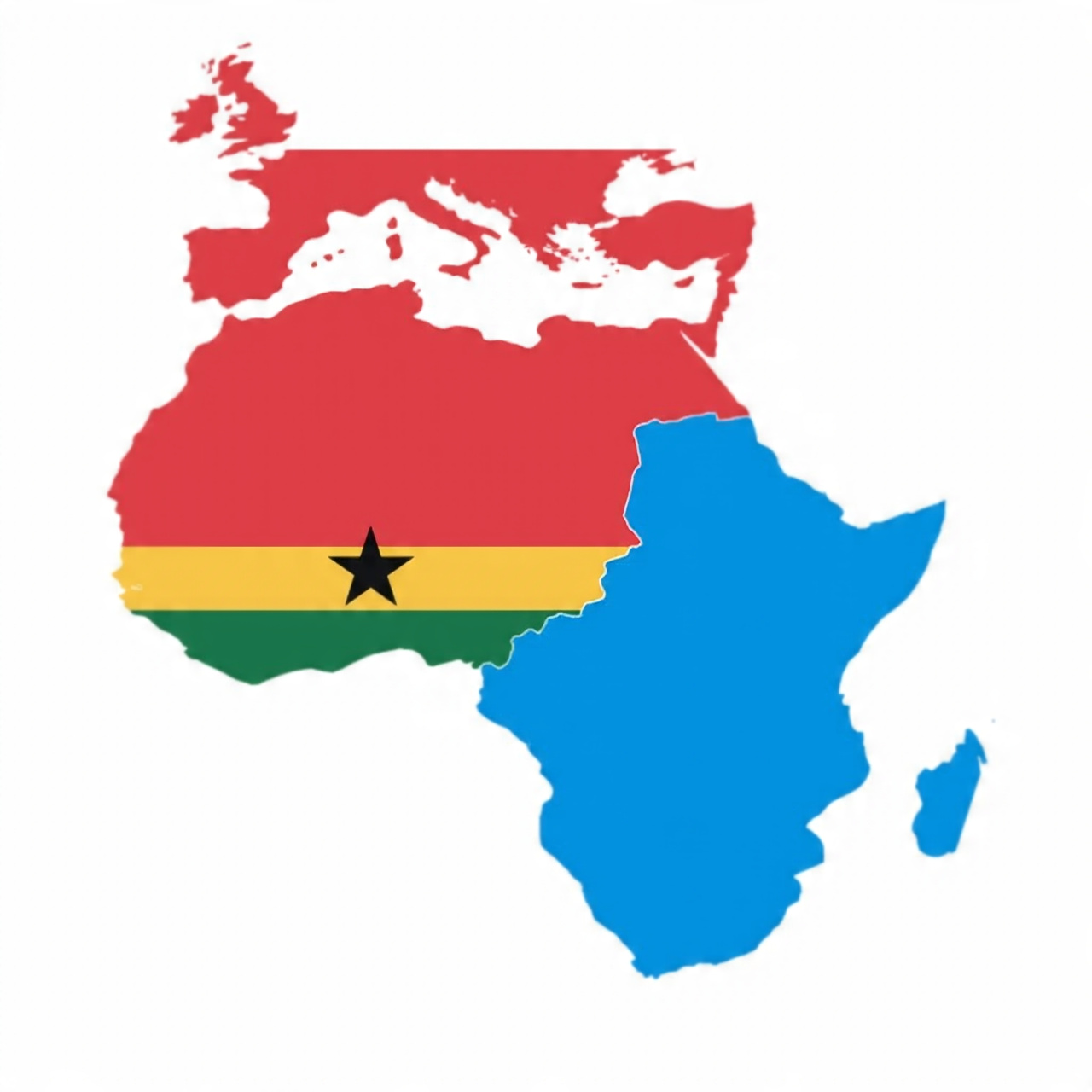
Ghana, a nation steeped in the rich tapestry of West African history, finds itself at a pivotal juncture. Once the Gold Coast, a jewel in the crown of colonial exploitation, it now navigates a complex web of international relations, dominated by the burgeoning influence of China.
This relationship, whilst promising a glittering path of infrastructure and economic growth, casts a long, disquieting shadow, revealing a narrative eerily reminiscent of its past: the systematic extraction of its precious resources, facilitated by a pervasive culture of corruption amongst its leadership.
*The Dragon’s Embrace*
China’s Strategic Imperatives in Ghana
For two decades, China has steadily ascended to become Ghana’s pre-eminent economic partner. From a modest trade volume of $93.13 million in 2000, bilateral exchanges have soared to over $11 billion by 2024, cementing China’s position as Ghana’s largest trading ally. This deepening engagement is not merely transactional; it is a meticulously woven tapestry of strategic investments, cultural overtures, and emerging security cooperation, all underpinned by China’s insatiable demand for resources and its ambitious Belt and Road Initiative (BRI).
The landscape of Ghana is being reshaped by Chinese-financed infrastructure. The colossal Tema Port expansion, poised to become West Africa’s largest, promises to transform maritime capabilities and trade. Roads, railways, and digital networks are springing up, often under the banner of “win-win cooperation”. Yet, beneath this veneer of mutual benefit lies a more pragmatic reality: resource-backed loans. The $2 billion Sinohydro deal, for instance, sees Ghana repaying infrastructure costs with refined bauxite over 15 years, granting China access to a significant portion of the nation’s bauxite reserves. This arrangement, whilst framed as a “barter,” functions as a loan, with revenues from bauxite exports funnelled into an offshore escrow account for repayment.
Ghana’s escalating debt to China, now exceeding $17 billion, places the nation at a precarious “high risk of debt distress”. The International Monetary Fund (IMF) has issued a chilling warning: should Ghana falter on its obligations, China could lay claim to portions of its oil, cocoa, or bauxite. This stark reality underscores a critical shift from direct political subjugation to economic leverage, a modern form of influence that can feel as binding as colonial chains.
Beyond the hard infrastructure, China cultivates its soft power through Confucius Institutes, scholarships for Ghanaian students, and vocational training, fostering cultural understanding and aligning Ghana’s developmental trajectory with its global initiatives. More recently, China’s Global Security Initiative (GSI) signals a deeper integration, with plans for a Ghana-China Police and Law Enforcement Academy, potentially securing Chinese interests through enhanced host-country security capabilities.
*The Rot Within: Corruption’s Grip on Ghana’s Resources*
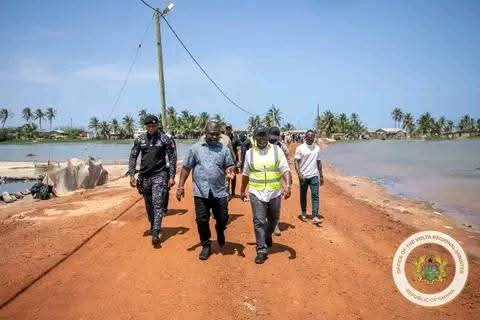
The insidious hand of corruption within Ghana’s leadership is the true enabler of this resource drain. Despite the Minerals and Mining Act 2006 explicitly reserving small-scale mining for Ghanaian citizens, tens of thousands of foreign miners, predominantly Chinese, operate illicitly, introducing heavy machinery that wreaks environmental havoc.
This impunity is no accident. Foreign miners thrive because they are “protected by those in authority, i.e., public officials, politicians, and chiefs, in return for private payments”. This phenomenon, deeply rooted in “neopatrimonialism,” transforms public office into a conduit for personal enrichment, rather than public service. The Ghana National Association of Small Scale Miners (GNASM) has even alleged that top government officials and security operatives have forcefully seized legally acquired concessions from Ghanaian miners, handing them over to illegal Chinese operators with impunity.
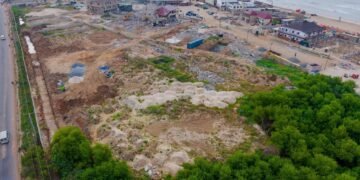
Land concessions for large-scale projects are equally fraught with opacity. Whilst Ghanaian law requires parliamentary ratification for resource extraction on land, public access to land ownership information remains woefully limited. Foreign nationals are typically restricted to 50-year leases, yet “Ghanaian intermediaries” are often employed to circumvent these restrictions, misleadingly listing projects as Ghanaian-sourced investments. The government’s power of compulsory land acquisition for “public purpose,” whilst vital for development, is often broadly defined, allowing rural land to be channelled into non-public, commercial uses, displacing local populations without adequate compensation. Unscrupulous chiefs and administrators are frequently implicated in selling land from under unsuspecting Ghanaians, leaving them dispossessed and impoverished.
Despite a plethora of laws, enforcement remains tragically weak, fostering a “culture of impunity”. Public perception widely condemns land sector agencies as corrupt, with informal fees and unreceipted payments being commonplace. High-profile graft cases, such as the alleged $28 million corruption scandal involving a former head of the petroleum regulator, further erode public trust. The existing legal framework, whilst present, is undermined by profound weaknesses in enforcement and a glaring lack of transparency, creating a “grey area” where illicit activities flourish.
*Echoes of the Past: A New Colonialism?*
The parallels between Ghana’s colonial past and its contemporary engagement with China are striking, albeit nuanced. The Gold Coast was a “colony of commercial exploitation” for European powers, its economy pivoting from the transatlantic slave trade to the extraction of raw materials like palm oil, cotton, timber, cocoa, and gold. Colonial authorities employed “expropriation” and “appropriation” to seize land, and forced labour was a common feature.
Today, the mechanisms of control have evolved, but the underlying narrative of external powers seeking to control and extract Ghana’s resources for their benefit persists. Just as European powers extracted gold and cocoa, Chinese entities now seek access to Ghana’s gold, bauxite, oil, and timber. Whilst Ghana possesses nominal sovereignty, its substantial debt to China and the terms of resource-backed loans raise serious questions about conditional sovereignty and economic leverage. The IMF’s warning of potential asset seizure is a modern echo of colonial extraction, achieved through financial rather than military means.
The critical distinction, however, lies in the active complicity of Ghanaian public officials, politicians, and traditional chiefs. Unlike the overt subjugation of colonial rule, the current situation involves sovereign Ghanaian actors allegedly prioritising private gain over national interest, directly undermining their own country’s laws and resource governance. This internal corruption amplifies external pressures, rendering the exploitation more insidious and complicating the nation’s fight for resource sovereignty.
*A Nation Under Siege* Socio-Economic and Environmental Fallout
The unchecked resource extraction and opaque deals have unleashed a torrent of devastating consequences. “Galamsey” has catastrophically polluted an estimated 60% of Ghana’s fresh water sources with deadly toxins like mercury and cyanide, rendering major rivers undrinkable. The Ghana Water Company Limited warns that Ghana may need to import fresh water by 2030 if current trends persist.
Extensive deforestation, impacting 34 out of 288 forest reserves, and the destruction of over 100,000 acres of vital cocoa farms paint a grim picture of environmental degradation. Illegal rosewood logging, driven by Chinese demand and facilitated by corruption, exacerbates erosion, flooding, and desertification, whilst devastating local industries like shea butter production. The proposed bauxite mining in the Atewa Forest Reserve, backed by Chinese loans, threatens the source of three crucial rivers supplying water to over two million people.
Beyond the environmental catastrophe, local communities face displacement and livelihood disruption. Land acquisition for infrastructure projects often results in inadequate and delayed compensation, imposing immense stress on displaced individuals. The destruction of farmlands and water sources by “galamsey” directly undermines community-based agriculture and access to essential daily water. Legitimate artisanal miners are being crowded out, whilst unscrupulous officials allegedly sell land from under unsuspecting Ghanaians, exacerbating landlessness and poverty.
Economically, illegal mining alone costs Ghana over $2.3 billion annually in lost revenue and illicit smuggling. Whilst Chinese traders offer affordable goods, their concentrated presence in traditional markets has displaced local merchants, fuelling tensions. Despite promises of job creation, working conditions for local labour on Chinese construction sites are often described as undesirable and informal, leading to conflicts.
*A Clarion Call to Action*
The Ghanaian Youth as Agents of Change
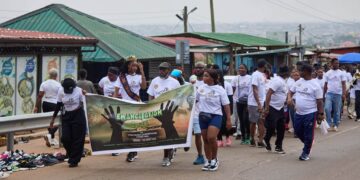
In the face of these formidable challenges, the Ghanaian youth emerge as the nation’s most potent force for change. Recognised by parliamentary leaders as “leading today” in national development, they are uniquely positioned to break the cycles of corruption and unsustainable resource exploitation.
Their path forward is multifaceted:
Strengthening Anti-Corruption Advocacy: Youth-led civil society organisations must converge to save the nation. They must demand radical transparency in all resource agreements, land deals, and loan terms, pushing for public disclosure of contracts to ensure accountability. Leveraging digital tools and social media to monitor illegal activities and counter disinformation campaigns is crucial. Supporting legal initiatives that offer free aid to those fighting injustice will empower affected communities.
Promoting Transparency and Accountability: Advocating for robust institutional reform is paramount. This includes pushing for stronger regulatory enforcement, enhancing the capacity of security agencies to understand and impartially enforce mining laws, and ensuring regulatory bodies are included in task force operations to prevent abuse of power. Youth must demand accountability for corrupt officials, supporting investigations and prosecutions to dismantle the culture of impunity.
Fostering Local Economic Empowerment: To reduce over-reliance on external actors, youth can actively champion and patronise local businesses and products. Advocating for policies that formalise small-scale mining and other informal sectors will ensure local participation and equitable benefits. Pursuing vocational and technical training (VET) will enhance local capacity, enabling Ghanaians to thrive in new industries.
Engaging in Environmental Protection and Restoration: Raising community awareness about the devastating environmental and health impacts of illegal mining and logging is vital. Youth can lead community-led initiatives for land and water rehabilitation, tree planting, and promoting sustainable agricultural practices. They must pressure the government to prioritise environmental protection and rigorously enforce regulations on all resource operations.
Advocating for Equitable and Sustainable Partnerships: Youth should demand better, more transparent loan conditions, ensuring that large-scale infrastructure projects are financially viable and do not lead to long-term debt distress. Advocating for policies that ensure greater local participation, technology transfer, and fair labour practices in all foreign-funded projects is crucial. Finally, encouraging Ghana’s government to maintain a balanced foreign policy, diversifying its trade and investment partners, will safeguard national interest and prevent over-reliance on any single nation.

*A Future Forged in Integrity*
Ghana stands at a precipice. The allure of rapid development, often facilitated by opaque deals and internal corruption, threatens to mortgage its future and its very essence. Yet, the spirit of its people, particularly its vibrant youth, holds the key to reclaiming its destiny. By demanding transparency, fostering accountability, and actively participating in the stewardship of their nation’s resources, they can ensure that Ghana’s golden future is not merely a mirage of external ambition, but a reality forged in integrity, sovereignty, and sustainable prosperity for all its citizens. The time for a new, truly independent Gold Coast is now.
By Raymond Ablorh
Policy, Strategy & Communication