






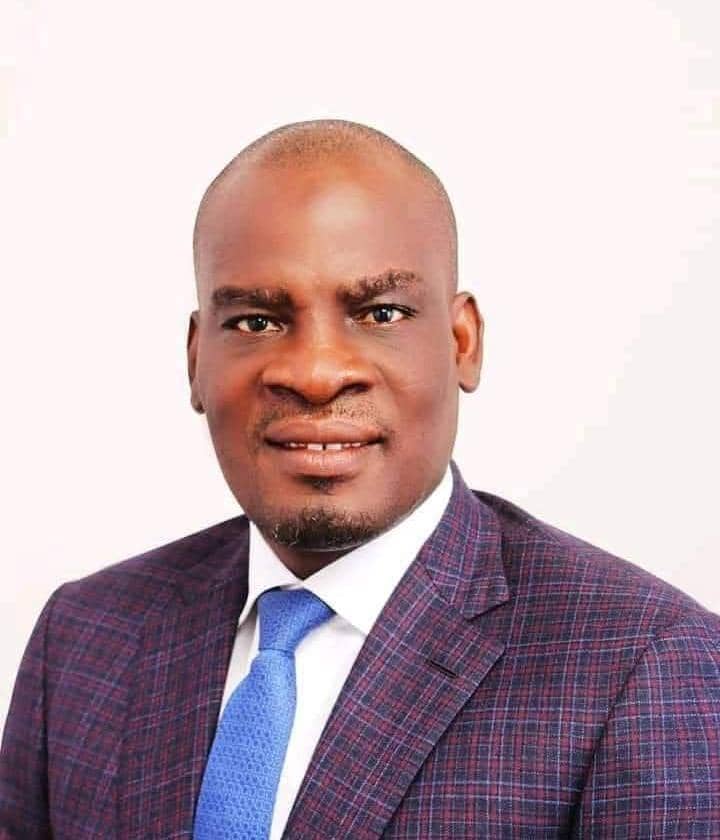
The appointment of the Member of Parliament for Tamale South, Hon. Haruna Iddrisu to the Ministry of Education in January 2025 marked not merely an invitation of a new Minister, but the calling of a constitutional barrister to the site of a profound national architectural failure.
Ghana’s educational sector, like a magnificent edifice built on shifting sand, had delivered the quantitative triumph of access, only to face the inevitable moral crisis of quality and crumbling infrastructure. The new Minister’s initial performance, however, is a demonstration of pragmatic, execution-focused leadership that transcends political rhetoric, charting a course for foundational stability and equitable justice.
*From Political Symbol to Administrative Solvency*
The inherited landscape was defined by the ghosts of unkept promises: the vast, spectral silhouettes of the abandoned Community Day Senior High Schools, the ‘E-blocks’. These structures, contracts for 124 of which had been awarded years prior, had metastasized from symbols of aggressive expansion into potent evidence of systemic incapacity. The challenge was not one of ideology, but of pure managerial competence.
Minister Iddrisu, utilizing the governance-centric skill set honed as a barrister and in the crucible of complex labour negotiations, has delivered an immediate, unequivocal resolution.
By explicitly announcing a US$18 million allocation to complete 30 of these abandoned E-blocks, he has not just injected funds; he has masterfully depoliticized the infrastructure gap. The E-blocks are now being transformed from a symbol of failure into a powerful demonstration of the State’s capacity for delivery, a necessary act of administrative redemption.
*The Financial Commitment: A Shield Against Collapse*
A crisis of quality demands an offensive financial strategy. The hallmark of this new leadership is the sheer fiscal decisiveness necessary to stabilize the nation’s most popular policy. The allocation of GH¢4.2 billion in the 2026 budget to sustain and improve Free SHS and Free TVET is not a maintenance budget; it is a capital injection for quality assurance. This represents a significant increase from the previous year’s GH¢3.5 billion, and it is explicitly targeted at solving the core operational crisis: the massive congestion threatening quality in high-enrollment schools.
This commitment acts as a constitutional shield, ensuring that the right to education, so fiercely fought for and delivered through access, is not diluted by resource scarcity.
*An Equitable Architecture: Justice in Bricks and Mortar*
The Minister’s vision transcends emergency stabilization; it is a blueprint for equitable national development. Quality, as the data relentlessly confirms, is fundamentally a question of equity: urban schools boasted a BECE pass rate of 74.53% while their rural counterparts lagged at 61.61%. The cause is often stark: the absence of the trained teacher.
The announced plan to construct 400 teacher bungalows is, therefore, the most strategic policy lever in the entire mandate. This action directly tackles the perennial challenge of deploying and retaining competent educators in deprived communities, serving as a powerful instrument to positively influence the Pupil to Trained Teacher Ratio (PTTR).
By investing in foundational JHS blocks and teacher housing, the Ministry is correcting the quality deficit at its very source, understanding that quality cannot be a remedial measure at the SHS level, but a quality of input from below.
Moreover, the extension of the school feeding program to all special needs and inclusive schools from January 2026, backed by a GH¢65 million GETFund allocation for essential learning devices, is a powerful move toward justice for the most marginalized. This policy moves the Ministry beyond broad, quantitative metrics to the high ground of inclusive, qualitative outcomes, cementing Ghana’s standing as a leader in modern education policy.
*The Mandate of Execution: The Reckoning*
Hon. Haruna Iddrisu’s initial performance is a powerful affirmation of the principle that strategic planning is hollow without ruthless execution. He has brought order to a chaotic inheritance, turning political liability into administrative opportunity.
Yet, the ultimate measure of this tenure, the final judgement of history, will be the successful translation of the staggering GH¢4.2 billion and the ambitious infrastructure agenda into completed projects and measurable learning outcomes.
The risk is clear: the scale of the announced projects demands exceptional procurement oversight to avoid repeating the implementation failures of the past. The mandate is now one of unyielding follow-through. If Minister Iddrisu successfully operationalizes this infrastructure and equity plan, he will not just have solved a crisis; he will have fundamentally shifted the educational sector from a state of structural congestion and political friction to one of administrative stability and foundational strength.

This stability is the true platform upon which the destiny of Ghana’s next generation will be secured. The nation applauds this decisive beginning, and now awaits the harvest of diligent, sustained execution.
By Raymond Ablorh