








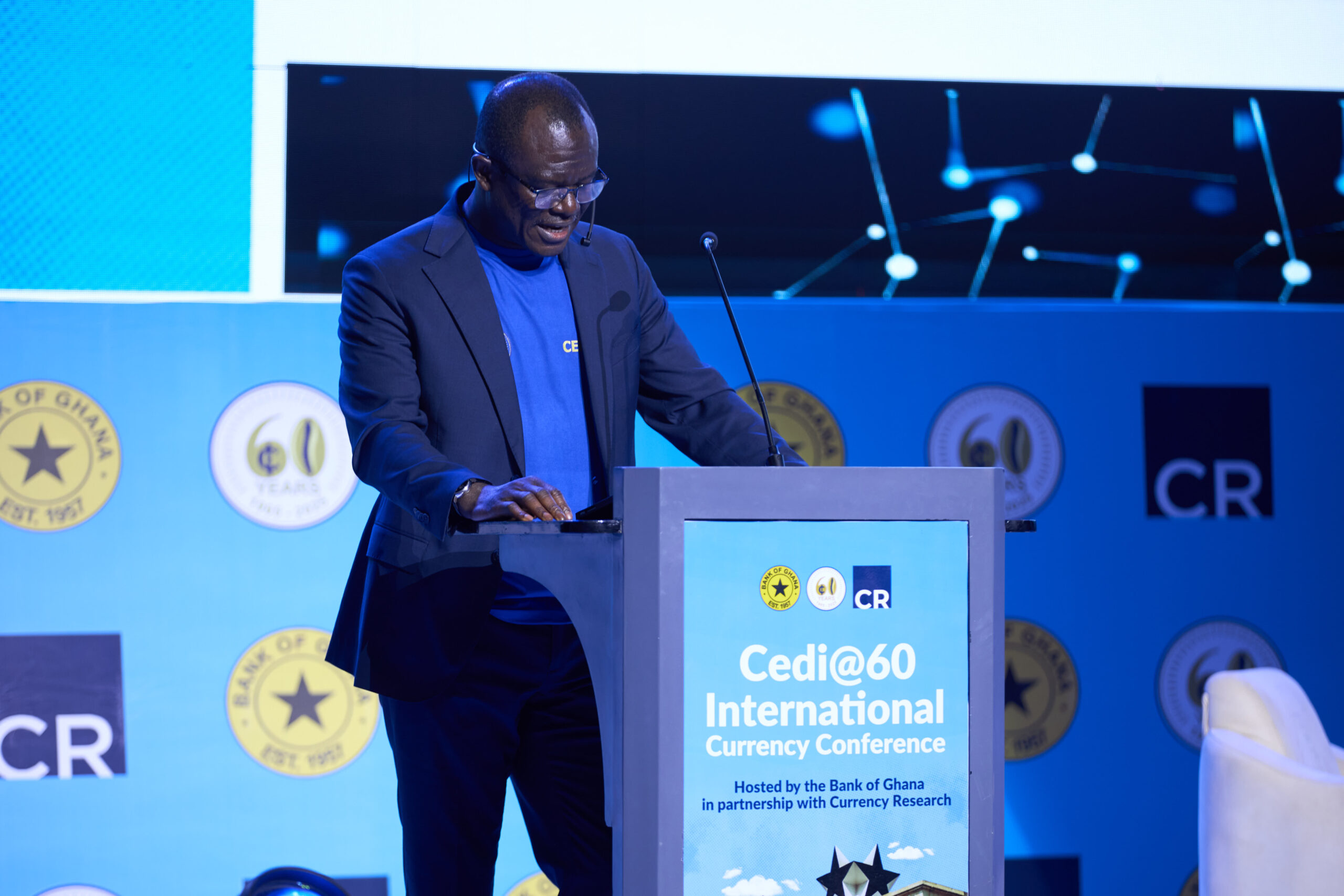
The first Deputy Governor, Bank of Ghana, Dr. Zakari Mumuni has submitted that the implementation of eCedi in Ghana will create a more efficient payment ecosystem faster, safer, and more reliable for
individuals and businesses.
He said, it will also help advance financial inclusion, resilience, and stability, while strengthening liquidity
management and monetary policy transmission.
According to him, it will help drive the digital transformation and competitiveness, empowering innovators and
MSMEs and contributing to economic growth and improved welfare.
The eCedi is also expected to reinforce Ghana’s leadership in Africa’s digital finance landscape,
demonstrating how innovation amd trust can coexist under a strong regulatory
framework.
Speaking at the Cedi@60 International Currency Conference on topic
The Digital Cedi- A Strategic Vision for Ghana’s Digital Currency Dr. Mumuni mentioned that the eCedi represents Ghana’s next step toward a resilient, inclusive, and digitally
driven economy and
“the eCedi marks a pivotal step in Ghana’s digital transformation. It is
not merely a new form of mone it is a strategic instrument for strengthening our
financial system and advancing national development”.
“Through the eCedi, we are enhancing financial sovereignty, promoting inclusion, and
fostering innovation across the economy”, he added.
The eCedi will provide a secure digital payment option that complements our evolving
digital economy.
It will enhance financial inclusion by offering a more affordable digital payment alternative, particularly for underserved populations. Ghana’s payment ecosystem has undergone remarkable transformation.
It began with the implementation of the Ghana Interbank Settlement System of the earliest RTGS systems in Sub-Saharan Africa which enhanced liquidity in the banking
industry and reduced credit and settlement risks.

The establishment of GhIPSS in 2007 further advanced this progress. Innovations
such as the Automated Clearing House, the Cheque Codeline Clearing system, and
Later, the e-zwich biometric smartcard system and Gh-Link improved efficiency and
broadened access to retail electronic payments.
These systems laid the foundation for GhIPSS Instant Pay, a secure, real-time retail
An interbank transfer platform that significantly enhanced the speed and convenience of
payments.
The introduction of mobile money in 2009 marked yet another turning point.
And in 2018, mobile money interoperability enabled seamless transfers across mobile
networks and between wallets and bank accounts.
In 2020, the Bank of Ghana strengthened oversight with the creation of the FinTech
and Innovation Office, ensuring an orderly licensing and regulatory framework for payment service providers and electronic money issuers, while fostering innovation
and safeguarding the integrity of the ecosystem.