







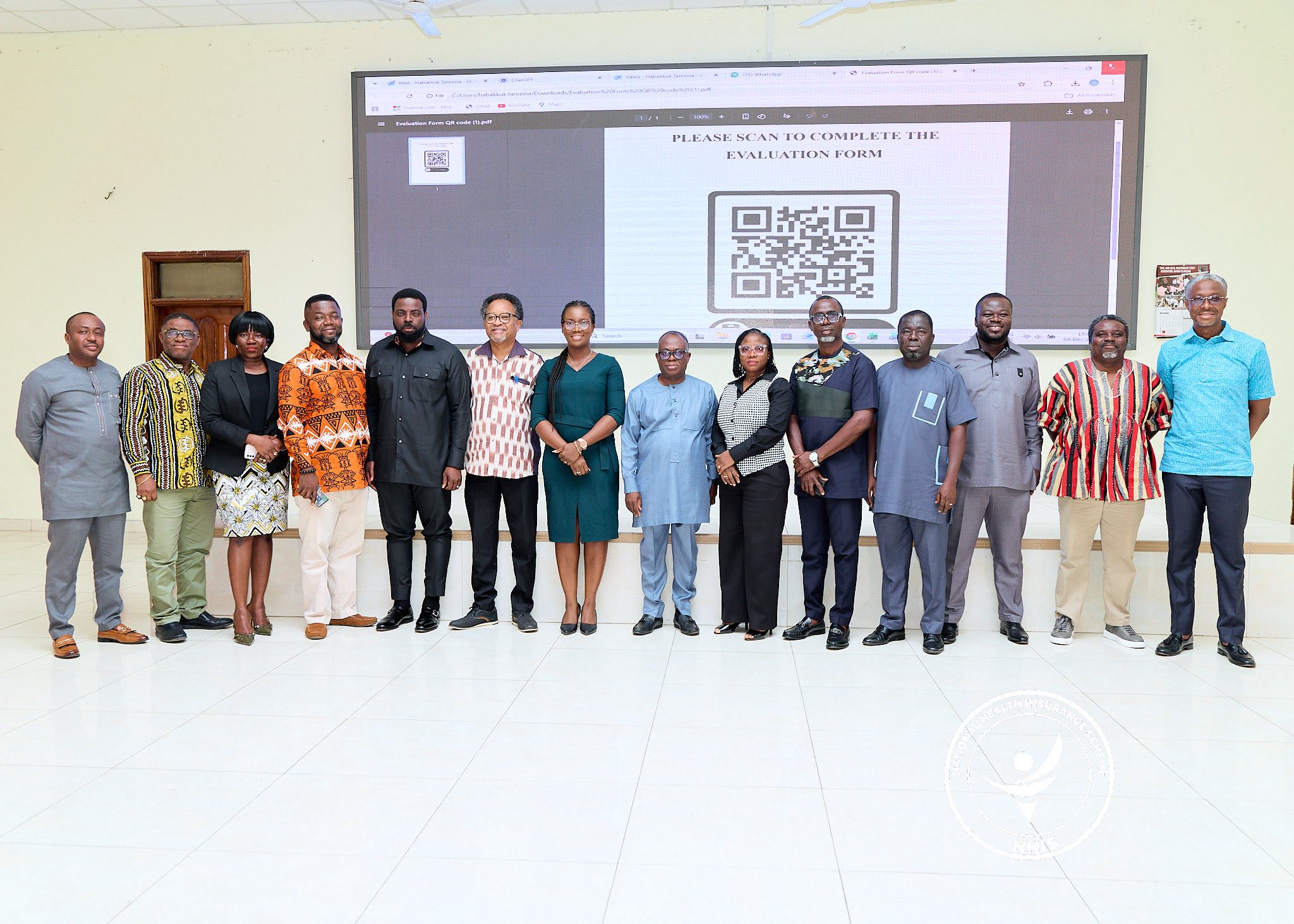
The nationwide training on the reviewed tariffs and engagements with service providers by the National Health Insurance Authority (NHIA) ended on Thursday, December 4, 2025, in Cape Coast.
The final session brought together service providers from the Western and Central Regions, as well as some participants from the Ashanti Region who missed the earlier engagement in Kumasi.
Over the past two weeks, the Authority has trained and engaged stakeholders in the health sector on the revised tariffs and the expanded Diagnostic Related Groupings (DRGs). Participants included Regional and District Directors of Health, Medical Superintendents and Directors, Regional Directors of Finance of the Ghana Health Service, managers of Christian Health Association of Ghana (CHAG) facilities, and private health service providers.
The training equipped participants with the knowledge required to properly apply the revised tariffs using the appropriate DRG codes for reimbursement. They were also taken through the new verification methods to be rolled out by the Authority to curb leakages in the system.
These new methods include the Biometric Member Authentication System (BMAS), aimed at high-volume facilities, and the One-Time Password (OTP) system, which will be deployed in low-volume facilities with weak internet connectivity.
At the Cape Coast engagement, participants welcomed the new tariffs and commended the NHIA for listening to their concerns and acting on them. They believed the introduction of the revised tariffs would strengthen their relationship with the scheme and enhance service delivery to NHIS members.
The Deputy Chief Executive in charge of Operations of the NHIA, Dr. Senanu Kwesi Djokoto, praised the service providers for their turnout and continuous support to the health sector. He said the training was intended to provide clarity on the revised tariffs, the evidence behind them, and to promote transparency, accountability, and stronger collaboration between the NHIA and service providers.
“We also hope to strengthen capacity for the implementation of the updated G-DRG payment system,” he added.
Dr. Djokoto reiterated the NHIA management’s commitment to strengthening partnerships and restoring trust in the National Health Insurance Scheme (NHIS). He acknowledged the sharp rise in operational costs associated with service delivery including diagnostics, medicines, and other aspects of hospital care.
He explained that the new tariffs were informed by a nationwide cost survey covering a range of providers, guided by standard treatment guidelines and an expanded DRG classification, while also correcting gaps in high-cost areas.
“So, the objective remains very simple but transformative: we aim to reimburse providers fairly, ensure financial sustainability, and abolish illegal out-of-pocket payments,” he stressed.
Dr. Djokoto called for the full cooperation of service providers in applying the revised tariffs and supporting the NHIA to eliminate illegal charges that undermine the scheme and erode public trust.
“The success of these tariff reforms and the broader health financing agenda rests on your integrity, leadership, and devotion to service,” he charged the participants.

The Strategic Health Purchasing Directorate (SHPD) of the NHIA spearheaded the public engagement on the revised tariffs.