


The midnight extraction of Nicolás Maduro from the heart of Caracas on January 3, 2026, was more than a military surgical strike; it was a decapitation of the very concept of the sovereign state.
As the world woke to images of a handcuffed president on American soil, captured under the shadow of the “Donroe Doctrine”, the air in Accra grew thick with a familiar, ancestral tension.
For Ghana, this is not a spectator sport played out in the halls of the UN; it is a direct assault on the memory of 1957 and a terrifying preview of a world where borders are mere suggestions to those with the largest armadas.
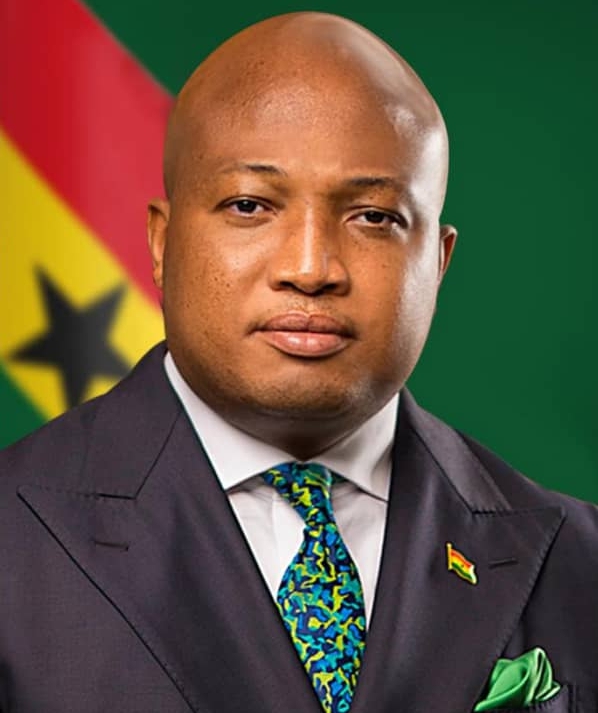
In the immediate aftermath, while others calculated the cost of their silence, Ghana spoke. Foreign Minister Samuel Okudzeto Ablakwa did not stutter. By condemning the U.S. invasion as “unauthorized and unilateral,” Ghana reclaimed its position as the moral heartbeat of the continent.
It was a high-impact opening that balanced the cold, hard logic of international law with the burning moral imperative of Pan-Africanism. We are reminded that constitutional clarity is not a luxury for the powerful, but a shield for the small. To remain silent in the face of such a brazen kidnapping is to sign the death warrant of our own independence.
But courage in the 21st century comes with an invoice. As President John Mahama navigates this storm, the domestic political landscape has fractured into a study of juxtaposition. The opposition speaks of “pragmatic realism,” warning that our vocal defiance puts our trade benefits under the “imperial blade.” They ask: “Can we eat sovereignty when the price of bread is rising?”
Yet, the “magic” of our defense lies in an institution that has evolved beyond the trial-and-error of the old “Gold for Oil” policy. Enter GoldBod (Ghana Gold Board). Institutionalized under CEO Sammy Gyamfi, this mineral powerhouse recorded a staggering GH₵960 million in revenue in 2025. It is no longer just a barter; it is a strategic command of our wealth.

The true decoupling from the dollar, however, is being forged in the furnaces of the Tema Oil Refinery (TOR) and the Sentuo Oil Refinery. For decades, Ghana’s greatest irony was its status as an oil producer that exported crude and begged for finished products back. This “circular poverty” drained nearly $4 billion annually in foreign exchange.
Today, the roar of the restored TOR, processing 28,000 barrels per day, combined with Sentuo’s 40,000-barrel capacity, means Ghana now refines nearly 70% of its own daily demand. By using GoldBod’s reserves to secure local crude, we have bypassed the need for USD in our energy sector.
The results are hitting the streets: while the world reels from the Venezuela crisis, the Chamber of Oil Marketing Companies (COMC) reported a marginal drop in local prices on January 2nd, with petrol at GH¢10.86 and diesel at GH¢11.96.
Critics argue for “strategic silence,” citing the quietude of neighbors as wisdom. But silence is not a strategy; it is a surrender. If we allow the “Eagle” to redefine global engagement today, we cannot complain when its talons reach for our resources tomorrow.
The Venezuelan crisis is a mirror reflecting the fragility of the entire Global South. If a president can be snatched in January, what prevents a “regime change” in Accra by December?
This moment demands a broadening of the national soul. President Mahama and Hon. Ablakwa have chosen the path of the “Black Star”, a path that is lonely and expensive, but undeniably right. They recognize that the “social contract” is not just about fuel prices; it is about national dignity.
Nkrumah’s survival was predicated on the belief that “we face neither East nor West; we face forward.” Today, “facing forward” means looking the world’s only superpower in the eye and declaring that international law is not a buffet to be sampled only when convenient.
The Eagle has landed in Caracas, but the soul of the Black Star remains unbought in Accra. We may pay for our principles, but we walk with our heads higher in the councils of men.
For in the final reckoning, a nation that trades its conscience for a trade deal will eventually find it has lost both.
By Raymond Ablorh