





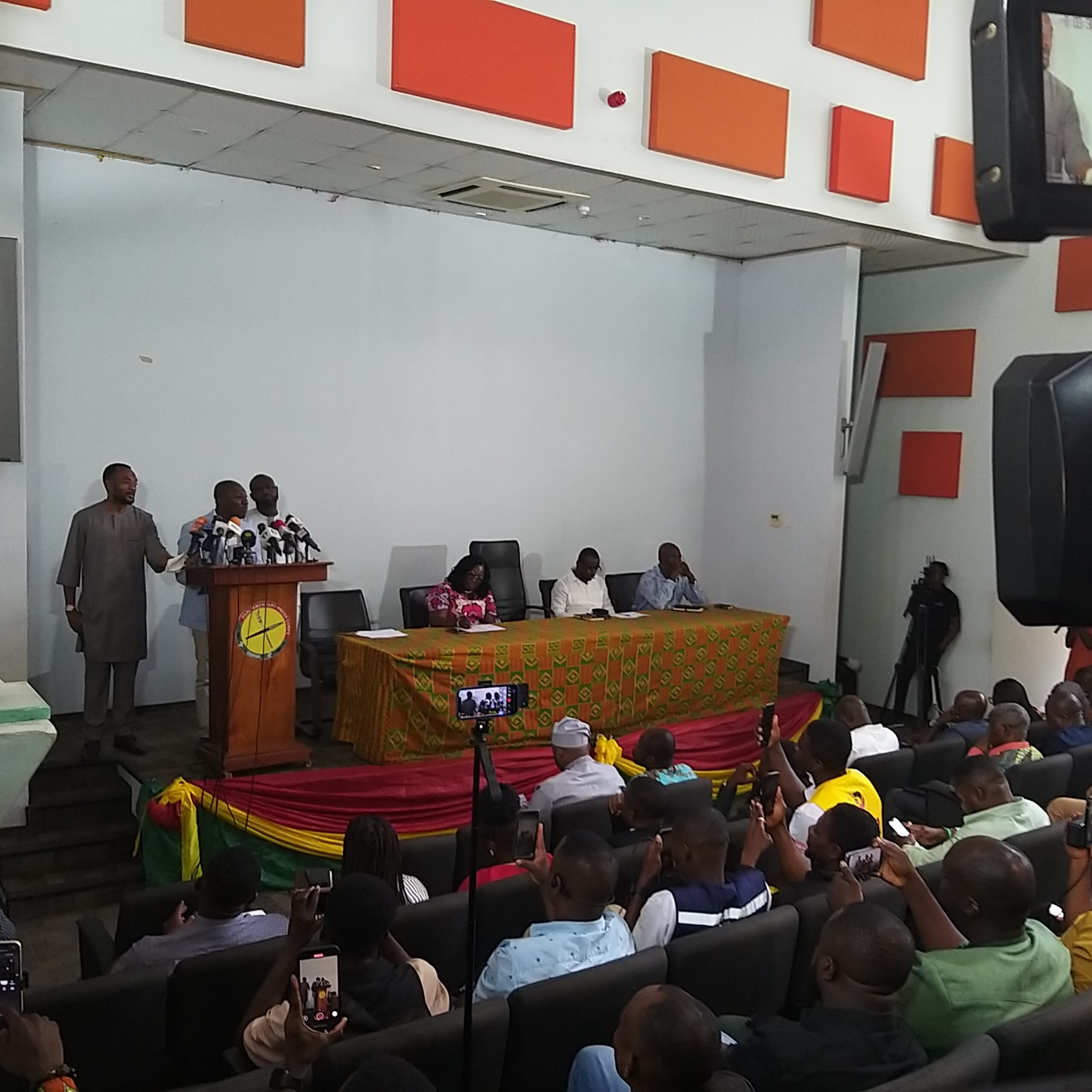
The Minority Parliament has launched a scathing critique of the ruling National Democratic Congress (NDC) government, marking its first-year assessment with sharp accusations and calls for transparency and accountability.
The opposition alleges that the government’s management of the Gold for Reserves programme, a key strategy to bolster Ghana’s foreign reserves, is flawed and potentially damaging the country’s environment and economy.
At news conference in Accra under the theme “Holding Government to Account: A Year of Active and Responsible Minority Scrutiny,” Minority Leader Osahen Alexander Kwamina Afenyo-Markin criticized what he described as the “dual role” of the Ghana Gold Board (GoldBod) as both regulator and operator. He warned that this arrangement is inadvertently encouraging illegal mining activities, known locally as galamsey, which have devastated water bodies and polluted the environment.
“The situation has worsened, and the government has failed to demonstrate tangible commitment in the fight against galamsey,” he stated. “What we see is a PR stunt, focusing on optics rather than substance. The future of our country is at stake.”
Afenyo-Markin questioned whether the Gold Board is effectively distinguishing between legally mined gold and gold sourced through illegal means, raising concerns over the potential for illegal gold to enter the country’s supply chain.
The opposition also raised alarms over financial mismanagement, citing a US$240 million loss reported by the International Monetary Fund (IMF) as of September 2025, linked to the Gold for Reserves programme. He pointed out confusion over responsibility between the Ghana Gold Board and the Bank of Ghana, accusing the latter of failing to protect the country’s funds.
“How can we lose such a huge amount due to exchange rate differences and illegal fees? This could amount to a significant financial loss to the state,” Afenyo-Markin emphasized. He called on the Bank of Ghana to take immediate corrective measures to prevent further losses.
In response to rising concerns, the Bank of Ghana and the Gold Board reportedly agreed to reduce margins for artisanal miners from 15% to around 9.75%, a move the opposition describes as “commendable” but insufficient to stem ongoing losses. A proposed one-month moratorium is also under consideration to allow stakeholders to develop a more sustainable, profitable framework.

The Minority leader announced that his side has filed a motion in Parliament to facilitate broader stakeholder engagement on the programme. “We need transparency, accountability, and the assurance that our resources are being managed in the best interest of the country,” he said.
This critical stance from Ghana’s opposition marks a low point in the ongoing political debate over the country’s resource management policies, with the NPP calling for reforms and greater oversight amid fears that current practices could undermine Ghana’s economic stability and environmental health.