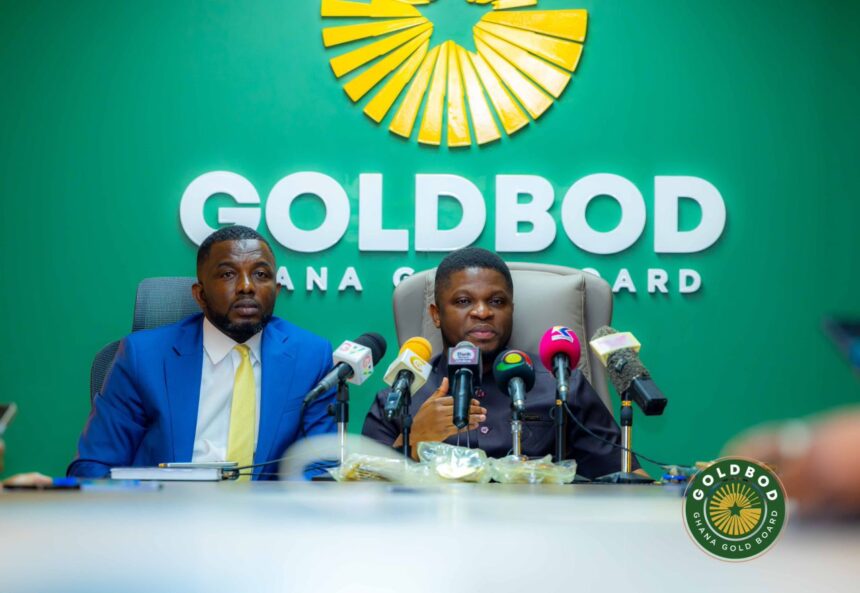
The Minister of Finance has asserted that, since its establishment, the Ghana Gold Board, popularly known as GoldBod, has redefined Ghana’s gold value chain through bold structural and regulatory reforms that are reshaping the small-scale and large-scale mining sectors.


According to the Dr. Ato Forson, the Board has implemented sweeping licensing reforms to promote responsible sourcing, strengthened regulatory oversight across the gold supply chain, and introduced a transparent, competitive pricing framework for licensed miners and gold buyers.
The Minister said the Board has also deployed an efficient gold aggregation system to mobilize gold from all mining regions and intensified the fight against illegal trading and smuggling through a dedicated Task Force, supported by a whistleblower reward scheme.

In paragraph 394 of the Budget statement, the Sector Minister noted that these reforms, combined with the removal of the 1.5 percent withholding tax on unprocessed small-scale gold in the 2025 Budget, have produced unprecedented results and that “Between January and October 2025, small-scale gold exports surged to a record 81.7 tonnes, valued at approximately US$8.1 billion, the highest in Ghana’s history.
For the same period, large-scale gold exports amounted to 74.1 tonnes, with an estimated value of US$6.6 billion. For the first time, small-scale gold exports have exceeded large-scale production in both volume and value, underscoring the effectiveness of the policy and regulatory reforms”.
He said, to deepen the local gold economy, “the Gold Board has partnered the Bank of Ghana to support reserve accumulation. So far, 137.7 kilograms of gold from large-scale producers have been purchased and added to Ghana’s official reserves.
Ato Forson mentioned that these inflows have bolstered foreign exchange reserves, improved the balance of payments, and provided critical stability for the Ghana cedi, directly supporting the broader economic reset agenda.
The Finance Minister in paragraph 396. Added that these achievements affirm the GoldBod’s strategic importance to Ghana’s economic transformation. The Board remains committed to responsible sourcing, environmental sustainability, and full supply-chain traceability.
“Beginning in 2026, it will roll out a comprehensive Gold Traceability System, ensuring every gram of gold purchased can be traced to its verified, licensed, and environmentally compliant origin”.
In line with Government’s industrialization and value-addition drive, the 2025 Budget in paragraph 397 submitted that the GoldBod has been tasked to spearhead Ghana’s transition from the export of raw gold to refined gold. Working closely with the Bank of Ghana, it is developing partnerships with local refineries to expand domestic refining capacity and anchor the local gold value chain. 398. Additionally, plans are underway to establish a “Gold Village”, a continental hub for gold jewellery design, manufacturing, and export, to position Ghana as Africa’s centre for high-value gold craftsmanship.
“Mr. Speaker, Government remains resolute in supporting the Ghana Gold Board’s efforts through targeted incentives, investor partnerships, and a favourable business environment to maximize domestic value addition in the 2026 fiscal year and beyond”, he noted.