







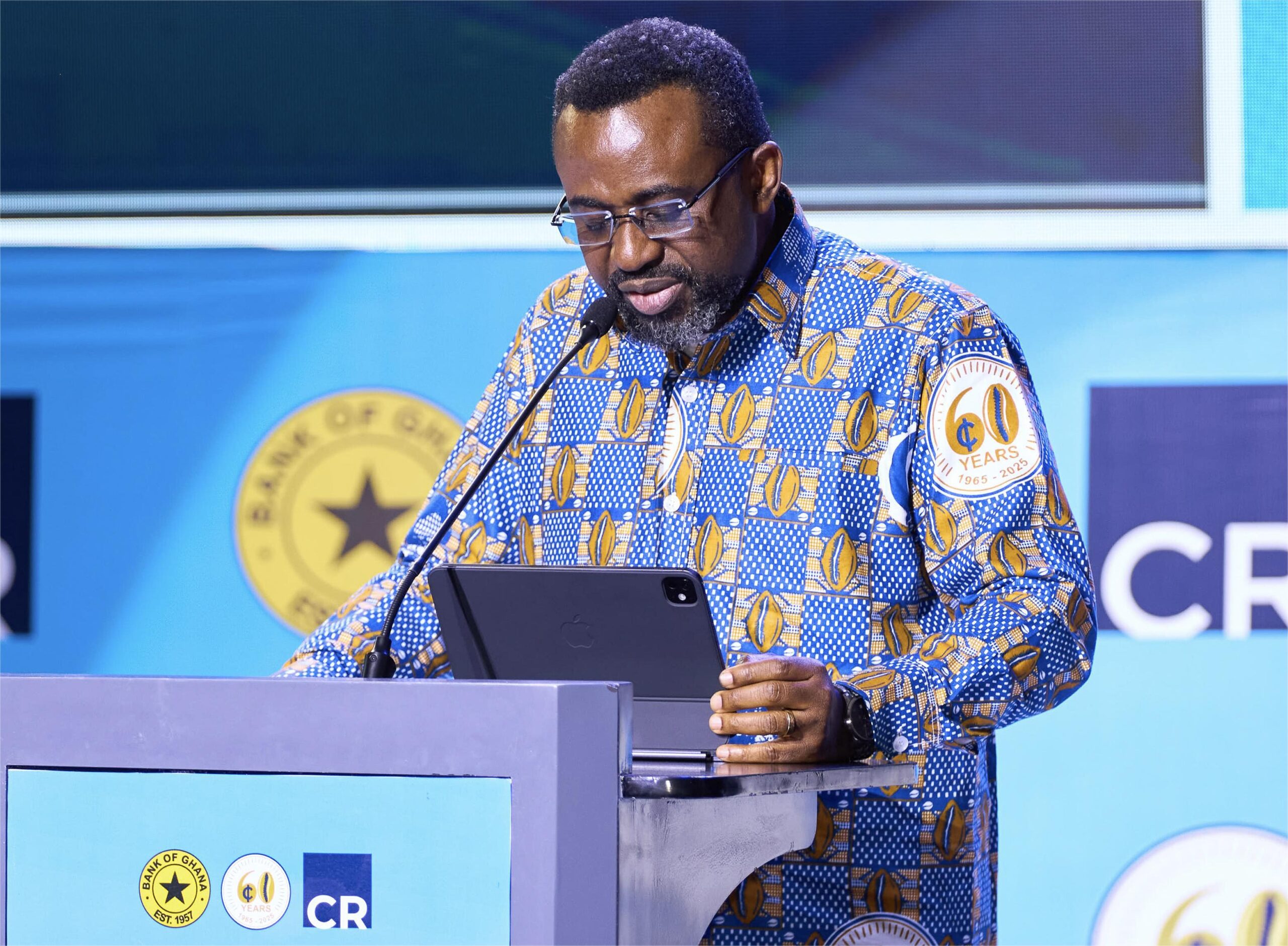
The Governor, Dr. Johnson Pandit Asiama has emphasized that the next generation of Ghanaians will relate to the Cedi in transformative ways, reflecting the dynamic evolution of money in a digital age. Speaking at Cedi@60 International Currency Conference in Accra On 18 November 2025, the BoG Boss highlighted how young Ghanaians are growing up in a world where instant value, seamless digital interactions, and heightened expectations for transparency and accessibility are the norm.

As the landscape of money shifts globally, Dr. Asiama said Ghana is positioning itself to adapt to these changes through innovative policies and technological advancements, “the rise of digital payments, Central Bank Digital Currencies (CBDCs), and tokenized financial instruments are reshaping how Ghanaians earn, save, trade, and secure their futures. These developments bring new opportunities for financial inclusion but also pose challenges related to trust, interoperability, privacy, and security”.
The conference underscored the importance of steady leadership and a cohesive strategy to ensure the Cedi remains relevant and trustworthy amid these rapid changes. The BoG reaffirmed its commitment to modernizing payment systems, including the rollout of the e-Cedi, designed to offer secure and interoperable digital value that aligns with Ghana’s unique realities and global best practices.
A key focus is strengthening the physical and digital dimensions of money, recognizing the continued importance of cash for inclusion and resilience while expanding digital channels for convenience and reach. Efforts to re-anchor the Cedi as Ghana’s primary medium of exchange are ongoing, aimed at countering pressures towards dollarization and preserving economic sovereignty.

Furthermore, Ghana is engaging actively in the global dialogue on the future of currency, drawing on international experiences in payments innovation, financial inclusion, and regulatory reform. The conference brought together a diverse ecosystem of central bankers, payment specialists, technology providers, academics, and industry leaders, highlighting the interdisciplinary nature of modern currency management.

As the country navigates these transformative times, the BoG stressed that strong economic stewardship, institutional stability, and international collaboration are critical to maintaining the value and trust in the Cedi. The future relationship between Ghanaians and their currency will be shaped by innovation, trust, and leadership—factors that will influence Ghana’s economic resilience and growth in the years ahead.