


The Afram Plains has existed for decades not merely as a geographic expanse, but as a silent, sequestered island of unfulfilled potential within the heart of Ghana.
The announcement by Roads and Highways Minister, Kwame Governs Agbodza, regarding the imminent signing of the contract for the “biggest and longest bridge” in the region is more than a line item in a national budget; it is a declaration of liberation for a people long shackled by the tyranny of distance.
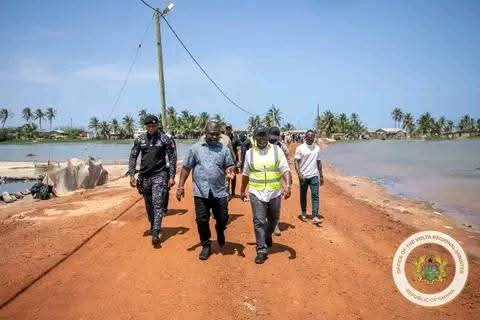
For too long, the Afram River has acted as a liquid wall. It is a barrier that has whispered to the farmer, the trader, and the student that their ambitions were bound by the ferry’s schedule and the water’s whim. To the country, this bridge represents the suturing of a long-open wound in our national infrastructure. It is a testament that no region is too remote to be reached by the hand of progress.
Infrastructure is the skeleton upon which the flesh of a nation’s economy is built. By connecting the Afram Plains to the mainland with steel and stone, we are not just moving cars; we are moving a nation. We are asserting that the constitutional right to freedom of movement is hollow if the physical means to exercise it are denied by the waters of indifference.
Regionally, this project transforms the Eastern corridor from a logistical dead-end into a pulsing artery of commerce. The Afram Plains has earned the moniker “the breadbasket of Ghana,” yet for years, that basket has been riddled with holes. Tons of yam and maize rot at the riverbanks while farmers watch the horizon for a ferry that may never come.
This bridge converts potential into profit, turning a grueling, multi-day journey into a predictable, hour-long transit. Justice, in a developmental sense, is the equitable distribution of opportunity. This bridge is the physical manifestation of that justice, ensuring that the geography of one’s birth no longer dictates the ceiling of one’s prosperity.
To the communities of the Plains, this bridge is a lifeline in the most literal sense. Humanise the data, and you find the expectant mother who no longer has to pray the ferry is docked when her contractions begin. You find the teacher who will no longer view a posting to the Plains as a sentence of exile, but as a viable professional opportunity.
Society is held together by the ease with which we interact. When a river divides a people, it divides their culture, their marriages, and their shared future. This bridge is a social adhesive. It allows for the seamless flow of ideas and the strengthening of communal bonds that have been strained by the friction of isolation.
As the aphorism goes, a road may lead you to the market, but a bridge brings you home. This structure will do more than carry trucks; it will carry the weight of broken promises finally made whole. It is a monument to the idea that every Ghanaian, regardless of their coordinates, deserves the dignity of access.
Ultimately, the measure of this project lies in the eyes of the individual. For the young entrepreneur in Donkorkrom, the bridge is a portal to the markets of Accra and the world beyond. For the elderly, it is the comfort of knowing that specialised healthcare is now a drive away, rather than a perilous expedition across the water.

We must recognise that every hour spent waiting at a ferry crossing is an hour stolen from the productivity of a citizen. This bridge restores that time and, with it, restores hope. It signals to the people of the Afram Plains that they are not a footnote in the Ghanaian story, but a central, indispensable chapter.
The signing of this contract is a high-impact moment in our contemporary history. It is a juxtaposition of our difficult past against a fortified future. While the skeptics may see only debt and dust, the visionary sees a redefined map of Ghana where the Plains are no longer a destination of last resort, but a hub of first choice.
The bridge is the metaphor, but the integration is the reality. As the first pillars are driven into the riverbed, let us remember that we are not just anchoring a road; we are anchoring the destiny of a million souls to the bedrock of a modern, connected, and truly United Ghana. This is the legacy of a bridge that refuses to let a people be forgotten.
Raymond Ablorh