







Introduction
Beyond sweeping national policies, meaningful climate action must also take root in our immediate environments; the public spaces, institutions of governance, the halls of knowledge. Transforming these everyday spaces offer a practical and visible pathway to a greener future.
The establishment of green spaces within public institutions is emerging as a critical strategy in this regard. Such initiatives create oases of well-being that enhance physical and mental health foster a culture of environmental stewardship, and model sustainable practices for the broader community. They also contribute directly to climate resilient by improving air quality, reducing urban heat effects and promoting diversity.

By embedding sustainability into the very spaces where decisions are made, learning occurs, and public service is delivered, institutions can drive tangible progress toward global sustainability goals while inspiring citizens to embrace environmentally responsible living.
In an era defined by the urgent imperative for climate action and sustainable development, nations across the globe are exploring innovative and practical ways to integrate environmental consciousness into the very fabric of their societies.
The transformation of our public spaces, including governmental buildings and educational institutions, offers a more practical and immediate pathway to achieving the Sustainable Development Goals than relying solely on broad national policies. While policy frameworks are essential, real and visible changes often begin within the environments people interact with daily. By integrating green spaces into public institutions, societies create vital hubs of wellness that promotes physical and mental well-being, strengthen environmental stewardship, and model sustainable practices.
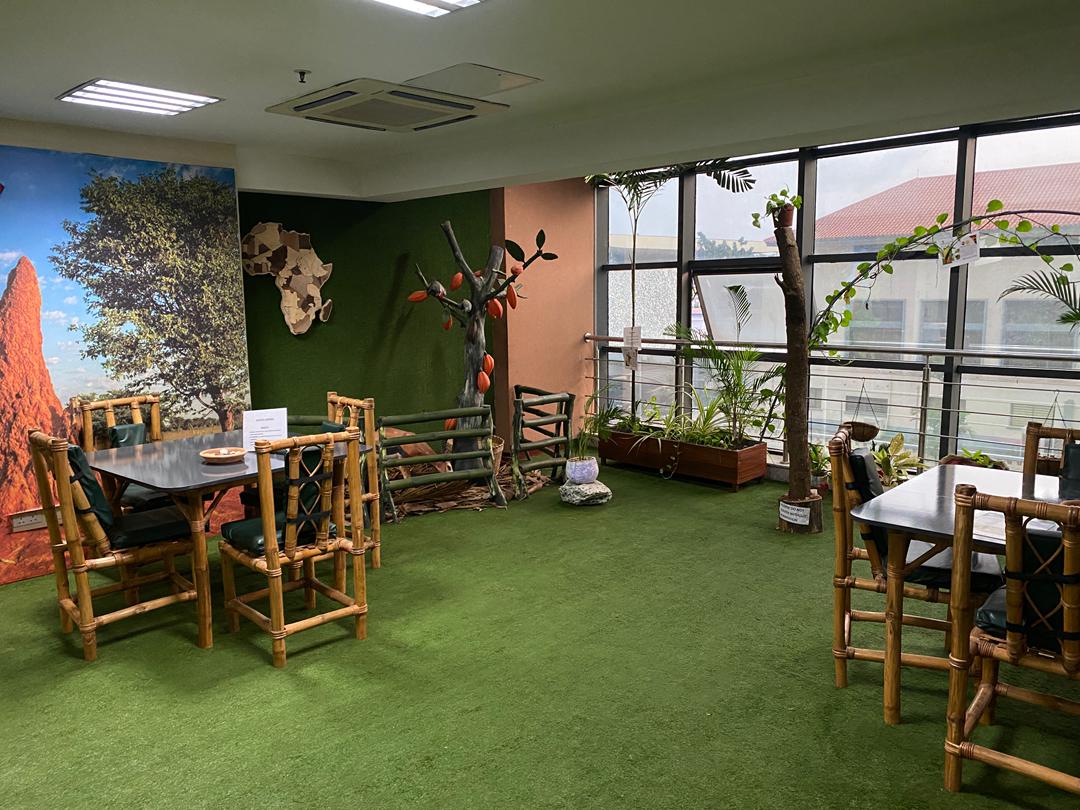
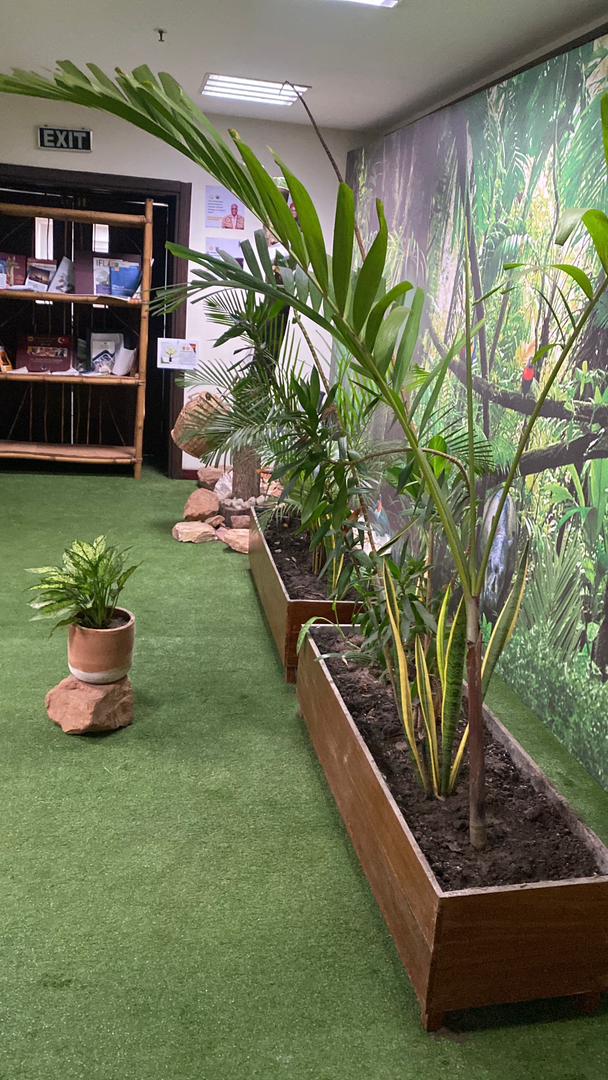
The Green Library at the Parliament of Ghana stands as Ghana’s pioneering example of this transformative movement. Initiated in 2022 and officially launched in 2024, the project represents far more than a redesign of a traditional library space. It embodies a forward-looking institutional commitment to sustainability and demonstrates how public institutions can meaningfully integrate environmental responsibility into their operational culture.
This article, therefore, explores the significance of the Green Library at the Parliament of Ghana, highlighting how green space enhance the social, environment, and institutional value of public space. It further argues that expanding green spaces within public institutions is essential to advancing the United Nations Sustainable Development Goals and fulfilling the aspirations of the African Union Agenda 2063. By aligning local institutional initiatives with global and continental development frameworks, such projects demonstrate that sustainability is not merely an abstract policy objective, but a practical and achievable commitment.
A Global Movement Towards Greener Institutions
The global movement toward institutional sustainability has gained significant momentum, with public institutions increasingly integrating environmental responsibility into their core operations. As central arenas for national debates, representation and lawmaking, parliaments in particular carry both symbolic and practical responsibility to lead by example. Their credibility in advancing environmental legislation is strengthened when sustainable practices are visibly embedded within their own institutional frameworks.
At the international level, the Inter-Parliamentary Union (IPU) has played a pivotal role in advancing this transformation. In March 2023, the IPU launched its “Parliaments for the Planet” campaign to encourage legislative bodies worldwide to reduce their carbon footprints while accelerating climate action. [1]. Central to the initiative is the “10 Actions for Greener Parliaments” framework, which provides practical guidance on measures such as emission monitoring, sustainable procurement policies, digital innovation, energy efficiency, and the institutionalisation of environmentally responsible practices. [2].
Parallel to the greening of the parliamentary institutions is a growing transformation within the knowledge and information sector. The International Federation of Library Associations and Institutions (IFLA) has been a strong advocate of the green library movement. Sustainability featured prominently at its 2023 World Library and Information Congress held in Rotterdam, underscoring libraries’ evolving role as champions of environmental awareness and responsible resource management. [3]. Through the annual IFLA Green Library Award, the organisation recognises libraries that successfully integrate sustainable practices into their infrastructure, services and community engagement initiatives. [4].
These global efforts reflect a broad consensus: public institutions must internalise sustainability within their own operations if they are to effectively promote environmental stewardship and climate-conscious policies. By aligning institutional practice with policy advocacy, parliaments and libraries alike reinforce the principle that leadership in sustainability begins at home.
Spotlight: The Parliament of Ghana’s Green Library
The Green Library project positions the Parliament of Ghana as a distinctly African institution operating confidently within the broader international sustainability framework. It demonstrates how local innovation can meaningfully contribute to global environmental discourse while reflecting national identity and priorities.
Officially opened to visitors on 30th October, 2024, the Green Library serves as an eco-friendly research and knowledge hub within a public institutional setting. The initiative was conceived by stakeholders committed to advancing the United Nations Sustainable Development Goals, which simultaneously address the evolving information and research needs of Parliament.
Beyond functioning as a repository of parliamentary resources, the Green Library was designed to foster environmental awareness, encourage sustainable practices and model responsible institutional behaviour. It integrates ecological considerations into its design and operations, thereby aligning parliamentary research services with broader environmental objectives. In doing so, the project illustrates how public institutions in Africa can contribute meaningfully to global sustainability efforts while strengthening their core mandates.
The space functions as a multi-dimensional initiative implemented through strategic partnerships and guided by clearly defined targets. As an environmental sustainability space, it serves as a trailblazer in the creation of environmentally responsive institutional environments within Ghana’s public sector.
The Green Library’s core objectives include raising awareness on climate change, promoting best practices in waste management, serving as a knowledge and research hub for climate legislation and facilitating collaboration among organisations committed to combating climate change. In this regard the Green Library operates not only as an information centre, but also as convening platform for dialogue, research and policy innovation within the Parliament of Ghana.
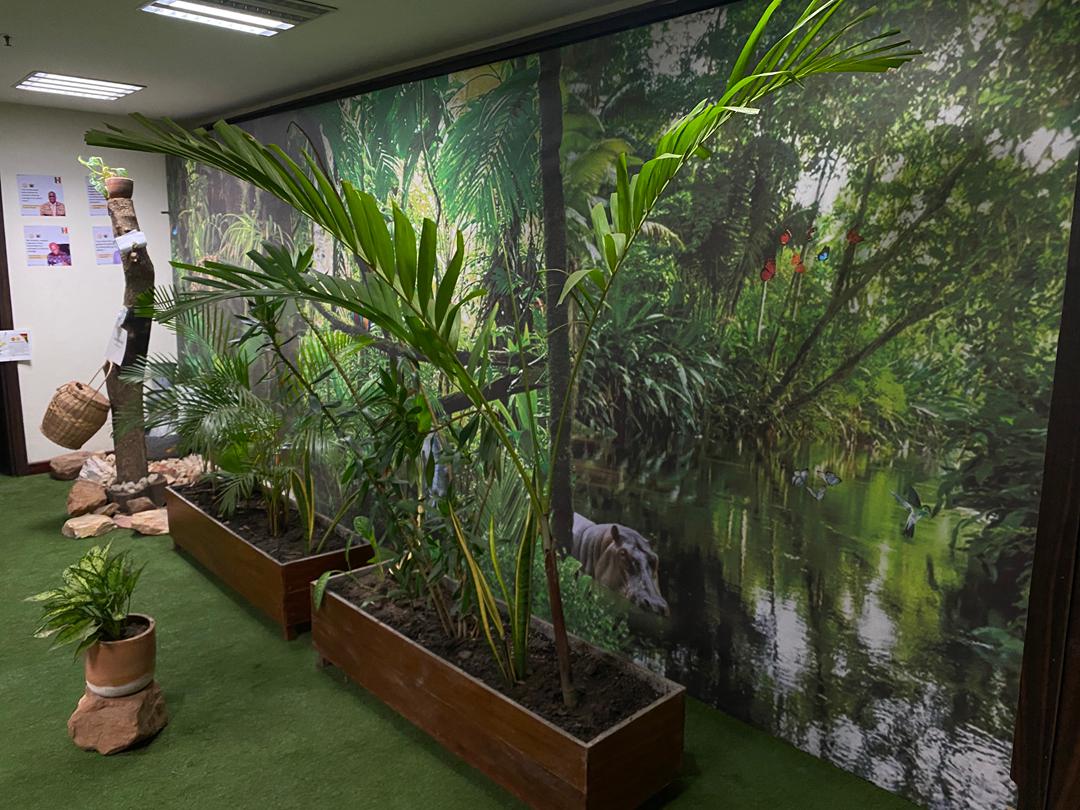
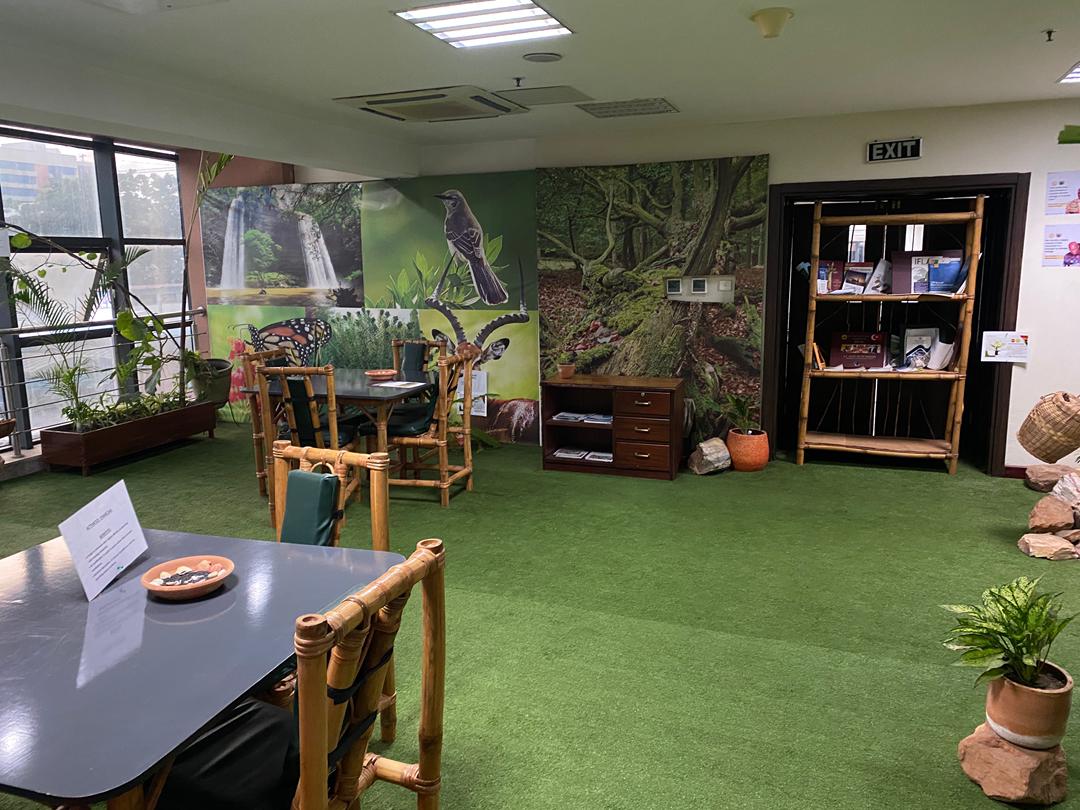
The space integrates sustainable design elements such as natural lighting, indoor plants, green areas, and expanded e-resources to encourage paperless acquisition and reduce environmental impact. A dedicated audiovisual system screens documentaries on global environmental protection practices, reinforcing continuous learning and awareness. The practical application of the 3R principles of Reduce, Reuse and Recycle is embedded in its operations, demonstrating that sustainability is not merely conceptual but actively practiced.
By creating a calm, healthy, and inspiring environment, the Green Library enhances the productivity and well-being of lawmakers and staff. It illustrates that environmental sustainability and effective governance are mutually reinforcing rather than competing priorities.
Beyond the library itself, Parliament’s annual participation in Green Ghana Day, through tree-planting initiatives, has strengthened institutional commitment to environmental stewardship and set a visible example for the nation. Through such actions, Parliament positions itself not only as a law-making body, but as a practical leader in advancing sustainable development.
The Ripple Effect: Why Green Public Spaces Matter
| Benefit Category | Description | Relevant SDGs |
| Health & Well-being | Green spaces provide scientific evidence which demonstrates their ability to decrease stress levels and anxiety symptoms and depression disorders. The facilities promote active movement which helps people fight their chronic health conditions and enhances their mental and physical health throughout their communities. [9] | SDG 3 |
| Sustainable & Resilient Cities | As urban areas expand their population base public green spaces become crucial for maintaining both community life and social interactions and outdoor activities. The aspect functions as a fundamental element which guarantees that all people will have equal access to urban planning. [10] | SDG 11 |
| Climate Action | Urban vegetation functions as a natural carbon sink which captures atmospheric CO2 emissions through its presence in city environments. The green areas of the city help decrease the urban heat island effect which results in reduced energy requirements for cooling and better climate resistance. [10] | SDG 13 |
| Biodiversity & Ecosystems | Urban green spaces provide essential environments which enable native species to thrive. These spaces include essential habitats which protect bird populations and pollinators and bolster biodiversity conservation efforts throughout urban areas. [11] | SDG 15 |
The expansion of green areas within public institutions, such as the library of the Parliament of Ghana, serves a purpose far beyond aesthetic enhancement. While visually appealing spaces contribute to institutional prestige, the integration of green infrastructure is grounded in scientific evidence and delivers measurable, sustainable outcomes that directly advance the objectives of the UN Sustainable Development Goals.
Research consistently demonstrates that green infrastructure projects generate tangible benefits. They improve air quality, regulate temperature, reduce noise pollution, and enhance biodiversity within urban environments. In addition, access to green spaces has been linked to reduced stress levels, improved mental health, and increased productivity. These are outcomes that are particularly relevant within high-pressure institutional settings such as parliaments.
Beyond individual well-being, green infrastructure strengthens environmental resilience. It contributes to climate adaptation by mitigating urban heat island effects, managing stormwater runoff, and promoting sustainable resource use. These interventions not only protect ecosystems but also improve citizens’ overall quality of life.

A Vision for Ghana and Africa: Connecting to Agenda 2063
The Green Library initiative reflects a strong community-driven effort that aligns with both national and continental development frameworks. At the national level, it directly supports Ghana’s environmental priorities, including the National Climate Change Policy (NCCP) and the country’s commitment under the Paris Agreement commitments. By functioning as a climate knowledge and research hub within the Parliament of Ghana, the library equips legislators with credible information to craft stronger environmental laws and to more effectively monitor government progress toward national climate targets.
At the continental level, the initiative aligns closely with African Union Agenda 2063, Africa’s long-term strategic framework for inclusive growth and sustainable development. In particular, it advances Aspiration 1 which envisions “A prosperous Africa based on inclusive growth and sustainable development” and calls for environmentally sustainable and climate-resilient economies and communities. [13].
The Green Library together with the broader movement to expand green public spaces, offers tangible proof that these aspirations are achievable. By integrating sustainability into governance infrastructure and knowledge systems, Parliament demonstrates a practical commitment to environmental stewardship and the preservation of Africa’s natural resources. In doing so, it signals that sustainable development is not merely a policy ambition, but an actionable institutional responsibility shaping the continent’s future.
A Call to Action: Sowing the Seeds of Change
The Green Library at the Parliament of Ghana stands as both a demonstration of s successful implementation and a compelling call to action. The initiative provides a replicable model that can guide Ghanaian and African public institutions in cultivating sustainable leadership and embedding environmental responsibility within their operations. Realising this vision, however, requires a coordinated effort across all sectors of society.
Public infrastructure, including schools, hospitals and administrative buildings, must integrate green spaces as fundamental components, not optional embellishments. Policymakers and governments should prioritise dedicated funding for green infrastructure, recognising it as an essential public infrastructure that delivers measurable social, environmental and economic benefit.
Civil Society Organizations play a critical role in driving this transformation. By raising public awareness, advocating for sustainable practices, and fostering partnerships, much like those that enable the success of the Green Library, they help create the social and institutional momentum necessary for change.
The private sector contributes complementary resources, providing financial support, innovative environmental construction technologies, and programmes that expand access to public green spaces
At its core, the initiative demonstrates that nature possesses simple yet profound power; it can transform public institutions into systems that promote well-being, resilience and sustainability. The Parliament of Ghana has planted a seed; it is now the responsibility of all stakeholders, such as the government, civil society, the private sector and communities, to nurture this vision and cultivate a greener, healthier, and more prosperous future for everyone.
References
[1] Inter-Parliamentary Union. (n.d.). Parliaments for the Planet. Retrieved from https://www.ipu.org/parliaments-planet [2] Inter-Parliamentary Union. (2023). 10 actions for greener parliaments (and those who work in them). Retrieved from https://agora-parl.org/sites/default/files/agora-documents/Ten%20actions%20brochure-EN_LR.pdf [3] IFLA. (2023). Libraries Empowering Climate Action: Ideas generated during WLIC 2023 Climate Session. Retrieved from https://www.ifla.org/news/libraries-empowering-climate-action-ideas-generated-during-wlic-2023-climate-session/ [4] IFLA. (n.d.). IFLA Green Library Award. Retrieved from https://www.ifla.org/ifla-green-library-award/ [5] Parliament of Ghana. (2024, October 30). The information Services Division of… [Facebook post]. Retrieved from https://www.facebook.com/Parliament.of.Ghana/posts/the-information-services-division-of-parliament-today-started-a-weeklong-informa/888327390072094/ [6] International Water Management Institute (IWMI). (2024, October 30). International Water Management Institute (IWMI)’s Post [LinkedIn post]. Retrieved from https://www.linkedin.com/posts/iwmi_onecgiar-greenlibrary-activity-7259086988518019073-XgNB [7] Parliamentary Network Africa. (n.d.). Boosting Renewable Energy Investments in Africa: The Important Role of African Legislators. Retrieved from https://parliamentafrica.com/boosting-renewable-energy-investments-in-africa-the-important-role-of-african-legislators/ [8] Parliament of Ghana. (2024). The Green Library: Advancing Climate Action Through Knowledge. [Internal Document provided by user].
[9] The Trust for Public Land. (n.d.).The Power of Parks to Promote Health. Retrieved from https://www.tpl.org/parks-promote-health-report [10] United Nations. (n.d.). Goal 11: Make cities and human settlements inclusive, safe, resilient and sustainable. Department of Economic and Social Affairs. Retrieved from https://sdgs.un.org/goals/goal11 [11] IUCN. (2023, May 22). Embracing biodiversity: Paving the way for nature-inclusive cities. Retrieved from https://iucn.org/story/202305/embracing-biodiversity-paving-way-nature-inclusive-cities [12] ClientEarth. (n.d.). Ghana National Climate Change Policy. Retrieved from https://www.clientearth.org/media/p13faarf/national-climate-change-policy-ext-en.pdf [13] African Union. (n.d.). Aspiration 1. Agenda 2063: The Africa We Want. Retrieved from https://au.int/en/agenda2063/aspiration1
Author : Jessica Adjeley Mensah
Parliamentary service, Library
0550861086