





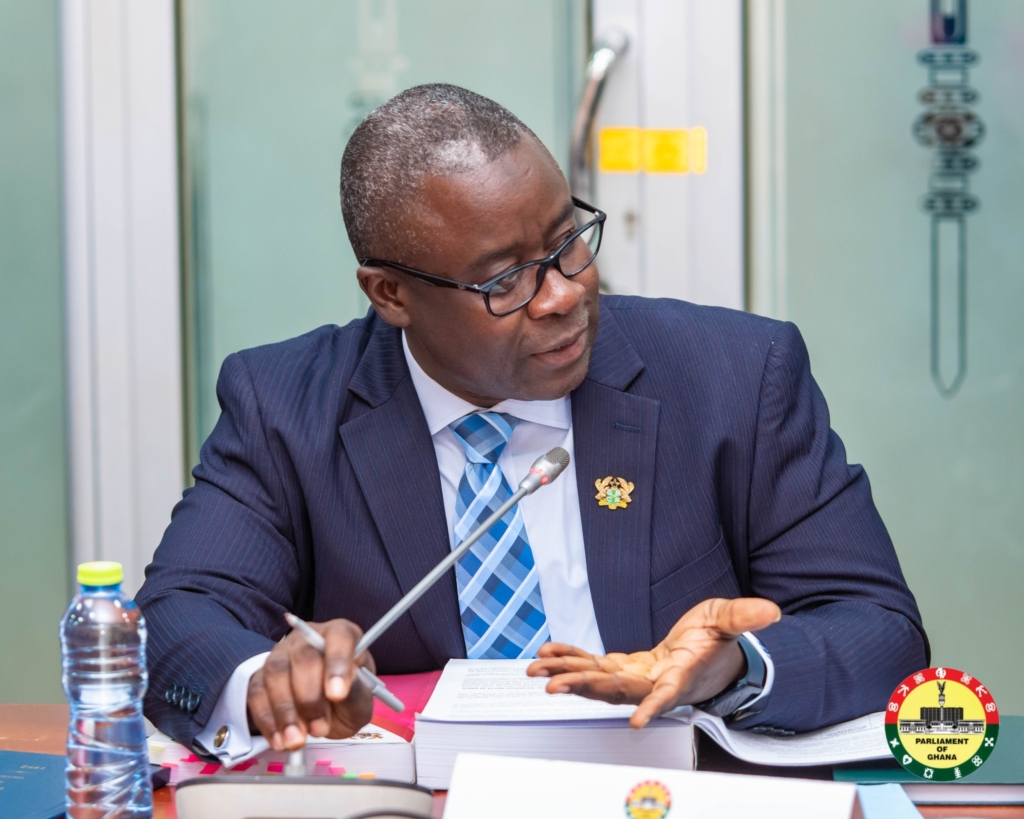
Agriculture is being positioned as the frontline driver of Ghana’s economic transformation. In a recent interview, Dr Godfred Seidu Jasaw, MP for Wa East and Chairman of Parliament’s Agriculture and Cocoa Affairs Committee, reiterated that the government’s “Agric for Economic Transformation” agenda is key to uplifting the lives of millions. He pointed out that about 72% of Ghana’s population lives in rural areas and depends directly on agriculture.
Strategically shaping agricultural policies, he argued, means delivering relief and opportunity to that vast majority, a move with enormous significance at the national level.
Under this agenda, the government has rolled out several flagship programmes including the Feed Ghana programme.
As part of Feed Ghana, the focus is on crop development, with cereals like rice and sorghum selected to be cultivated at scale, set to become “arrowheads” in Ghana’s food production drive.
Meanwhile, the government is positioning the yam sub-sector for export, seeing it as a potential foreign-exchange earner as well as a means of rural job creation. To support this, infrastructure measures have already begun: a bridge is being constructed to improve the movement of produce between the Volta Region and the northern areas via Dambai.
Beyond staples and yams, the government has earmarked oil palm as the lead crop in its tree-crop development programme. Under the newly unveiled National Policy on Integrated Oil Palm Development (2026–2032), the state is committing substantial resources to revive and modernise the oil-palm industry. According to the 2026 budget proposals, a dedicated GH¢ 6.9 billion Oil Palm Finance Window will support out-grower schemes, nurseries, land-bank activation, long-term financing, and investments in local processing and value addition.

In parallel, the government has committed to mobilising a US$ 500 million long-term financing facility in collaboration with development partners to back the rehabilitation and expansion of oil-palm plantations across 100,000 hectares. This bold plan, according to budget documents, aims to convert Ghana’s “red gold” into a pillar of rural prosperity, industrial growth, job creation, and export-led value addition.
Dr. Jasaw emphasised that this is a conscious, strategic effort, not piecemeal interventions. By aligning crop-development programmes, infrastructure investment, financing windows and value-chain policies, the government intends to transform agriculture from subsistence farming into a comprehensive, modern agro-industrial enterprise.
He believes that with the right policies, funding, and institutional support, the agriculture sector can indeed serve as the arrowhead of Ghana’s economic transformation agenda, delivering growth, food security, and livelihoods for millions.