Ahmed Ibrahim, the Minister for Local Government, Chieftaincy and Religious Affairs, has noted with grave concern that the inadequate sanitation situation in Ghana is costing the country dearly.


He submitted that “the Ghana Health Service estimates that poor sanitation contributes to over 25% of outpatient cases, including diarrhoea, typhoid, cholera, and intestinal worms. Every year, diarrhoeal diseases alone kill more than 5,000 children under five, a figure that should be zero in a country like ours”.
He said, “Improper disposal of faecal sludge is contaminating water bodies”, and uncontrolled disposal of faecal sludge remains a major challenge, contaminating water bodies across urban areas 2023 assessment by the Water Resources Commission revealed faecal coliform contamination in over 60% of surface water samples in water basins, primarily due to inadequate sanitation practices.

The 2023 Water Resources Commission assessment reported faecal coliform contamination in over 60% of surface water samples in water basins in urban areas, mainly due to poor sanitation.
As far back as 2012, the World Bank estimated that Ghana loses 290 million US Dollars annually due to poor sanitation. This includes health care costs, productivity losses, pollution clean-up costs and tourism potential losses
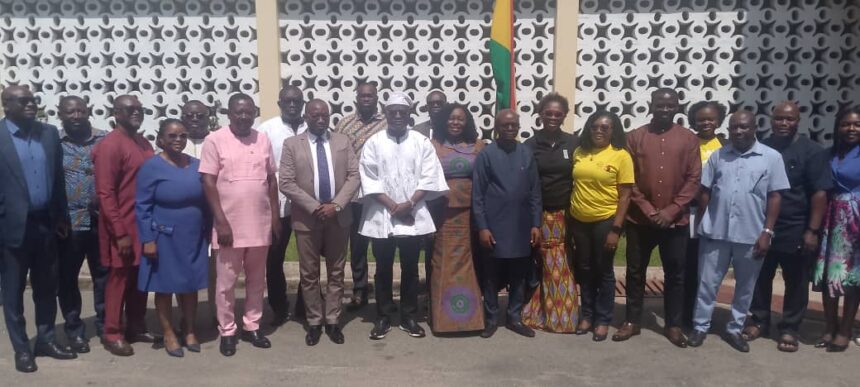
Speaking at the Occasion of the commemoration of 2025 World Toilet Day held on Wednesday, 19th November 2025, however, added that “if we must achieve Toilet for All, then we must transform our approach. I am quick to add that the story of sanitation in Ghana is not a story of failure but a story of slow but steady progress, of lessons learned, and of enormous potential waiting to be unlocked”.
Addressing the challenge, officials emphasized that Ghana’s sanitation journey is not a story of failure but one of slow progress, lessons learned, and immense potential. They called for a renewed sense of urgency, collective responsibility, and unwavering political support to transform sanitation access across the country.
He also called for accelerated action, collective responsibility, and unwavering political support, which I am ready to provide.
“Let us resolve with a renewed sense of urgency to commit to making our communities cleaner, safer, and healthier. Let us work together-government, private sector, civil society, chiefs, households, and development partners to ensure that by the next World Toilet Day, Ghana would have taken the needed steps towards universal access to safe sanitation”, he said.