







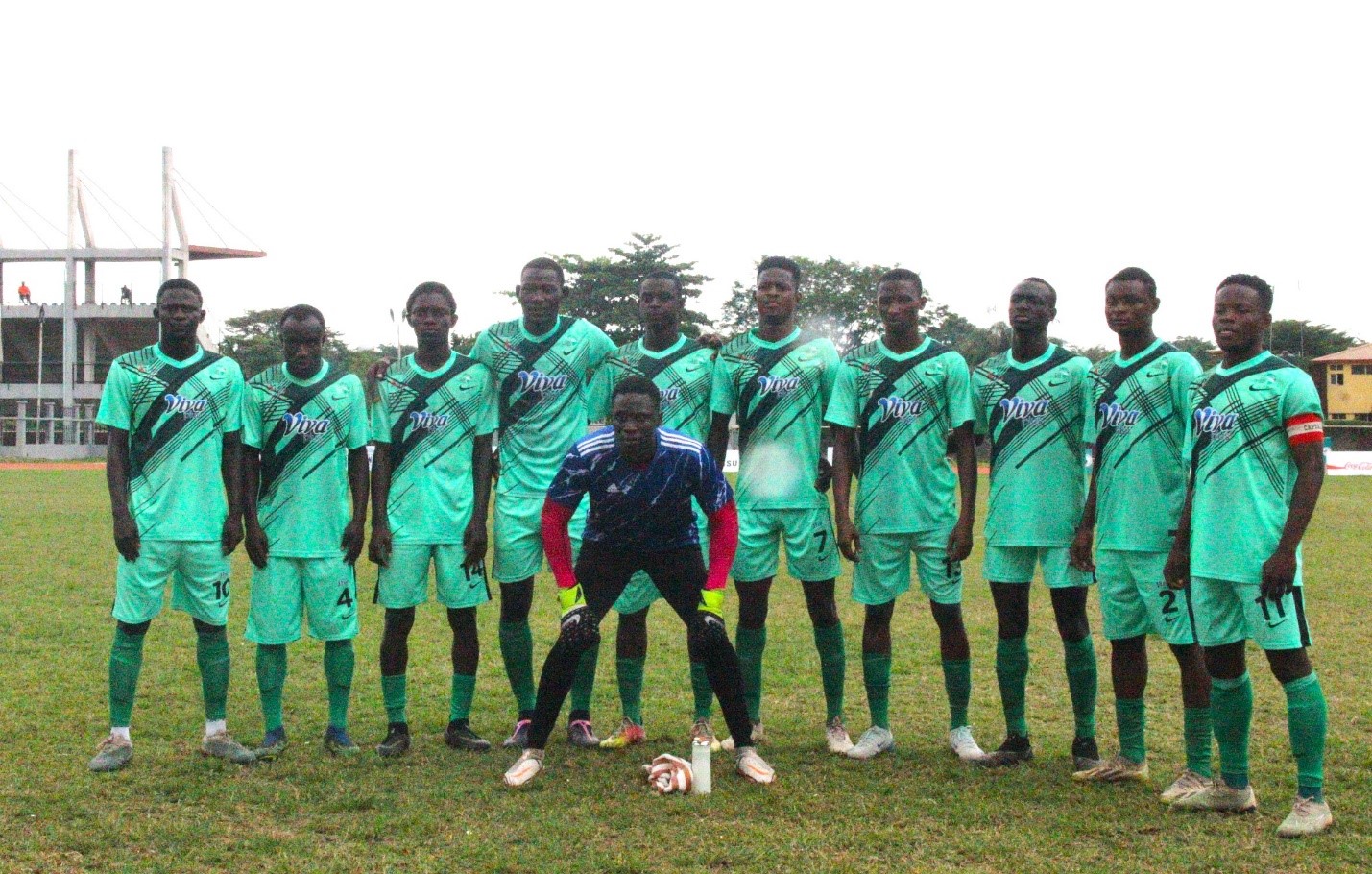
The University for Development Studies (UDS) has etched its name in history as champions of the 2025 FISU World University Football Games after a spirited campaign in Dalian, China.
This victory was not just a sporting milestone; it reflected the strength and resilience symbolized by the baobab tree on the university’s crest. Just as the baobab stands deeply rooted and unshaken by storms, UDS has shown that Ghanaian football can also grow tall and withstand global challenges when its foundations are strong.
To better appreciate this achievement, it is worth looking at how universities and schools have shaped world football. For example, Didier Drogba sharpened his skills through France’s academic football system before conquering Europe. Similarly, in the United States, Clint Dempsey and Brian McBride developed through NCAA college football before earning international acclaim.
In Asia, Park Ji-sung began at Myongji University in South Korea before making history at Manchester United. These stories clearly show that education-based football systems can produce stars of global renown.
Turning to Ghana, the lesson becomes even clearer.
The country once thrived on football pipelines that began in primary and secondary schools. Inter-school and inter-college competitions uncovered talents who later dominated on the world stage. Abedi Pele and Michael Essien, for instance, were discovered in these school settings before moving into professional football and achieving international success.
However, in recent years these competitions have weakened, leaving gaps in talent discovery and development.
This is why the UDS triumph is so significant. It proves that the tertiary level can play a powerful role in football growth when given the right attention.
Even with limited resources, UDS rose above its rivals and conquered the world. Much of the credit goes to the university’s sports management team, whose planning and dedication turned potential into performance. Moreover, the government’s effort in positioning UDS as the flagship university of Northern Ghana provided visibility and pride, ensuring that Ghana’s flag flew high in China.
Therefore, the message for the Ghana Football Association and administrators is clear. If Ghana wants a stronger football future, it must rebuild the pathway from the ground up.
This means investing in primary schools, revitalizing secondary school competitions, and strengthening tertiary football programs, before connecting them to the professional level. Such a system would not only expand the talent pool but also allow young players to combine academics with sport, securing their futures both on and off the field.

In this light, UDS’ crown as 2025 FISU champions should not be seen as an isolated success. Rather, it should be embraced as a blueprint for football development in Ghana. The next football icon may not come from a premier league club but from a school field or university pitch, if the right structures are restored.
Ultimately, reconnecting education with football offers Ghana the chance to build a sustainable system that blends academic achievement with sporting excellence. UDS has already shown the way, and now the responsibility lies with football leaders, managers, and policy makers to nurture this vision.
As the baobab tree on the UDS crest connotes strength, resilience, and nourishment, so too must Ghana’s football structures be firmly rooted. If the nation waters this seed, it will one day grow into a forest of champions.
By: Curtice Dumevor public health expert, and Edzorna Francis Mensah