









The Deputy Chief Executive in charge of Operations at the National Health Insurance Authority (NHIA), Dr. Kwesi Senanu Djokoto, has called on staff from the Central and Western Regions to deepen their understanding of the Free Primary Health Care policy (FPHC) and position themselves as frontline champions of the reform.
Dr. Djokoto made the call at a staff sensitisation session on the policy, held in Cape Coast, the fifth in a series of zonal engagements that have taken the NHIA from Accra to Tamale, Kumasi, and Sunyani in preparation for the April 2026 rollout of the policy.
The first phase of the policy is expected to be rolled out by April this year.
He was speaking on behalf of the Chief Executive Officer, Dr. Victor Asare Bampoe.

Dr. Djokoto situated the FPHC policy within Ghana’s broader health history, citing the establishment of the Community-based Health Planning and Services (CHPS) policy and the National Health Insurance Scheme (NHIS) as milestones that have made Ghana a reference point in global health financing literature.
He noted, however, that the current system remains largely curative with limited preventive and promotive services reflected in claims processes. He also pointed to persistent underinvestment in health financing and declining resource inflows, stressing the need for a more sustainable approach to primary health care delivery.
“It was within this context, he said, that President John Dramani Mahama introduced the Accra Reset agenda, a framework for African countries to finance their own social interventions rather than depend on external support. The Free Primary Health Care policy is one of the primary instruments through which Ghana intends to realise that vision.
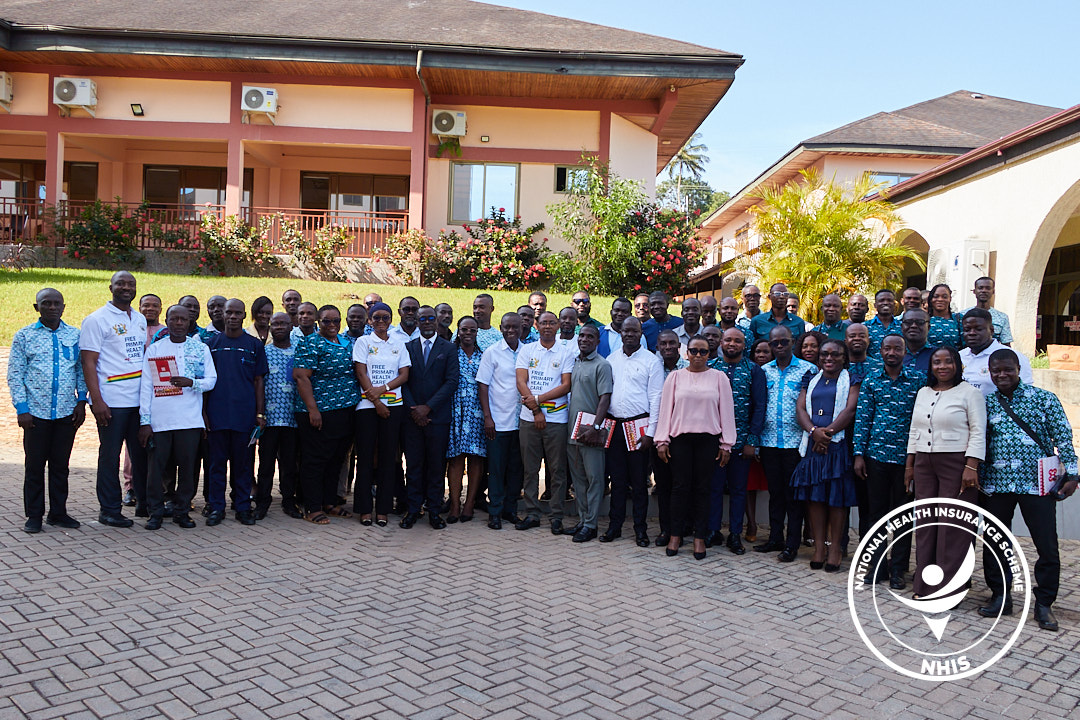
“Ghana is taking a step forward. We want to be able to finance our primary health care interventions ourselves, and one of the ways we have envisioned that is by implementing a FPHCP,” he said.
Dr. Djokoto explained that the policy seeks to restore preventive and promotive health care delivery to the centre of the health system, noting that while activities such as antenatal care, immunisation, and nutritional counselling had always existed, the capacity of health workers to move into communities and deliver them has become severely constrained.
Membership Drive and the Road Ahead
Dr. Djokoto cautioned staff to anticipate public misconceptions, particularly the belief that the NHIS card is no longer necessary under FPHC, and to respond to them accurately. He reminded staff that the NHIA achieved 66 percent membership coverage in 2025 and has set a minimum target of 80 percent by the end of 2026, describing the FPHC rollout as a direct opportunity to accelerate enrolment at every touchpoint.
He assured staff of the CEO’s full personal commitment to the policy’s success and commended the team that has travelled across the country during the zonal exercise, including the Directors of RPME, MIS, CAF, Quality Assurance, and Operations, alongside the Regional Directors and the CPC Head.
Other presentations
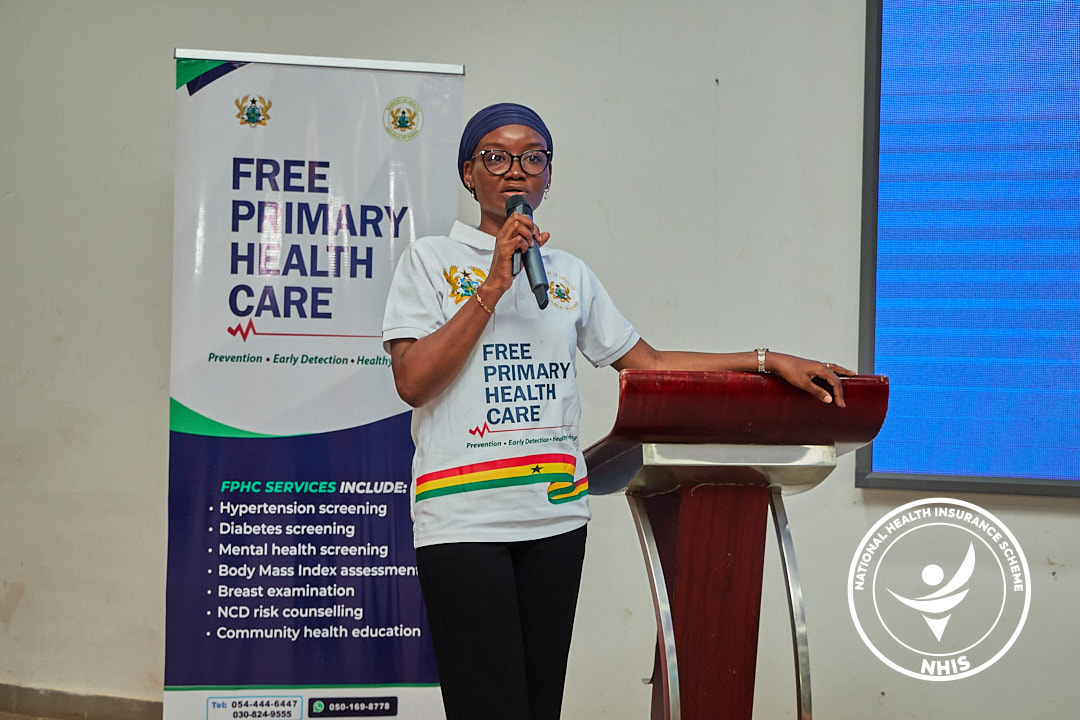
Acting Director of Operations at NHIA, Mariam Musah, presented on the policy framework.
She said under Phase I of the Free Primary Health Care (FPHC) rollout, nine preventive screenings and 30 promotive health services will be offered free at the point of use.
These include screenings for blood pressure, blood glucose, body mass index, non-communicable disease risk, breast and breast cancer, mental health, child and adolescent health, and newborn conditions, where necessary.
“The FPHC does not replace NHIS membership. While screening and early detection services are free, treatment, hospital admissions, specialist care. and surgeries remain covered only for active NHIS members,” she said.
The digital system for implementing the FPHC policy was presented by Stephen Bewong of the MIS Directorate, who explained that the NHIS Electronic Health Facility Attendance Management System (NeHFAMS) will verify all patient visits in real time.
He said each visit will require a One-Time Attendance Code (OTAC), generated via USSD (*929#), an online portal or assisted channels, using either a Ghana Card or NHIS number. The code is single-use and valid for 24 hours, helping confirm actual service delivery and prevent fraudulent claims.

A Monitoring and Evaluation framework presented by Suleymana Abass will track inputs, service delivery, outcomes, and impact using data from NHIS, DHIMS2, and facility records.
Doreen Andoh, Communications Manager at the NHIA, presented a public education strategy for the rollout of Ghana’s Free Primary Health Care (FPHC) policy on behalf of the Director for Corporate Affairs, Oswald Essuah-Mensah.
She stressed that communication is the make-or-break factor for every policy, noting that even well-designed policies can face misconceptions, resistance, and poor uptake if not communicated well. She therefore urged staff to fully familiarise themselves with the policy and strictly adhere to the approved communication guidelines.
The strategy will guide consistent messaging ahead of the April 2026 rollout, deepen public understanding of the policy, and clarify service entitlements while reducing misinformation and promoting early health-seeking behaviour.

ADVERTISEMENT