







The post-school silence is a deafening vacuum, a cruel absence of purpose that stretches the soul thin. For countless young people, this void is not a respite but a sentence, a limbo where potential atrophies under the harsh judgment of the employed world.
To be jobless is to be guilty, and the epithet hurled at the ambitious, yet currently idle, girl is always the same: lazy. A single, stinging word that erodes self-worth and demands immediate, desperate repudiation.
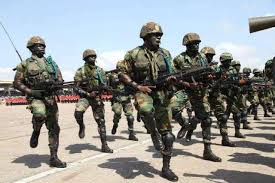
This was the desolate landscape that compelled her, a symbol of a generation, to rush toward the sudden, fleeting shimmer of opportunity. When the call came for military recruits, promising a uniform and a wage, it was a lifeline cast into a rising tide of societal despair. She seized it.
The clock had not yet struck 2:00 a.m. when she rose, wrenching herself from the brief peace of sleep into the chilling predawn air. Her hunger, a gnawing, familiar companion since the light of the previous day, was dismissed. Her sustenance was the slim hope of a future.
She joined the silent river of hopefuls converging on the El-Wak Stadium in Accra, a sacred ground that became, instead, a slaughterhouse of dreams during the Ghana Armed Forces recruitment process.
The atmosphere, charged with collective yearning, became a volatile compound when met with systemic failure. The nation had not learned; it had seldom transformed. The government, a vessel too long steered by inertia, had organized an event of catastrophic predictability. The masses were treated not as citizens vying for service, but as an unruly tide to be contained.
The surge began, not of malice, but of primal necessity. Ambition, compressed by scarcity, exploded into a brutal, unintended stampede. The iron gate of opportunity became a wall of crushing futility. Our symbol, the determined girl, was swept under the feet of her equally desperate peers. She went down in the dark, her last breath a gasp of unmet potential, smothered by the weight of a nation’s chronic mismanagement.
The tragic dawn revealed the cost of this failure: young lives extinguished, their aspirations reduced to crumpled forms on the turf.
And how did society reconcile this unforgivable lapse? The response, echoing the deepest, most dangerous strains of fatalism, was swift and morally bankrupt. “It was her destiny,” said a Member of Parliament in the House of legislators. This is the ultimate societal abdication. To label a structural failing—a failure of infrastructure, of planning, of governance, and of basic human respect—as destiny is to render the entire system exempt from accountability. It is a spiritual blanket thrown over a very material crime.
No, this was not destiny; this was the brutal arithmetic of negligence. This was the inevitable conclusion when a constitutional mandate to protect and provide is replaced by a cynical scramble for scarce resources. The stadium became a devastating mirror reflecting our inability to organize fairness. The bodies lying there were not victims of fate, but casualties of the juxtaposition between grand national ambition and shoddy, contemptuous execution.
The tragedy at El-Wak is not an isolated Ghanaian anomaly; it is a recurring nightmare in the developing world, a stark symptom of economies failing to generate jobs commensurate with burgeoning youth populations. Just a few months prior, the Republic of Congo witnessed an eerily similar catastrophe, where 37 young lives were lost in a deadly crush at a military stadium after responding to a recruitment appeal. Further back, in Nigeria in 2014, a stampede during a government immigration recruitment drive claimed at least seven lives.
These incidents, stretching from Accra to Brazzaville to Abuja, form a global litany: where youth unemployment soars, a single recruitment invitation transforms into a Darwinian struggle for survival.
The systemic violence of scarcity demands systemic solutions. First, governments must pivot instantly to digitalized, phased recruitment, mandating online applications and allocating staggered, pre-scheduled appointment times to eliminate mass physical congregation.
Second, a constitutional imperative must enforce accountability for organizational manslaughter, requiring high-ranking officials responsible for planning and logistics to face immediate sanction when such preventable tragedies occur.

Third, and most crucially, the underlying economic engine must be addressed: a Marshall Plan for youth employment is necessary, one that incentivizes private sector job creation through significant tax relief and shifts educational focus from purely academic pursuits to high-demand technical and vocational skills. This is the only way to deflate the pressure cooker of desperation that turns a job application into a fatal gamble.
The El-Wak tragedy is an aphorism etched in blood. It is a powerful symbol of the nation’s core instability: a young democracy resting its weight on a foundation of crumbling institutions. For every child who perished seeking the simple dignity of work, a profound question is posed to the governing structure: Is the promise of citizenship merely the right to scramble and die for the crumbs of opportunity?
The constitutional clarity must be restored: the government is tasked with safeguarding life, liberty, and the pursuit of well-being. When the state’s own recruitment process becomes the instrument of death, the social contract is not merely bent, it is broken.
This death toll extends far beyond the stadium grass. It is a moral imperative that the tears shed in Accra today fertilize a renewed national resolve, transforming this tragedy from a final, sad chapter into the opening salvo of a renewed commitment to comprehensive and equitable opportunity for all.
By Raymond Ablorh