








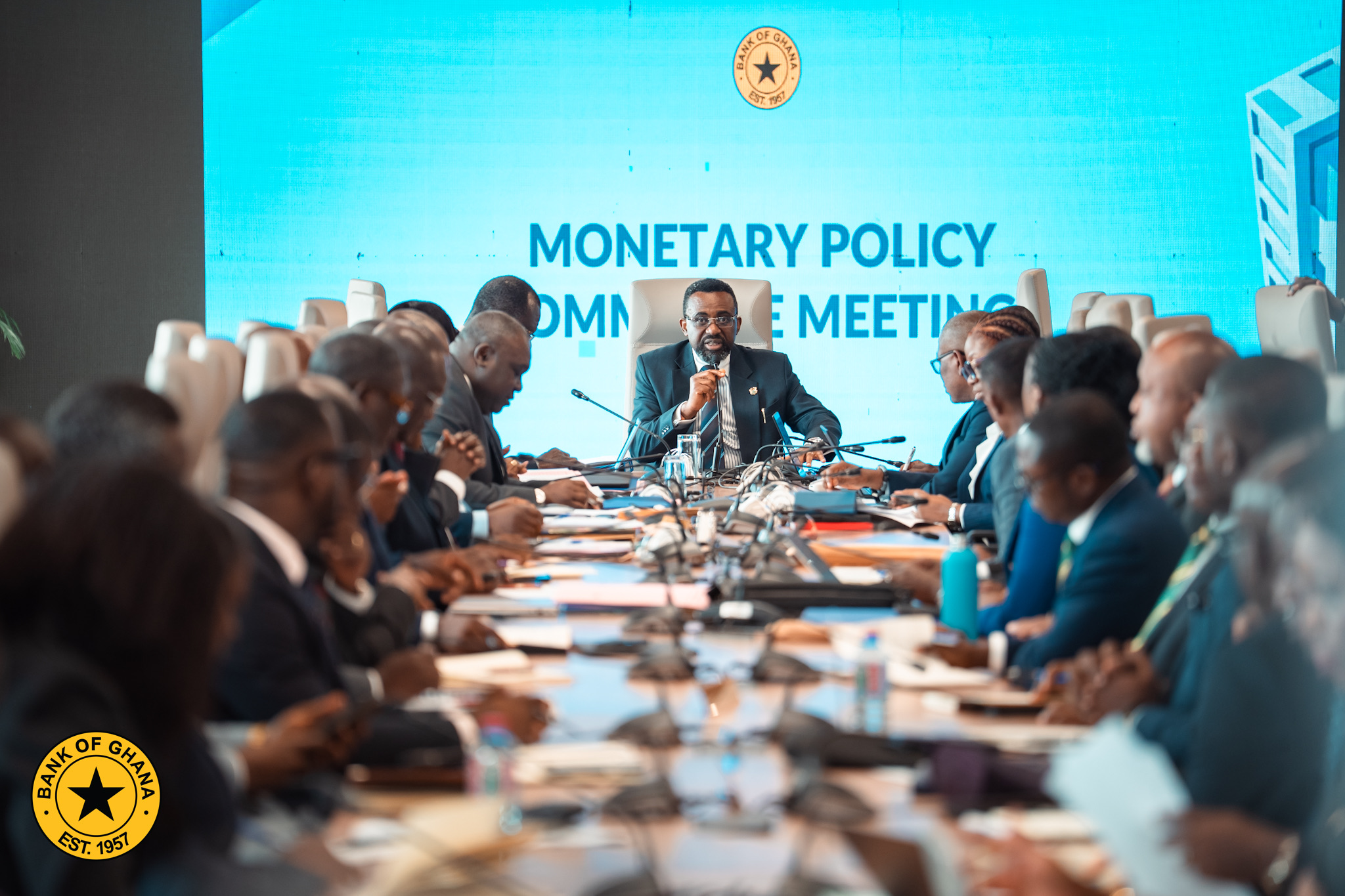
The Governor, Dr. Johnson Pandit Asiama has given the strongest indication that the country’s economy is demonstrating notable resilience and signs of stabilization, even as external uncertainties pose new challenges.
He mentioned, the data available is indicating a strengthening economy, driven by declining inflation, improved foreign reserves, and robust economic activity.
Speaking at the 129th Monetary Policy Committee (MPC) meeting on March 16, 2026, Asiama Dr. Asiama said “since the last MPC meeting in January, Ghana has recorded a remarkable decline in inflation, which dropped to 3.3 percent in February — the fourteenth consecutive month of decline. This achievement places inflation below the medium-term target band, a feat that analysts previously considered aspirational”.

He said, the decline reflects effective monetary policy measures and easing inflationary pressures, providing a conducive environment for economic growth.
According to him, external buffers have also improved considerably with Gross international reserves now standing at approximately US$14.5 billion, covering about 5.8 months of imports — up from US$13.8 billion in January. This increase enhances Ghana’s macroeconomic resilience and provides a buffer against external shocks.

He discloses that, the real economy is showing promising momentum, with the Composite Index of Economic Activity growing by 8.4 percent year-on-year at the start of 2026 with Key drivers been stronger bank credit, industrial output, trade activity, and household consumption suggesting that consumer and business confidence also improved in February, bolstered by the sustained decline in inflation, signaling renewed optimism among economic agents.
On external Risks and External Environment shift the Bank emphasized that external risks have intensified. The escalation of conflict in the Middle East has disrupted critical energy and shipping routes, leading to increased volatility in global oil markets and heightened uncertainty about global inflation trends. For Ghana, which relies heavily on imported energy and goods, rising oil prices threaten to reverse some of the gains made in inflation control by fueling imported inflation.
While higher gold prices, driven by geopolitical uncertainty, provide some trade balance benefits, the overall external environment remains highly volatile and inflationary in nature. Asiama noted that these external shocks could compel the Bank to consider policy tightening measures to safeguard macroeconomic stability.