







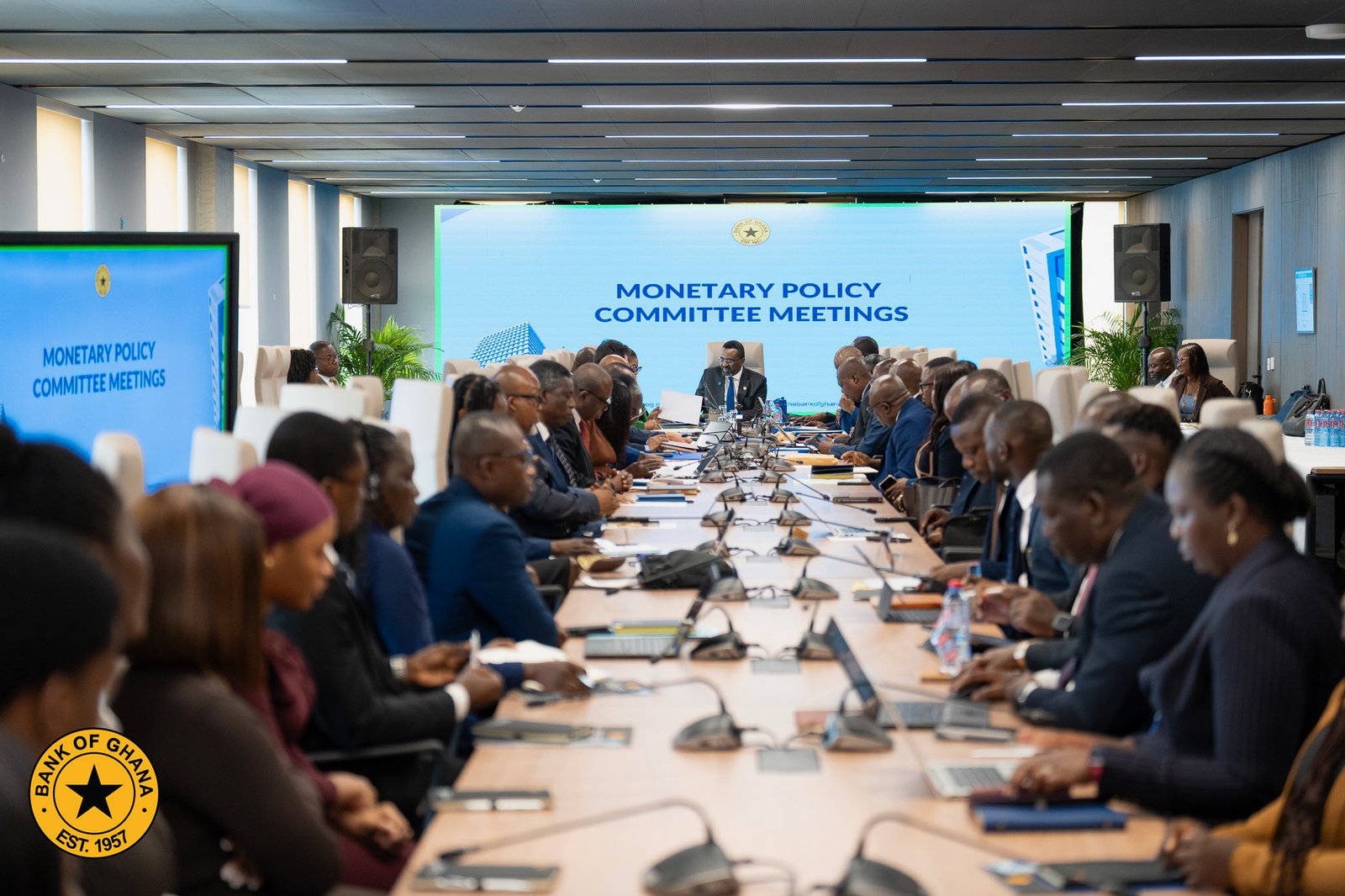
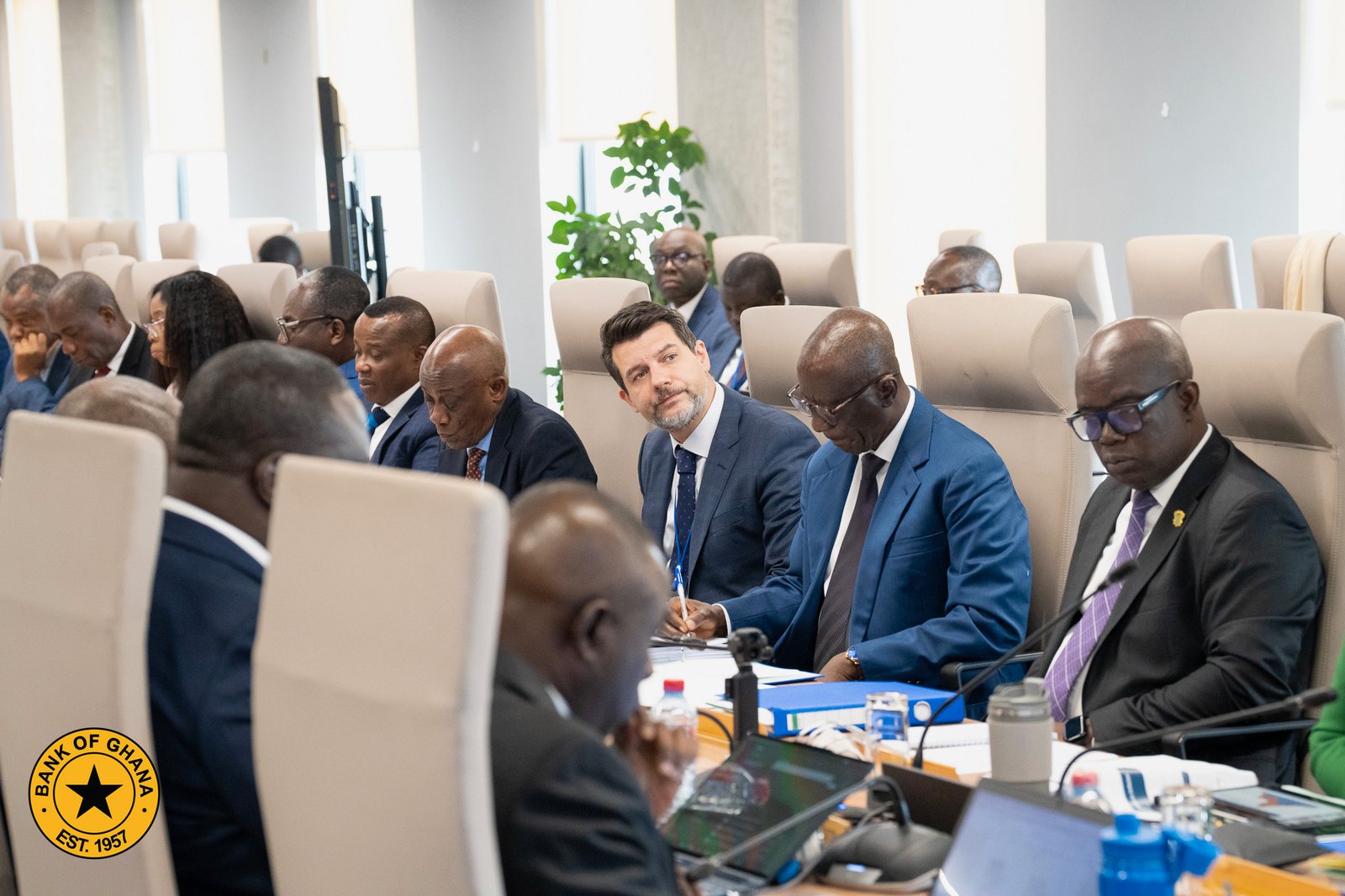
The Governor of the Bank of Ghana, Dr. Johnson Pandit Asiama, has warned of emerging pressures on inflation and the external sector as the Monetary Policy Committee (MPC) begins its 132nd meeting to decide on the policy rate.
The Committee at its last meeting in July unanimously maintained the Monetary Policy Rate at 14.0 percent, to guide inflation back into the target band and to assess the impact of the Middle East conflict and the transmission of the revised Cash Reserve Ratio (CRR) regime.

Delivering his opening remarks at Bank Square in Accra on Tuesday, September 23, 2026, Dr. Asiama said the meeting carries particular institutional significance, as it is the first MPC meeting convened under Ghana’s 36-month Policy Coordination Instrument (PCI) which the IMF Executive Board approved on July 27, 2026.
According to him, the PCI marks Ghana’s transition from crisis stabilisation to consolidation, and the credibility with which the Bank conducts policy will send an early signal to markets and the international community about policy ownership.
Dr. Asiama said the dominant global issue remains the Middle East crisis, now in its seventh month, with hopes of a permanent ceasefire fading and renewed hostilities between the United States and Iran disrupting trade flows through the Strait of Hormuz. Attacks on Saudi Arabia’s oil infrastructure have also shut down alternative export routes.
Brent crude, which was above US$85 per barrel when the MPC last met in July, rose to about US$107 per barrel last week — its highest level in four months — against depleted global inventories.
Global growth forecasts have been downgraded, with the World Bank and UN now projecting global growth at 2.5 percent, well below pre-pandemic norms and the IMF’s April estimate of 3.1 percent.
Global inflation is picking up on higher energy and fertilizer prices, prompting several central banks to pause or reverse easing cycles.
Tighter global financial conditions and a stronger US dollar have weighed on emerging market currencies, including the cedi.
For Ghana, Dr. Asiama said the shock is double-edged: higher gold prices support export earnings, reserves and government revenue, while higher energy and fertilizer import costs could feed quickly into transport, production costs and consumer prices.

On the domestic front, the Governor described conditions as stable and broadly positive as Headline inflation at 5.0 percent in August remains well below the lower bound of the Bank’s 8±2 percent target band, despite cost pressures in housing, transport and services. Exchange rate stability is containing imported inflation.
However, inflation has risen from its March low of 3.2 percent to 5.0 percent in August — a cumulative increase of 1.8 percentage points in five months — raising questions about whether it is a one-off adjustment to higher energy prices and administered tariffs or the start of more persistent pressure.
Real GDP grew by 6.0 percent in the second quarter, led by services and ICT, while private sector credit accelerated sharply.
The fiscal position is stronger than programmed, with a primary surplus above target, public debt at 45 percent of GDP, upgrades from all three rating agencies, and debt distress risk reassessed from high to moderate.
The banking sector remains sound, liquid and profitable.
Externally, however, gross international reserves fell to US$11.07 billion, equivalent to 4.2 months of import cover. The current account is projected to record a deficit in the third quarter as gold shipments by GoldBod slowed since mid-August and service payments increased.
“The domestic position affords policy space; the external position determines how much of it can safely be used. Rebuilding net foreign assets must therefore remain the priority heading into the fourth quarter,” Dr. Asiama stated.
The Governor outlined three key issues shaping deliberations:
1. Inflation trajectory: Whether the expected rise will be temporary or persistent.
2. External position: Weak current account, declining reserves and pause in GoldBod exports ahead of seasonal FX demand in Q4.
3. Fiscal-monetary interaction: Rising spending, increasing share of short-term domestic debt and higher debt service obligations following completion of external debt restructuring.
He stressed that under the PCI — which is a policy signalling instrument — markets will watch monetary and fiscal discipline closely ahead of the first PCI review in October.