




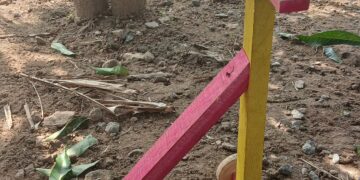

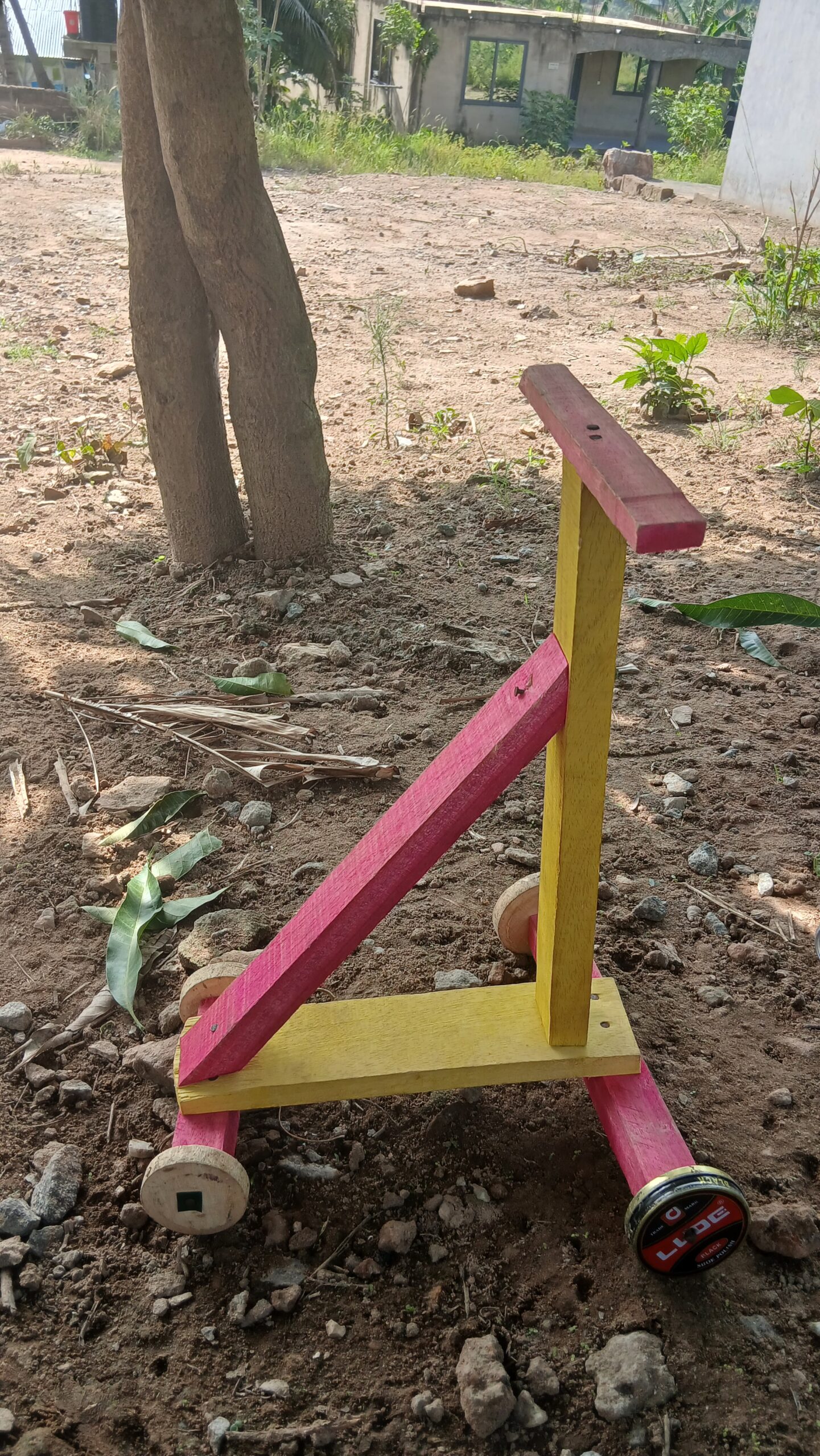
In Ghanaian compounds and backyards across the country, you’ll spot it leaning against a tree or rolling down a dusty path: the humble wooden baby bicycle. Painted in bright pink and yellow, with wooden wheels and sometimes a shoe polish tin swapped in for a tire, it looks simple.
But for decades, this handmade toy has been doing one serious job – teaching Ghana’s kids how to walk.
The “baby bicycle” isn’t a toy store import. It’s a local invention, built by carpenters, uncles, or dads with scrap wood and a bit of paint. No batteries, no plastic, no screens.
Just a triangular frame, a handlebar at toddler height, and wheels that roll just fast enough to keep a baby moving forward without falling.
Parents call it a walking trainer, and it’s everywhere from Accra to Ho, Kumasi and to villages in the north.
The idea is straightforward: the child holds onto the handlebar and pushes the walker ahead, using it for balance and momentum. Within weeks, wobbly steps turn into confident strides.
What makes it stick around in an age of imported baby gear is practicality and culture. Wood is cheap and available.
The design is easy to repair. And it’s built tough enough to be passed from child to child, cousin to cousin.
In many households, the same walker that steadied an older sibling is now helping the youngest take their first steps.
There’s also a bit of creativity baked in. Notice the shoe polish tin on one wheel in this photo?
That’s classic Ghanaian resourcefulness – using what you have to keep things moving. The bright colors aren’t just for fun; they catch a child’s eye and make them want to chase it forward.
Beyond walking, the wooden bicycle is part of childhood memory for many Ghanaians. It’s the toy that lived outside, got scratched in the dirt, and was raced down the compound path while older kids cheered.

It’s low-tech, but it works – and it connects generations.
As plastic walkers and electronic baby gear fill stores, the wooden baby bicycle is still holding its ground.
It’s a reminder that sometimes the simplest tools, made with local know-how, do the job best. And for thousands of Ghanaian kids, it’s how the journey to walking begins.
Ever seen one of these in your family or neighborhood?