









Governor of the Bank of Ghana, Dr. Johnson Pandit Asiama, says Ghana must now shift focus from merely expanding access to financial services to improving the actual financial health of households and businesses.
He made the call at the Financial Health Leadership Roundtable held at The Bank Square in Accra on Wednesday, November 4, 2026, for the visit of Queen Máxima of the Netherlands, the United Nations Secretary-General’s Special Advocate for Financial Health.
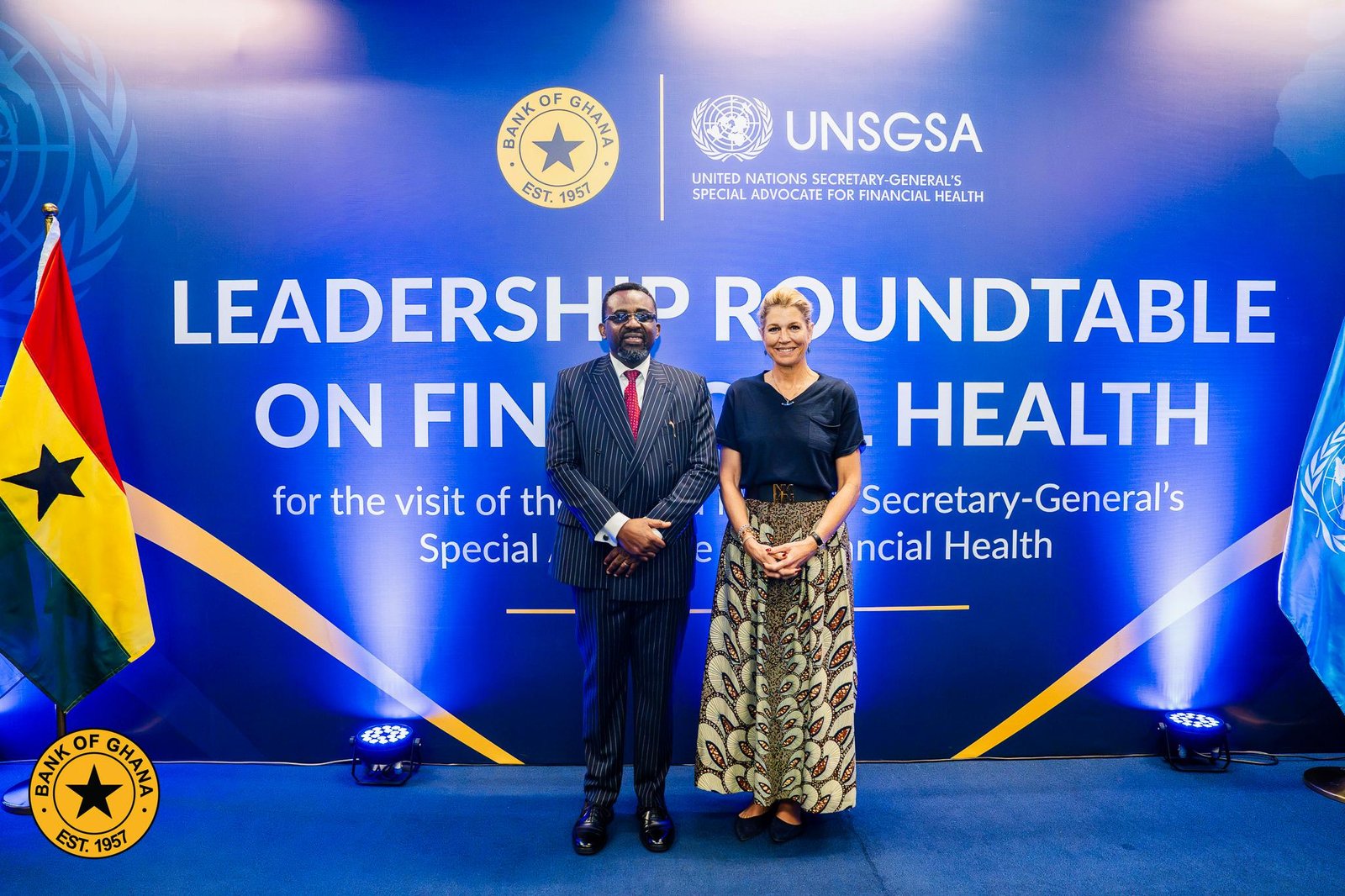
Welcoming Queen Máxima, Dr. Asiama praised her longstanding leadership in advancing financial inclusion and, more recently, financial health around the world.
Ghana Among Africa’s Digital Finance Leaders:

The Governor said Ghana’s financial sector has undergone a remarkable transformation over the past decade, driven by innovation, collaboration and investment in digital infrastructure.
Today, he said, Ghana stands among Africa’s leading digital finance markets, supported by interoperable payment systems, mobile money, fintech innovation and a regulatory environment that has fostered both growth and trust.
But he noted that access alone is not enough. Financial health, he explained, is influenced by savings, insurance, pensions, investment opportunities and financial literacy.
Responsible Credit Key for MSMEs:
For Ghana, Dr. Asiama identified productive and responsible credit as one of the most important pathways to improving financial health.
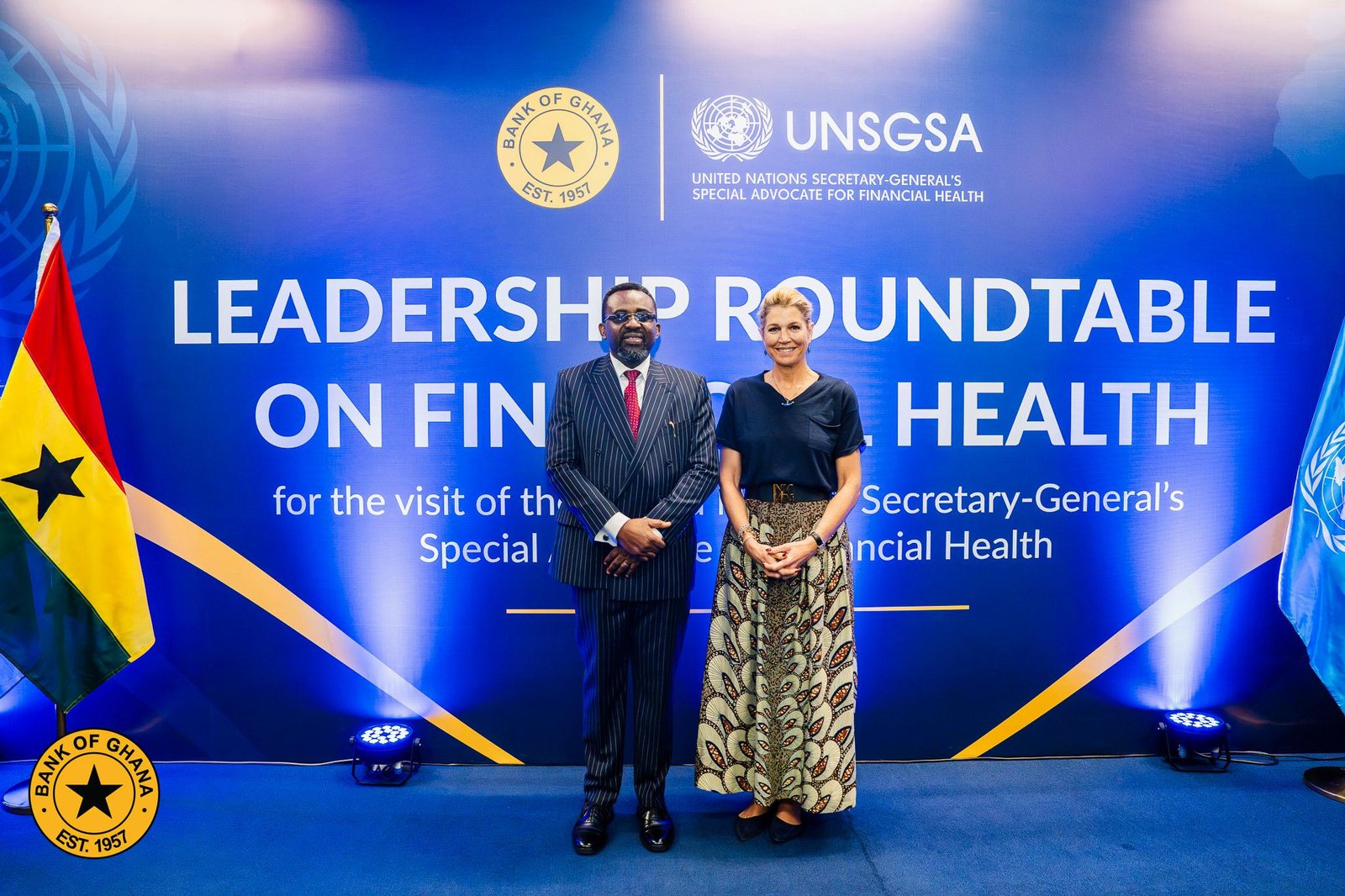
“Credit, when appropriately designed and delivered, enables households to invest in their futures and gives businesses the capital required to grow, innovate and create jobs,” he said.
He stressed that this is particularly important for micro, small and medium-sized enterprises (MSMEs), which form the backbone of economic activity in Ghana — creating jobs, driving innovation and supporting livelihoods.
Yet many MSMEs, he said, still face significant barriers to accessing finance, with credit often unavailable to viable businesses because of unfair mechanisms.
Bridging the gap, he said, will require leveraging technology, data and innovation to broaden credit access, reduce information asymmetries and create pathways for viable businesses to access finance on fair and sustainable terms.
Focus on Women, Farmers:
The Roundtable, he said, was an opportunity to focus on practical solutions: how to use innovation to improve financial health, expand productive credit for MSMEs, women and smallholder farmers, strengthen savings, insurance and long-term resilience, and ensure the next generation of financial services delivers better outcomes.
Dr. Asiama called for partnership across government, regulators, industry and development institutions, and urged an open, action-oriented discussion to identify barriers and concrete commitments.
“If we leave this room with a clear set of priorities, this Roundtable will have achieved its purpose,” he said.