






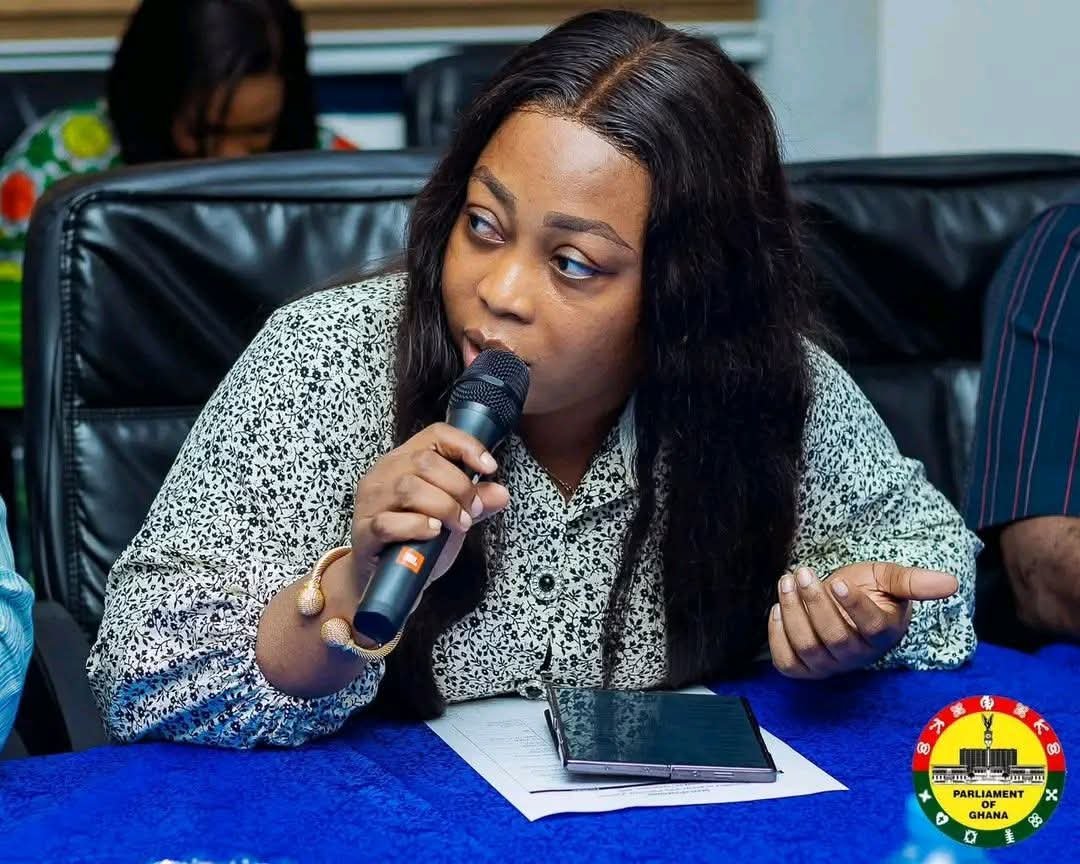
The Member of Parliament for Awutu Senya East, Phyllis Naa Koryoo Okunor, has defended the Mahama administration’s energy sector investment programme, arguing that government is taking decisive steps to restore financial stability, strengthen electricity generation and secure Ghana’s long-term energy sovereignty.
Contributing to the debate on the 2027 Budget in Parliament, Ms Okunor said government inherited an energy sector burdened with approximately US$1.4 billion in debt and significant outstanding obligations to Independent Power Producers (IPPs) and fuel suppliers, which she blamed on years of mismanagement and inadequate planning.
She said the administration was determined to end the cycle of power shortages and dependence on expensive emergency generation plants through investments in thermal power, renewable energy, battery storage and nuclear energy development.
Major investments outlined
Key components of the government’s programme highlighted by the MP include:
– 1,450MW thermal generation capacity to strengthen electricity supply
– 600MW solar power to expand renewable energy generation
– 22,000MWh battery storage to improve grid stability
– A programme to phase out emergency power plants
– A projected reduction in electricity generation costs from 16 US cents to 8 US cents per kilowatt-hour
-A US$200 million, 24-month nuclear readiness programme, with the target of signing an Engineering, Procurement, Construction and Financing (EPCF) contract by 2028
– Extension of electricity access to 47 isolated island and underserved communities in the Volta, Oti, Northern and Savannah regions through the Self-Help Electrification Programme
Ms Okunor also highlighted plans to reform electricity distribution through private-sector partnerships and performance-based arrangements, arguing that improved efficiency would help reduce the cost of electricity for households and businesses.
Beyond keeping the lights on:
She said government’s energy agenda was not limited to maintaining electricity supply, but also involved building infrastructure capable of supporting industrialisation, expanding access to underserved communities and reducing the financial burden on the national budget.

Invoking Ghana’s first President, Dr Kwame Nkrumah, and his vision behind the construction of the Akosombo Dam, she said the proposed nuclear energy programme represented another important step towards securing the country’s future energy needs.
The lawmaker assured that the Mahama administration’s objective is to ensure reliable electricity supply and end Ghana’s dependence on rented emergency power generation.