







The Executive Board of the International Monetary Fund (IMF) has approved the final review of Ghana’s US$3 billion Extended Credit Facility (ECF) programme, officially bringing to a close the bailout package initiated in May 2023 following Ghana’s 2022 economic crisis.
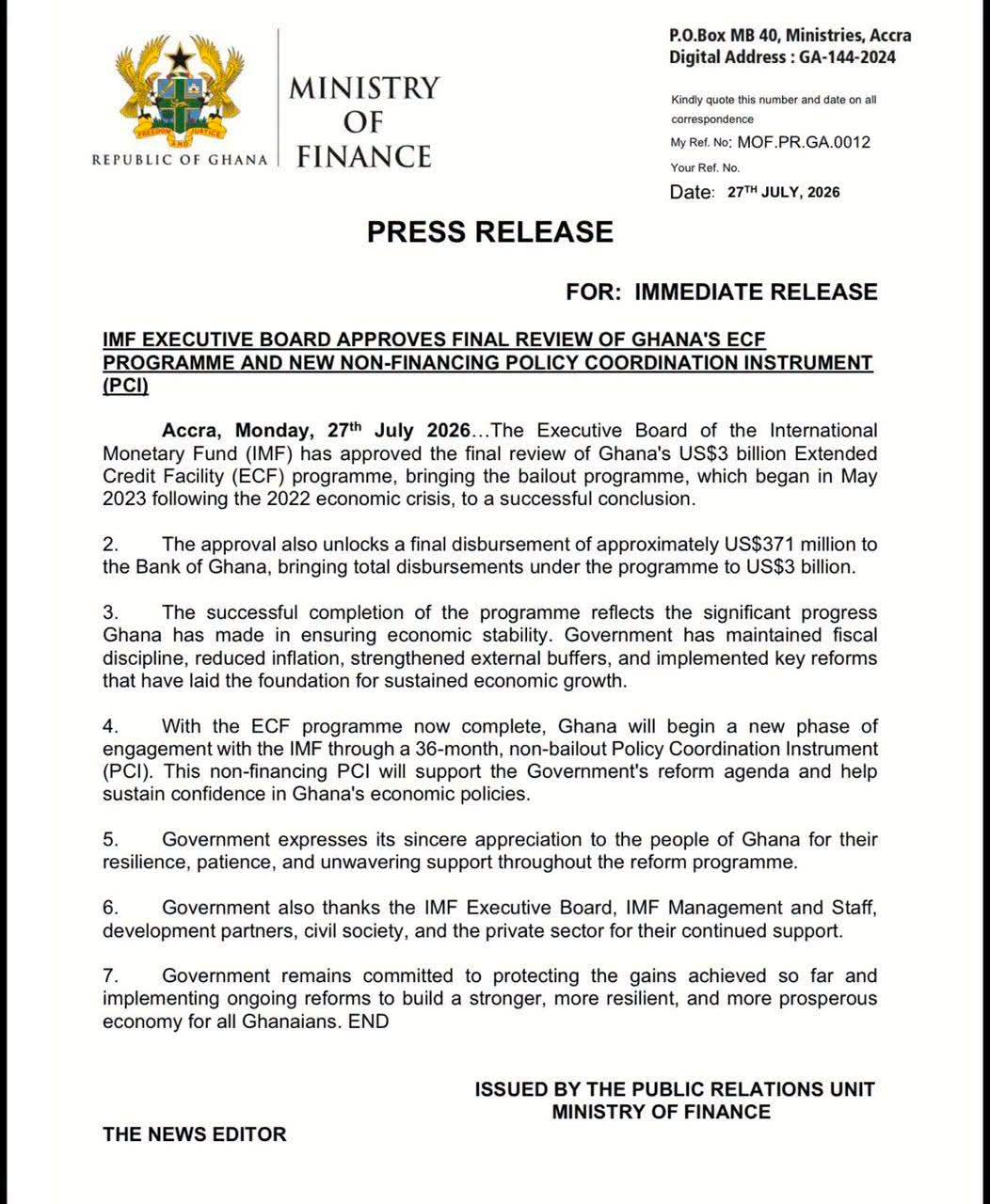
According to a press release from the Ministry of Finance, the approval also triggers a final disbursement of approximately US$371 million to the Bank of Ghana.
This brings total disbursements under the ECF to the full US$3 billion.
The Ministry said the successful completion of the programme reflects “significant progress” Ghana has made in restoring economic stability. Key achievements cited include maintained fiscal discipline, reduced inflation, strengthened external buffers, and the implementation of structural reforms aimed at laying the foundation for sustained economic growth.
New 36-Month Non-Bailout Deal with IMF:
With the ECF now complete, Ghana will transition to a new phase of engagement with the IMF through a 36-month, non-financing Policy Coordination Instrument (PCI).
The PCI is a non-bailout arrangement designed to support the government’s reform agenda and “help sustain confidence in Ghana’s economic policies,” the Ministry noted.
Government Commends Stakeholders:

The government expressed appreciation to Ghanaians for their “resilience, patience, and unwavering support” throughout the reform period. It also thanked the IMF Executive Board, Management, Staff, development partners, civil society, and the private sector for their continued support.
“Government remains committed to protecting the gains achieved so far and implementing ongoing reforms to build a stronger, more resilient, and more prosperous economy for all Ghanaians,” the statement concluded.
The ECF was secured in 2023 as part of efforts to stabilize Ghana’s economy after debt distress and high inflation forced the country to seek IMF support.