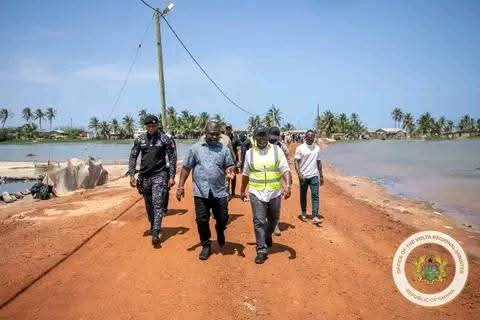




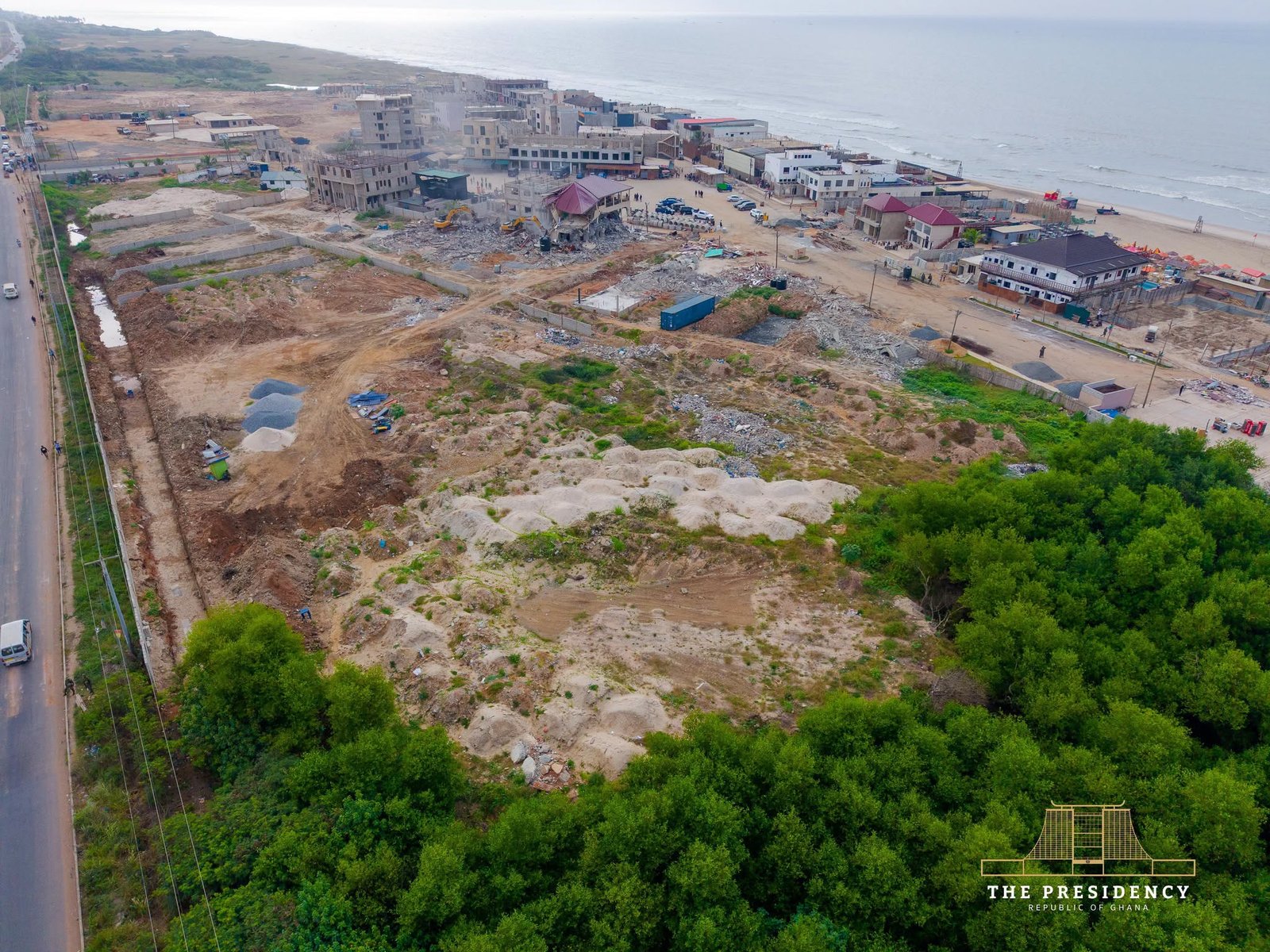
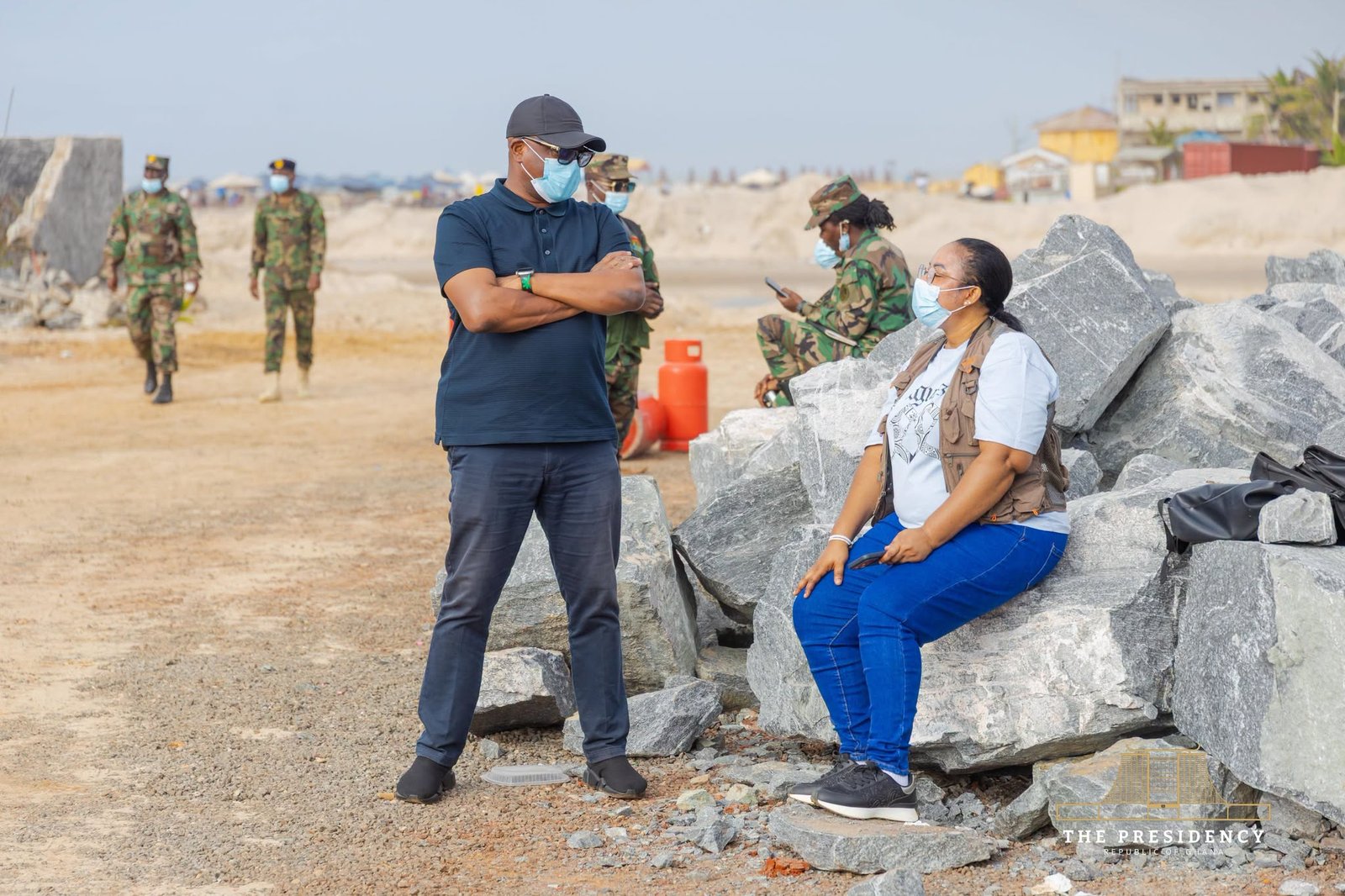
Deputy Chief of Staff in charge of Operations, Stan Xoese Dogbe, issued the directive at Laboma after the Post Flood Mitigation Task Force carried out a demolition exercise as part of measures to restore flood-control infrastructure and protect critical water-retention areas across the Greater Accra Region.
The restoration programme will involve the Forestry Commission and the Environmental Protection Authority (EPA), which are expected to develop appropriate measures to rehabilitate the affected areas.
Plans include the planting of coconut and other suitable tree species, as well as the introduction of environmental safeguards aimed at protecting and regenerating the fragile wetland ecosystem.
Mr Dogbe stressed that the exercise goes beyond the demolition and removal of illegal structures.
According to him, the ultimate objective is to return the reclaimed portions of the lagoon to their natural state, improve the wetland’s ability to retain excess water and prevent further encroachment.
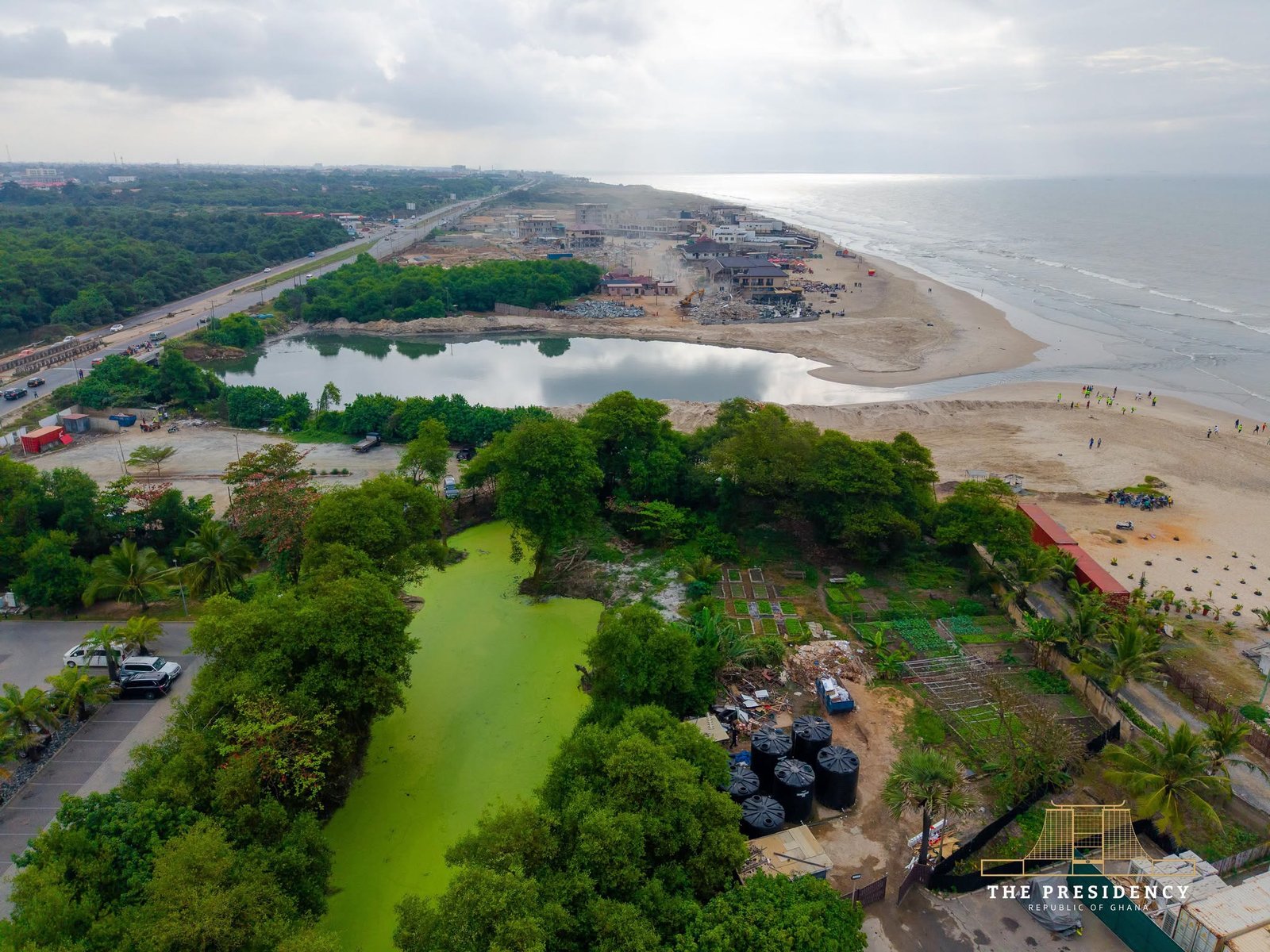
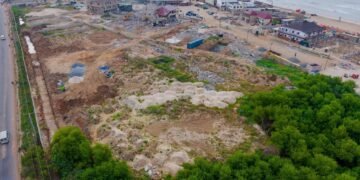
The Kpeshie Lagoon is considered one of Accra’s important flood-control areas. However, years of reclamation, sand filling and construction have significantly reduced portions of the wetland and, consequently, its natural water-holding capacity.
Authorities are therefore expected to move into the next phase of the intervention, which will include clearing demolition debris, restoring vegetation and implementing measures to ensure the reclaimed areas remain protected.
The government says sustained environmental protection will be critical to preserving the lagoon and strengthening its resilience against future flooding.
The restoration of the Kpeshie Lagoon forms part of broader efforts to protect wetlands and other natural drainage systems in the Greater Accra Region, particularly in communities vulnerable to flooding.

Deputy Chief of Staff in charge of Operations, Stan Xoese Dogbe, issued the directive at Laboma after the Post Flood Mitigation Task Force carried out a demolition exercise as part of measures to restore flood-control infrastructure and protect critical water-retention areas across the Greater Accra Region.
The restoration programme will involve the Forestry Commission and the Environmental Protection Authority (EPA), which are expected to develop appropriate measures to rehabilitate the affected areas.
Plans include the planting of coconut and other suitable tree species, as well as the introduction of environmental safeguards aimed at protecting and regenerating the fragile wetland ecosystem.
Mr Dogbe stressed that the exercise goes beyond the demolition and removal of illegal structures.
According to him, the ultimate objective is to return the reclaimed portions of the lagoon to their natural state, improve the wetland’s ability to retain excess water and prevent further encroachment.
The Kpeshie Lagoon is considered one of Accra’s important flood-control areas. However, years of reclamation, sand filling and construction have significantly reduced portions of the wetland and, consequently, its natural water-holding capacity.
Authorities are therefore expected to move into the next phase of the intervention, which will include clearing demolition debris, restoring vegetation and implementing measures to ensure the reclaimed areas remain protected.
The government says sustained environmental protection will be critical to preserving the lagoon and strengthening its resilience against future flooding.
The restoration of the Kpeshie Lagoon forms part of broader efforts to protect wetlands and other natural drainage systems in the Greater Accra Region, particularly in communities vulnerable to flooding.