







The Monetary Policy Committee (MPC) of the Central Bank has maintained the Monetary Policy Rate at 14.0% as the latest forecast suggested that inflation is expected to trend upward into the medium-term target band largely due to base drift effects related to exchange rate movements, food supply conditions, and transport fares.
“Upside risks to the inflation outlook included the protracted Middle East crises, which could keep crude oil prices above US$100 per barrel and raise the prospect of petroleum price pass-through into domestic transport and utility costs”, the Committee asserted.
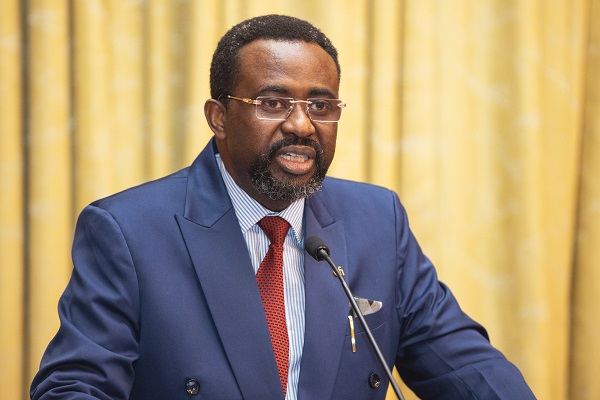
According to the Governor Dr. Johnson Asiama, the Committee will continue to monitor incoming data, in particular relating to potential spillover of the geopolitical tensions to the domestic economy and take appropriate policy actions when necessary.
Communicating key summaries of the discussions at the 130th regular meetings of the Monetary Policy Committee held from 18 to 20 May 2026 to review recent economic developments and assess risks to the outlook for inflation and growth Dr. Asiama said since March 2026, global economic conditions have been shaped by the ongoing geopolitical tensions in the Middle East.
According to him, the conflict has disrupted maritime and air traffic, increased energy prices, and heightened policy uncertainty. “Against this backdrop, the IMF has revised down its 2026 global growth projection to 3.1 percent from an initial estimate of 3.3 percent. The IMF also noted that further downward revisions are likely if the conflict is prolonged”.
He mentioned that. the disruption to trade flows following the blockade of the Strait of Hormuz has led to a sharp increase in international crude oil prices and reignited inflationary pressures in both advanced and emerging market economies.
In addition, early indicators suggest that global headline inflation is beginning to accelerate, fuelled by higher energy and food prices and rising inflation expectations.
According to him, the expected resurgence in inflation may prompt central banks to raise policy rates, which could push long-term bond yields higher, tighten global financing conditions, and reverse portfolio flows to emerging market and developing economies.
But on the domestic front, the Bank stressed that economic activity has strengthened in the first quarter of 2026 and the Composite Index of Economic Activity (CIEA), which tracks the Bank’s high-frequency indicators of real sector activity, expanded by 12.6 percent year-on-year in March 2026, up from 2.3 percent in March 2025.
The main drivers of the growth in the Index were credit to the private sector, consumption, industrial production, and international trade activities.
He said the latest surveys conducted in April 2026, however, indicated that both consumer and business confidence, though high, have softened, compared with the February survey results.
This was largely due to concerns about the domestic implications of the ongoing Middle East conflict.
Similarly, Ghana’s Purchasing Managers’ Index declined to 50.3 in April 2026 from 51.4 in March 2026, mainly reflecting higher input costs.
Headline inflation inched up marginally to 3.4 percent in April 2026, from 3.2 percent in March, marking the first increase since December 2024.
The uptick was driven by non-food inflation, which increased to 4.2 percent in April 2026 from 3.9 percent in the preceding month largely on account of base effects. Core inflation, which excludes energy and utility items, declined, indicating that underlying inflationary pressures continued to ease.
However, inflation expectations among consumers, businesses, and the financial sector edged up marginally but remained broadly anchored within the medium-term inflation target band.
Growth in monetary aggregates moderated further in April 2026, largely reflecting the tight monetary policy stance. Reserve money growth slowed significantly to 3.6 percent in April 2026, compared to 38.0 percent growth a year earlier. Similarly, broad money supply expanded at a slower pace by 22.2 percent, down from 26.7 percent over the same period.
On the money market, interest rates on short-term instruments declined further, reflecting easing inflation expectations and the monetary policy stance. Yields on the benchmark 91-day Treasury bill fell to 4.9 percent in April 2026, from 15.5 percent a year earlier. Similarly, the Ghana Reference Rate eased to 10.06 percent in April 2026, compared to 23.99 percent a year earlier. A
verage bank lending rates declined to 16.3 percent from 27.4 percent. In line with this, private sector credit rebounded strongly in April, up by 28.7 percent in nominal terms, compared with a 19.9 percent growth in April 2025. In real terms, this represents a growth of 24.5 percent compared to a contraction of 1.1 percent over the same comparative period. Provisional data showed that fiscal performance for January to March 2026 reflected strong expenditure containment measures amid revenue shortfalls. On commitment basis, the fiscal balance recorded a surplus of 0.1 percent of GDP, against the target deficit of 1.2 percent. The primary balance also recorded a surplus of 1.2 percent of GDP, against a surplus target of 0.2 percent.
BoG maintains Policy Rate at 14.0% as inflation expected to trend upward into medium-term target
The Monetary Policy Committee (MPC) of the Central Bank has maintained the Monetary Policy Rate at 14.0% as the latest forecast suggested that inflation is expected to trend upward into the medium-term target band largely due to base drift effects related to exchange rate movements, food supply conditions, and transport fares.
“Upside risks to the inflation outlook included the protracted Middle East crises, which could keep crude oil prices above US$100 per barrel and raise the prospect of petroleum price pass-through into domestic transport and utility costs”, the Committee asserted.
According to the Governor Dr. Johnson Asiama, the Committee will continue to monitor incoming data, in particular relating to potential spillover of the geopolitical tensions to the domestic economy and take appropriate policy actions when necessary.
Communicating key summaries of the discussions at the 130th regular meetings of the Monetary Policy Committee held from 18 to 20 May 2026 to review recent economic developments and assess risks to the outlook for inflation and growth Dr. Asiama said since March 2026, global economic conditions have been shaped by the ongoing geopolitical tensions in the Middle East.
According to him, the conflict has disrupted maritime and air traffic, increased energy prices, and heightened policy uncertainty. “Against this backdrop, the IMF has revised down its 2026 global growth projection to 3.1 percent from an initial estimate of 3.3 percent. The IMF also noted that further downward revisions are likely if the conflict is prolonged”.

He mentioned that. the disruption to trade flows following the blockade of the Strait of Hormuz has led to a sharp increase in international crude oil prices and reignited inflationary pressures in both advanced and emerging market economies.
In addition, early indicators suggest that global headline inflation is beginning to accelerate, fuelled by higher energy and food prices and rising inflation expectations.
According to him, the expected resurgence in inflation may prompt central banks to raise policy rates, which could push long-term bond yields higher, tighten global financing conditions, and reverse portfolio flows to emerging market and developing economies.
But on the domestic front, the Bank stressed that economic activity has strengthened in the first quarter of 2026 and the Composite Index of Economic Activity (CIEA), which tracks the Bank’s high-frequency indicators of real sector activity, expanded by 12.6 percent year-on-year in March 2026, up from 2.3 percent in March 2025.
The main drivers of the growth in the Index were credit to the private sector, consumption, industrial production, and international trade activities.
He said the latest surveys conducted in April 2026, however, indicated that both consumer and business confidence, though high, have softened, compared with the February survey results.
This was largely due to concerns about the domestic implications of the ongoing Middle East conflict.
Similarly, Ghana’s Purchasing Managers’ Index declined to 50.3 in April 2026 from 51.4 in March 2026, mainly reflecting higher input costs.
Headline inflation inched up marginally to 3.4 percent in April 2026, from 3.2 percent in March, marking the first increase since December 2024.
The uptick was driven by non-food inflation, which increased to 4.2 percent in April 2026 from 3.9 percent in the preceding month largely on account of base effects. Core inflation, which excludes energy and utility items, declined, indicating that underlying inflationary pressures continued to ease.
However, inflation expectations among consumers, businesses, and the financial sector edged up marginally but remained broadly anchored within the medium-term inflation target band.
Growth in monetary aggregates moderated further in April 2026, largely reflecting the tight monetary policy stance. Reserve money growth slowed significantly to 3.6 percent in April 2026, compared to 38.0 percent growth a year earlier. Similarly, broad money supply expanded at a slower pace by 22.2 percent, down from 26.7 percent over the same period.
On the money market, interest rates on short-term instruments declined further, reflecting easing inflation expectations and the monetary policy stance. Yields on the benchmark 91-day Treasury bill fell to 4.9 percent in April 2026, from 15.5 percent a year earlier. Similarly, the Ghana Reference Rate eased to 10.06 percent in April 2026, compared to 23.99 percent a year earlier. A
verage bank lending rates declined to 16.3 percent from 27.4 percent. In line with this, private sector credit rebounded strongly in April, up by 28.7 percent in nominal terms, compared with a 19.9 percent growth in April 2025. In real terms, this represents a growth of 24.5 percent compared to a contraction of 1.1 percent over the same comparative period. Provisional data showed that fiscal performance for January to March 2026 reflected strong expenditure containment measures amid revenue shortfalls. On a commitment basis, the fiscal balance recorded a surplus of 0.1 percent of GDP, against the target deficit of 1.2 percent. The primary balance also recorded a surplus of 1.2 percent of GDP, against a surplus target of 0.2 percent.