



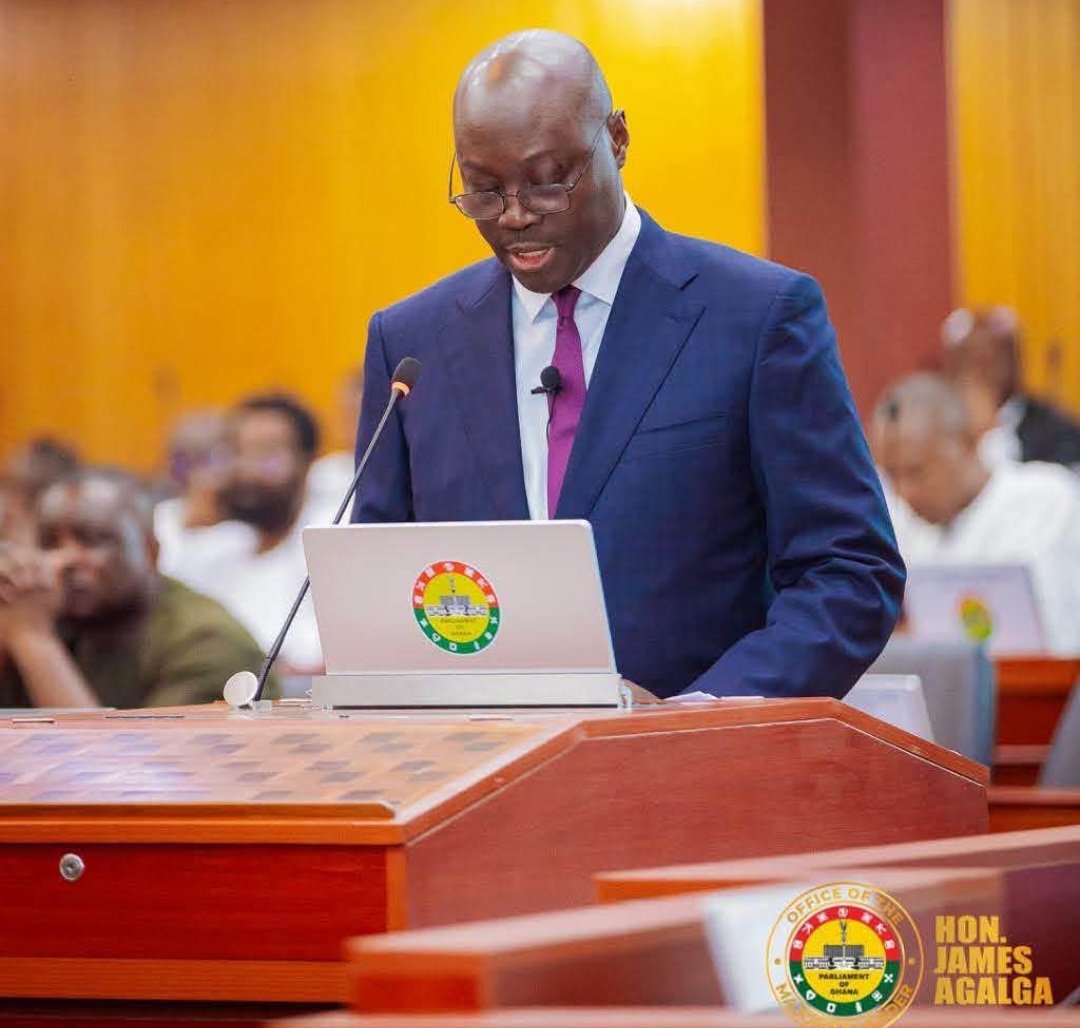
Dr. Cassiel Ato Forson did not present a normal budget on Thursday. He presented a bet.
The bet is this: Ghana has suffered enough to earn stability — inflation down from 54.1% in 2022 to 5.5% in October 2026, growth at 6.2% in H1 2026, reserves at US$12.7 billion, debt down to 47.5% of GDP— and now that stability must be _spent_, not just celebrated.
That is the core of “The New Economy: New Ghana, Jobs and Prosperity” — a 4-year, US$10 billion programme to transform what Ghana produces, not just how it balances its books.
It is the most ambitious — and most politically risky — budget since the 2022 crisis. Here is what it really means.
1. THE VERDICT: From Stabilisation To Production
For two years, the Mahama government’s story has been discipline: cut the deficit, pay bondholders, rebuild reserves, bring rates down.
It worked. The Ghana Reference Rate fell from 29.72% in January 2025 to 10.01% in October 2026.
Bank lending rates fell from 22.2% to 15.94%. Credit to the private sector grew 35.5%.
Forson’s argument in 2027 is: _discipline without production will fail again.
“We have grown, but we have not built enough resilience into that growth… Commodity upswings have lifted revenue… When prices dropped, the cedi came under pressure, inflation rose, and investment declined.”
Between 1990 and 2025, Ghana averaged 5.2% growth* — but unemployment was still 12.8% in 2025. Growth without jobs is the old pattern Forson says must end.
Our take: He is right on diagnosis. Ghana’s boom-and-bust cycle is real. The question is whether this budget breaks it, or just renames it.
2. THE BIG NUMBERS THAT MATTER
What 2027 Target / Allocation
**Total Revenue & Grants GH¢323.4 billion (17.9% of GDP)
Total Expenditure (cash) GH¢389.2 billion (21.6% of GDP)
Overall Deficit GH¢65.8 billion (3.6% of GDP)
Primary Surplus 0.5% of GDP — down from 2.5% in 2025
New Economy Programme
GH¢30 billion (1.5% of GDP) in 2027 alone
Capital Expenditure GH¢100.4 billion (GH¢120.5bn with transfers) — now 98% MORE than interest payments
Growth Target
At least 5.2% overall, 5.7% non-oil
Inflation Target Single-digit — stated in speech as 8%.
Reserves Target Not less than 6 months import cover

That last line on capital spending is the headline Forson wants you to remember:
For the first time in years, Ghana will spend more on building things than on paying interest — GH¢120.5bn on capital vs GH¢61bn on interest, and GH¢92.7bn on wages.
That is a decisive shift. If it is delivered.
3. HOW WILL HE PAY FOR THE US$10 BILLION?
This is where the commentary must get serious.
Forson says the US$10bn (2027-2030) will be financed by two measures:
1. Cutting the primary surplus target by 1 percentage point of GDP — i.e. deliberately spending part of the fiscal space
2. Tax reforms + compliance expected to generate 0.5% of GDP
No new taxes in 2027. In fact, he abolished E-Levy, betting tax, COVID Levy, Emissions Levy, and VAT on motor insurance — and now adds exemptions on import duty + VAT for solar panels and batteries.
The risk: This only works if discipline holds through the 2028 election cycle. Forson promises it will — “Fiscal discipline will apply throughout the election cycle” — but Ghana’s history says election years are exactly when discipline collapses.
If revenue underperforms, or the 1% surplus cut becomes 2% or 3%, the debt story unravels quickly.
The opportunity: If he holds the line, using fiscal space for productive assets — irrigation, energy, rail — rather than consumption, is exactly what economists have begged Ghana to do for 30 years.
4. THE 8 PILLARS: AMBITIOUS, SOME MORE CREDIBLE THAN OTHERS
a) Agriculture — US$3 billion
The most detailed pillar. Eight industries: rice, sugar, poultry, maize/soya feed, aquaculture, oil palm, vegetables, cocoa value addition.
The boldest promises:
– Ban on commercial rice imports by 2030
– Ban on raw cocoa exports by 2030 — process 50% locally by 2028, 100% by 2030
– Pwalugu Dam: US$1 billion, 25,000 hectares irrigated, 70MW power, ready early 2029
– Oil palm: 100,000 hectares, US$500m patient finance, 250,000 jobs
– Public procurement MUST buy only Ghana rice, Ghana textiles, Ghana medicines
Import bans are powerful — but dangerous if local supply is not ready. Ghana has announced rice self-sufficiency before. The difference this time is the farm-to-market system, silos (GH¢500m), and linking import licences to local purchases from 2027. Watch rice prices in 2028. If local rice is not competitive, this becomes inflation, not food security.
b) Energy — US$2.2 billion
– 1,450MW state-owned thermal plant* at Kafodzidzi-Abrobeano, Central Region — first 600MW by Dec 2028
– 600MW solar + 2,000MWh battery storage
– Phase out emergency power by 2030
– Cut generation cost from 16 US cents to 8 US cents/kWh
– US$200m nuclear-readiness programme, 2,000 scientists trained, EPC contract by Dec 2028
– 2 million prepaid meters, transmission modernisation US$500m
This is the pillar that makes or breaks everything else. No factory, no 24-hour economy, no mineral processing without cheap, reliable power. The state-owned model is a deliberate break from IPPs that left Ghana with US$1.7bn arrears. But state-owned does not automatically mean cheap — execution and GRIDCo/ECG losses will decide it.
c) Critical Minerals — US$1.5 billion
– 100% local refining of artisanal gold by Dec 2028, raw ASM gold exports banned
– 50% manganese/bauxite processed locally by 2028, 100% by 2030, raw exports banned
– Western Corridor Railway: Takoradi to Nyinahin — funded with petroleum + mineral royalties, _not borrowing_
– Takoradi Port as gateway to Sahel, railway extended to Hamile by 2030
Commentary: This is the most nationalist part of the budget — and the most economically logical. Ghana exports ore and imports the value. The railway is key: 1 billion tonnes of bauxite at Awaso/Nyinahin is worthless without transport and power. Financing it from resource revenues, like the Accra-Kumasi Expressway, is smart — if the money is truly ring-fenced.
d) Tourism, Textiles, Pharma, Tech — US$1bn + US$1bn + US$1bn + US$300m
– Tourism: SSNIT convention centre at La Trade Fair, 5-star hotels, Black Star Experience year-round
– Textiles: “Fabrics made in Ghana, garments sewn in Ghana”
– Pharma: Manufacture 60-80% of essential medicines locally by 2030, from 25-30% today. 20,000 jobs.
– Tech: National AI Centre + rural 2G to 4G upgrade for US$300m
Commentary: Pharma is the sleeper winner. Ghana imports 70-75% of medicines at US$500m a year. If local procurement + WHO prequalification works, this saves forex _and_ builds health security. Tech is under-funded at US$300m compared to others, but the rural 4G upgrade could be transformative for farmers and SMEs.
5. THE DEBT MOMENT: “YOUR CASH IS READY”
Forson’s most dramatic moment was not the New Economy. It was debt.
He announced early redemption of GH¢29 billion in DDEP bonds due February 2027, effective today, 12 November 2026, plus plans to pay the US$590m Eurobond due 2 January 2027 by 31 December. “TO HOLDERS OF THE FEBRUARY 2027 DDEP BONDS… YOUR CASH IS READY. COME FOR YOUR MONEY!”
Total early repayment: over GH¢36 billion by December.
With GH¢29bn already in the Cedi Sinking Fund and US$480m in the Dollar Sinking Fund, this is credible — and politically powerful.
After pensioners lost savings in the 2022-23 restructuring, the government is saying: never again will Ghana default on our watch._
Rating agencies have noticed: Fitch upgraded to B (positive), Moody’s to B3, S&P affirmed B-/B stable.
Risk to watch: Paying GH¢53bn in DDEP obligations in Feb + Aug 2027 will test liquidity even with buffers. Early redemption helps confidence, but it also uses cash that could have funded the New Economy.
6. WHAT IT MEANS FOR YOU
For the market woman / trader: No new taxes. Cheaper credit if banks pass on rate cuts. But if rice import ban pushes prices before local supply catches up, food inflation could return.
For the farmer: This is your budget. GH¢2.9bn to Agriculture, GH¢800m for machinery, GH¢515m fertiliser/seeds, GH¢500m silos, guaranteed public procurement. If the hubs actually work, you get a market before you plant.
For the young graduate: GH¢3.5bn for youth employment, GH¢1bn extra from uncapping youth funds, GH¢2bn for youth employment/skills. But the real test is whether factories, pharma hubs and AI centre create _sustainable_ jobs, not just programmes.
For business: Single-digit cost of capital is the promise. Energy cost halving is the promise. If both happen, Ghana becomes competitive. If not, the New Economy is just another plan.
For pensioners / bondholders: Your money is being paid early. That is the strongest signal of the whole budget.
7. THREE RISKS THAT COULD SINK IT
Execution Risk: Ghana is good at launching programmes, bad at delivering them. Pwalugu, nuclear, railway, 8 agriculture industries — all at once — will stretch state capacity.
Election Cycle Risk: 2028 is an election year. The promise to keep a 0.5% primary surplus _throughout_ the cycle will be tested by political pressure to spend.
External Shocks: Forson himself listed 2026 shocks — Middle East conflict doubling oil prices, cocoa price fall, Akosombo fire stranding 1,020MW, June floods. Stability held in 2026. But the New Economy assumes 4 years of relative calm.
BOTTOM LINE
This is not a “chop money” budget. It is a production budget.
Forson has moved Ghana from _“we survived”_ to “what do we build with survival?”
If he delivers even 60% of it — rice, energy, minerals processing, pharma — Ghana in 2030 will look fundamentally different.
If he fails on execution or discipline slips in 2028, Ghana will have spent its hard-won fiscal space and be back in the old boom-and-bust cycle — only with more debt and more disappointment.
The budget should not be judged by applause in Parliament today. It should be judged by Forson’s own test:
“By 2030, the graduate should find work… the farmer should sell to a contract buyer before planting… the trader should see the cedi hold its value… the pensioner should know their savings are safe.”
That is how this House — and this country — should judge us.