









For far too long, the Ghanaian road sector has been a graveyard of stalled dreams and “work-in-progress” signs that have outlived the governments that commissioned them.
We have grown accustomed to the sight of rusted excavators and abandoned chippings, symbols of a systemic lethargy that treats public contracts as indefinite annuities rather than urgent assignments.
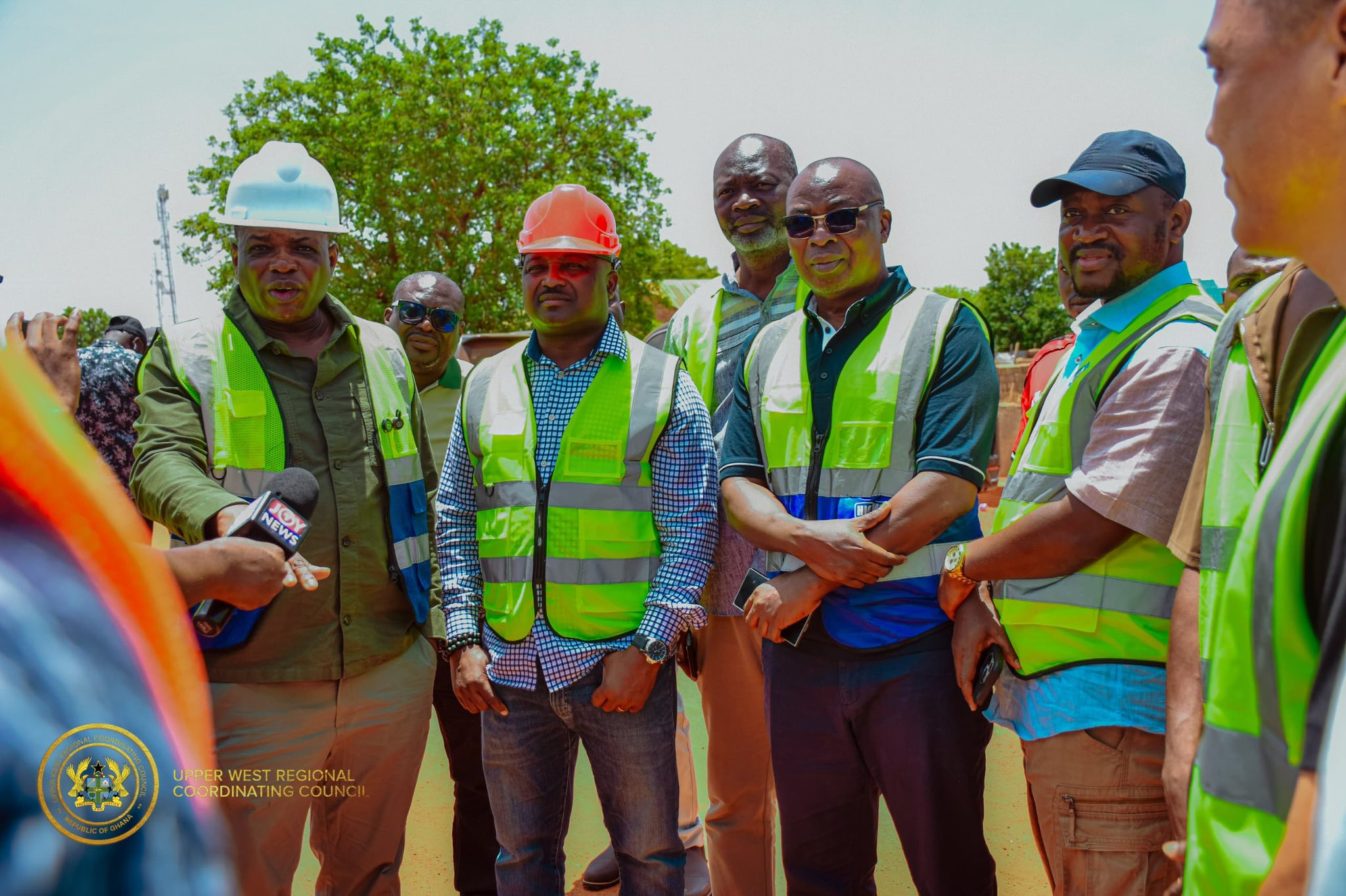
But the wind has shifted. The recent decisive posturing of Hon. Kwame Governs Agbodza, characterized by unannounced site visits and a blunt ultimatum, finish or be fired, represents more than just a bureaucratic tweak; it is a long-overdue restoration of the sanctity of the contract.
In the theater of national development, the road contractor is a lead actor. When that actor fails to deliver, the entire play grinds to a halt.
A stalled road is not merely an architectural inconvenience; it is a direct assault on the economic jugular of the community. It is the farmer’s produce rotting in the hinterland; it is the expectant mother delayed on her way to the theatre; it is the entrepreneur losing man-hours to the mechanical attrition of dust and potholes.

Hon. Agbodza’s recent engagements with contractors are a departure from the polite, sterile memos of yesteryear. By stepping onto the red dust of the construction site and looking the contractor in the eye, he has replaced the “official letter” with the “official presence.”
This is the language of high-impact governance. It signals that the era of the “armchair administrator” is dead. The message is as clear as a constitutional decree: the state’s patience is not a renewable resource.
Every contract signed in the name of the Republic carries a heavy moral weight. It is funded by the sweat of the taxpayer and the hope of the citizenry. Therefore, a contractor who treats a deadline as a mere suggestion is not just guilty of poor time management; they are committing an act of bad faith against the sovereign people of Ghana.

The Minister’s warning, to terminate contracts that fail to meet the threshold of urgency, is a masterclass in institutional integrity. For years, the narrative has been that once a contract is awarded, the contractor becomes an untouchable entity, protected by layers of “technical excuses” and “variation claims.”
The Minister’s hammer has shattered this illusion. By asserting the right to terminate, the Ministry is reclaiming its power as a client. It is a reminder that the state is not a victim of its service providers, but a master of its destiny.
”A contract without a deadline is a gift; a deadline without a consequence is a joke.”. This aphorism seems to be the guiding philosophy of the current tour. We are witnessing a transition from the politics of promises to the policy of performance. It is a move that aligns perfectly with the constitutional mandate to ensure the efficient use of national resources.

When Hon. Agbodza warns of termination, he is protecting the public purse from the leakages of prolonged mobilisation costs and the inflationary pressures of delayed completion.
However, this assertive stance must be more than a momentary flare of energy; it must become the institutional DNA of the Ministry. The contractors must understand that the Minister’s visit is not a cameo appearance, but a permanent preview of the new standard. The “deadline” must be resurrected as the most sacred word in the construction lexicon.
The critics may call this approach “aggressive,” but in a nation in a hurry to develop, aggression is often the only antidote to apathy. We cannot build a first-class economy on third-class work ethics. Hon. Agbodza’s focus on site-level engagement forces a “ground-up” accountability that no boardroom meeting could ever replicate. It brings the reality of the pothole to the forefront of the policy discussion.
Ultimately, the Minister’s crusade is about restoring the citizen’s faith in government. When a road is completed on time, it is a victory for the rule of law. It proves that the system works, that the state can hold the powerful to account, and that the taxpayer’s money has been transformed into a tangible, durable asset.
Hon. Agbodza’s visits have set a fire under the feet of the laggards. It is now up to the contractors to decide: will they be remembered as the builders of a new Ghana, or will they be swept away by the broom of accountability? The choice is theirs, but the clock, as the Minister has so forcefully reminded them, is ticking.
The hammer has fallen. The days of the “eternal project” are over. Let the bitumen flow, or let the contracts go. For the sake of the Republic, there can be no middle ground.