






There comes a point when a people must pause and ask themselves:
At what point does honouring history become the erasure of history?
At what point does commemoration become appropriation?
And at what point does the renaming of public spaces become an assault on collective memory?
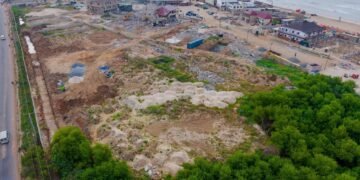
_Gbeakute_ became Hogbe Park during our childhood, at a time when many of us had little or nothing at stake in the affairs of Anlo.
We inherited that name. We grew up with it. We knew the space by that name. Generations came to identify that particular public space as Hogbe Park.
And so Hogbe Park stayed.
It is extremely important to acknowledge the point that history is made by those who lived it, preserved it and transmitted it and not by those who, later, seek to appropriate it, rearrange it or rewrite it to suit contemporary interests.
Anlo already had a Sri Park, deliberately named for posterity in recognition of that distinguished lineage.
What happened to Sri Park?
Instead of protecting, preserving and developing it as a place of public memory, it has, in the view of many concerned citizens, been allowed to deteriorate and become cluttered with kiosks and private commercial activities.
A space that ought to have represented historical memory and public dignity has been progressively compromised.
And now, instead of restoring Sri Park, the solution appears to be to take Hogbe Park—a space with its own history, identity and collective memory—and rename it Torgbui Sri III Park.
Torgbui Sri III must accept the responsibility to rally his Clansmen together to develop Sri Park for their honour and and for posterity.
*Why?*
Why must one historical memory be displaced in order to honour another?
Why must Hogbe Park cease to be Hogbe Park before the legacy of Torgbui Sri III can be recognised?
Why not restore and develop Sri Park in a manner befitting the lineage and the history it was established to commemorate?
This is not merely a question of changing a signboard.
Names matter.

Places matter.
Memory matters!
When _Gbeakute, (the epitome of criminal jurisprudence in Anlo)_ became Hogbe Park, a layer of Anlo’s history became attached to that place.
Whatever its origins, whatever debates may surround its naming, the name became part of the lived experience of generations of Anlo people.
To rename Hogbe Park is therefore not an innocent administrative exercise. It risks severing the place from the historical memory through which generations have known it.
And to rename it Torgbui Sri III Park, when Anlo already has Sri Park, creates an even deeper historical contradiction.
It is, quite frankly, a chasm between memory and commemoration.
We cannot claim to honour history, while simultaneously erasing the very spaces through which that history has been transmitted.
We cannot preserve the name of one lineage by destroying the historical identity of another public space.
We cannot invoke tradition selectively and we certainly cannot build the future of Anlo by destroying the physical markers of its past.
*“We are who we are, and that is the way it got to be.”*
Anlowoe mienye!
And Gbeakute at Tɔkɔatɔlia is not an empty piece of land waiting for somebody to give it a new identity.
It occupies a particular place in the historical milestones of Anlo.
Its significance cannot simply be overwritten by an administrative fiat or contemporary sentiment.
If Tɔkɔatɔlia itself embodies aspects of Anlo’s citadel of historical and juridical achievement, then the question becomes unavoidable:
How does renaming the Park as Torgbui Sri III Park, in one breath, preserve the history embedded in Tɔkɔatɔlia and, in the next breath, erase the name by which generations have known that public space?
That contradiction deserves an answer!
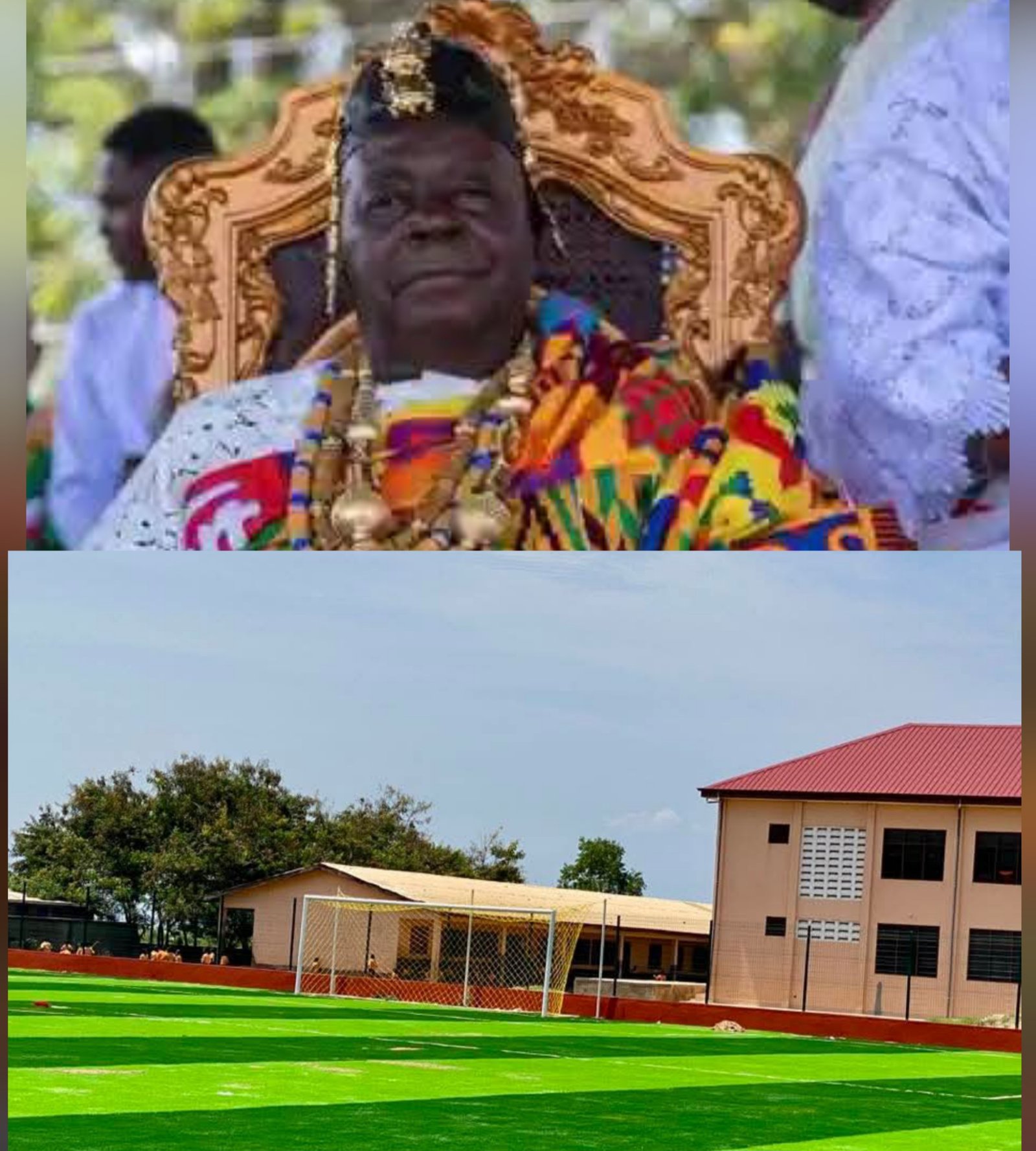
This is not an argument against Torgbui Sri III. On the contrary, a distinguished leader deserves appropriate and enduring recognition.
But recognition must not require historical displacement.
If Torgbui Sri III deserves a park, then let Anlo identify, restore, develop and properly dedicate Sri Park to that memory.
Let the space be worthy of the name. Let it become a genuine historical landmark rather than allowing the existing Sri Park to deteriorate while another historically established public space is appropriated in its place.
That would be commemoration without erasure.
That would be honouring the past without mutilating another part of the past.
And that would demonstrate that Anlo has the wisdom to hold multiple histories simultaneously.
There is another uncomfortable question that must also be asked.
The members of the royal Adzorvia Clan, whose historical role as governors of the state is acknowledged within Anlo tradition, possess considerable land within Anlo.
Why should public space, established and used for generations for the public good, become the object of contestation when there are other lands that could potentially be developed to create an enduring monument to the Adzorvia history and contribution?
Public space must remain public!
The common heritage of Anlo must not become a casualty of competing claims over historical recognition.
Today it may be Hogbe Park. Tomorrow it could be another landmark whose name carries memories that we have taken for granted.
And once these names disappear, they may never return and our cultural history is gone forever!
Our children will inherit the renamed spaces but not necessarily the stories that once gave those spaces meaning.
That is how historical amnesia begins and not always with the destruction of monuments, but sometimes with the quiet changing of names.
Anlo must do better.
We must learn to honour our ancestors without erasing one another.
We must learn to preserve public spaces rather than appropriating them.
We must learn that heritage is not the property of individuals, families or transient administrations; it is a trust held on behalf of generations-past, present and yet unborn.
So, respectfully but unequivocally:
*HOGBE PARK MUST REMAIN HOGBE PARK.*
Restore Sri Park.
Develop Sri Park.
Honour Torgbui Sri III appropriately.
But do not rewrite one chapter of Anlo’s history in the name of preserving another.
Anlo’s history is not a disposable commodity.
Our names are our archives.
Our public spaces are our monuments.
And our collective memory must not be surrendered and trampled upon.
Most Importantly,
A LEGITIMISED SPACE CAN NEVER BE ILEGITIMATE SPACE!!!
By Dumega Mayor Agbleze
September 2026