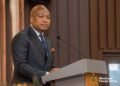



Ghana’s Ninth Parliament reconvened for its second meeting, with the Minority Leader, Hon. Alexander Kwamena Afenyo-Markin, delivering a scathing statement on the state of the nation. He accused the government of scandal, mismanagement, and failure to address critical issues such as energy shortages, economic decline, and security concerns.
Afenyo-Markin highlighted recent troubling events, including the arrest of a Ghanaian MP in the Netherlands over alleged financial crimes, and the arrest of citizens for exercising their constitutional right to free speech—particularly those criticizing the return of power outages (“Dumsor”). He condemned the resurgence of power cuts, issues at the Bank of Ghana, and questionable government transactions like the controversial award of the Damang Mine lease to a relative of President Mahama.
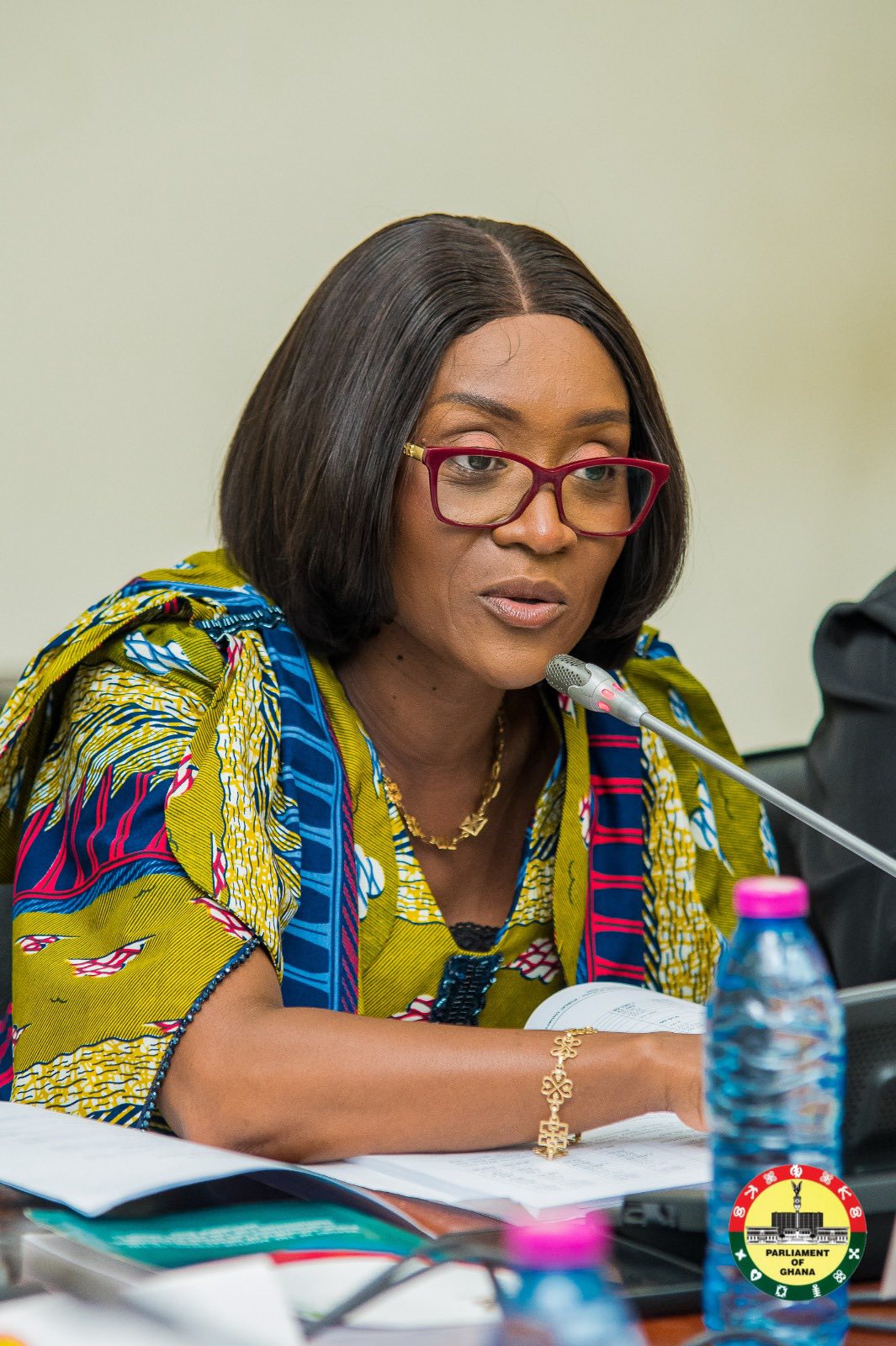
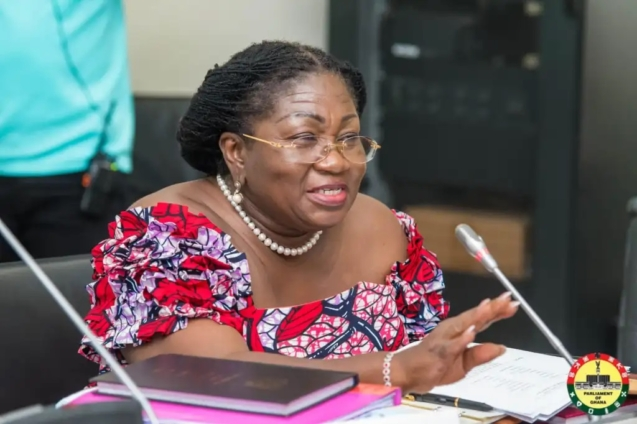
Below does Patricia Appiagyei deliver her Leader full statement on behalf of Alexander Kwamena Afenyo-Markin:
PARLIAMENT OF GHANA
SECOND MEETING – SECOND SESSION – NINTH PARLIAMENT
OF THE FOURTH REPUBLIC OF GHANA
STATEMENT BY THE MINORITY LEADER
HON. ALEXANDER KWAMENA AFENYO-MARKIN
MP FOR EFFUTU | MINORITY LEADER
ON THE STATE OF THE NATION:
A GOVERNMENT IN SCANDAL, A PEOPLE IN DISTRESS
Commencement of the Second Meeting of the Second Session | Parliament House, Accra | 21st May, 2026
- INTRODUCTION
Rt. Hon. Speaker, thank you very much,
I am grateful for the opportunity to welcome Honourable Members back to this august House as we reconvene to transact the important business of Parliament and, ultimately, the business of the Ghanaian people.
Mr. Speaker, today marks the First Sitting of the Second Meeting of the Second Session of the Ninth Parliament of the Fourth Republic. In keeping with the cherished traditions of this House, I warmly welcome Honourable Colleagues back from recess, a recess which, unfortunately, was overshadowed by the return of dumsor and the growing anxieties of many Ghanaians.
Notwithstanding these challenges, I trust that Honourable Members have had the opportunity to rest, reflect, and reconnect with the constituents whose interests and aspirations we are privileged to represent in this Chamber. I believe Honourable Members return refreshed, reinvigorated, and adequately prepared for the demanding responsibilities of this Meeting.
Mr. Speaker, the expectations of the Ghanaian people remain high, and rightly so. It is therefore incumbent upon all of us, regardless of political persuasion, to approach the work of this House with diligence, patriotism, and an unwavering commitment to accountability, good governance, and the welfare of our citizens.
Mr. Speaker, Parliament stands at the center of the nation’s life. And the life of this nation, in the weeks just past, has been marked by failure, scandal, and the deepening suffering of millions of Ghanaians who placed their confidence in a government that has failed to earn that trust.
The Minority does not take stock of the nation merely to score political points. We do so because when the Executive fails, Parliament must speak. When the government refuses to answer, this House must ask. And when power is abused, it remains our constitutional duty to say so—clearly, firmly, and without apology.
Mr. Speaker, what the country witnessed during the recess was deeply troubling: a government that drove our central bank further into historic losses; a government that brought back the darkness of Dumsor and sent armed officers to arrest citizens for speaking about it; a government that disgraced Ghana before the African continent at a sporting event it had two years to organise; a government that handed a billion-dollar national asset to the President’s own brother through a process it cannot defend; and a government that stood largely helpless while Ghanaian citizens were attacked abroad.
These are not mere opposition allegations. They are documented facts, and this House deserves a full and honest account of every one of them.
Mr. Speaker, I have ten critical matters to place before Parliament today.
- OUR COLLEAGUE IN THE NETHERLANDS: MORE MUST BE DONE
Mr. Speaker, days before we reconvened, our colleague, the Honourable Member for Asante Akyem North, was detained at Schiphol Airport in Amsterdam in connection with allegations of financial crimes involving international investigative cooperation. Parliament confirmed the incident on May 12 through a statement from the Clerk of Parliament.
We understand the Government, Parliament, and our Mission in The Hague are engaged to secure legal representation and consular support. We acknowledge those steps. They are not sufficient. This arrest has inflicted deeply damaging international press on Ghana. Our country’s name has been dragged through European headlines in a manner that reflects poorly on this Parliament and this nation. The government must respond to this as what it is: a crisis with serious reputational consequences for Ghana. We call on the Ministry of Foreign Affairs and the Speaker’s Office to intensify engagement, deploy a senior diplomatic presence, brief this House regularly, and issue a formal statement on managing the international fallout. Silence and routine will not suffice.
On innocence until proven guilty: the Minority is unequivocal. No court has made any finding against our colleague. We will not try him in the court of public opinion, and we call on all political actors and media to show the same restraint.
III. ARRESTING CITIZENS FOR POLITICAL SPEECH: AN ASSAULT ON DEMOCRACY
Mr. Speaker, during recess, members and supporters of the NPP were arrested and detained not for violence, not for financial crime, but for speech. For exercising the right to free expression that Article 21 of our Constitution guarantees to every Ghanaian. A party organiser was seized by masked, heavily armed CID and BNI officers for posting a Facebook image of the President with the caption ‘Dumsor is back.’ That is what it took to bring the full apparatus of state security to a citizen’s door. A lawyer following the case put it plainly: ‘What makes the statement false? Anybody who says dumsor is not back is living in a cuckoo land.’
Our flagbearer described these events on May 13 as an ‘endless assault on the fundamental rights’ of NPP officers and supporters that is ‘setting Ghana’s democracy backwards.’ He is right. Any government that deploys security forces against citizens for political opinion has lost its democratic bearings. Today it is the NPP. Tomorrow, it could be anyone who dares to disagree.
I call on the Inspector General of Police and the Director-General of the CID to immediately review all such cases and release every detainee held without solid legal justification. I call on the Honourable Attorney General and Minister for Justice to fulfil his constitutional role and direct the security services accordingly. They serve the people of Ghana. They do not serve the ruling party.
- DUMSOR IS BACK
Mr. Speaker, those arrests were designed to suppress the very crisis they exposed. Dumsor is back. It is back under a government that campaigned loudly on ending it. Communities across this country are once again enduring prolonged, unpredictable power cuts. Businesses are hemorrhaging money. Hospitals are under strain. Children are studying by candlelight in a country that generates its own electricity. The economic cost is estimated at $320 million per year in lost output alone.
The Akosombo Power Control Centre fire and the GRIDCo CEO suspension, raised by this Caucus in April, were documented warning signs that were not addressed with the urgency they deserved. The result is that Ghanaians are again sitting in darkness, and this government’s answer was to arrest the people who said so. The Minister for Energy must appear before this House with a credible, costed, time-bound plan to end load-shedding. Not a press release. A plan that this House can hold the government to.
- THE BANK OF GHANA: A CENTRAL BANK IN DEEP TROUBLE
Mr. Speaker, on May 1, the Bank of Ghana published its audited 2025 accounts. The numbers are alarming. The bank declared a Net operating loss of GH¢15.63 billion and an additional loss of GH¢19.3 billion. Together, that is a staggering GH¢34.9. This GH¢34.9 has moved the Bank’s negative equity position from GH¢58.62 billion to GH¢93.82 billion.
That means Ghana’s central bank owes more than ninety-three billion cedis more than it owns.
Even the GHS 15.63 billion headline conceals a worse reality. GH¢9.6 billion of the reported income came from selling Ghana’s gold reserves. Remove that, and the Bank would have recorded a GH¢4 billion operating deficit. This government sold 50% of Ghana’s Gold reserve before it could reduce the quantum of the original loss and achieve policy solvency. Meanwhile, the Bank paid GH¢14.61 billion in interest to private commercial banks in 2025 alone, banks that were posting record profits while our central bank haemorrhaged public money.
During the year 2025, when the Minority warned this Government of its worrisome monetary policy measures, the Majority dismissed them. We were told that the losses on Gold trading were not significant enough to spark a national alarm. When we warned about the Policy reversals causing huge losses on the sterilisation program, they were initially denied, only for the BOG accounts to show the true volume of the losses later.
Mr. Speaker, GH¢93.82 billion in negative equity at the institution that issues our currency is not a footnote. It is a crisis. Restoring equity to the statutory minimum will cost approximately $9.1 billion over six years. That is money that could have been used to build schools, hospitals, and farms.
The Finance and Economy Committees must convene an urgent joint hearing with the Governor present. The recapitalisation plan must be published. And this House must be updated regularly on the recapitalisation process and the instruments being used, before any further harm is done to the Bank.
- THE TRANSITION FROM AN ECF TO A PCI PROGRAM UNDER THE IMF
Mr Speaker, Contrary to Governments PR that the IMF program has ended, the truth is that this Government has only transitioned from an ECF program that has ended and signed up for a new program known as the PCI program. This is the mark of a country that the IMF believes still requires supervision. It remains to be seen whether this Government will be able to sustain the results in the framework that was negotiated by the Previous NPP administration. While the NDC is quick to claim the 2023 program was derailed, let me remind them that the IMF said no such thing. Indeed, it was their 2014 program that was described as off-track by the IMF. What is important going forward is that Ghanaians expect that hikes in utility tariffs, escalating cost of living, and new taxes will be a thing of the past. Rather, the stability of the exchange rate is what the people expect even now that the ECF is over.
VII. THE SAFETY OF GHANAIANS ABROAD: CREDIT WHERE DUE, CHALLENGE WHERE NECESSARY
Mr. Speaker, before I come to the xenophobic attacks in South Africa, I must place something on record. The steps that the Ministry of Foreign Affairs subsequently took on this matter did not arise in a vacuum. They arose, at least in part, because of the sustained pressure mounted by this Minority Caucus and, critically, because of the intervention the Minority leader made at the ECOWAS Parliament in Abuja during the First Ordinary Session of 2026, running from May 4 to 17, in His capacity as Third Deputy Speaker of the ECOWAS Parliament.
Speaking under Rule 71 on matters of urgent public importance, He raised the xenophobic attacks on Ghanaians and other West Africans in South Africa, the massacre of our tomato traders in Burkina Faso, the severing of the Ghana-Mali trade corridor, and the broader crisis of citizen protection across the sub-region. The ECOWAS Parliament subsequently ordered its Committee on Political Affairs to investigate the attacks. That is parliamentary advocacy at the regional level doing precisely what it is meant to do. And it is a rebuke, however indirect, to a Ministry of Foreign Affairs that required sustained external pressure before it acted with the urgency that these matters demanded.
Let me now set out the record of what the Ministry has done, and what remains undone.
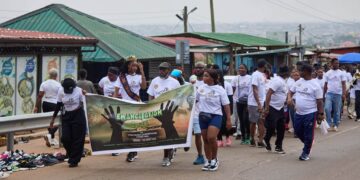
On South Africa: Minister Ablakwa spoke with Foreign Minister Lamola on April 22. On April 23, he summoned South Africa’s Acting High Commissioner and formally registered Ghana’s protest. On May 6, he petitioned the AU Commission to place xenophobic attacks on the agenda of the Eighth Mid-Year Coordination Meeting in El Alamein in June. On May 12, the President approved the evacuation of 300 Ghanaians. These were the right steps. But Mr. Speaker, several of them came somewhat belatedly. The attacks began in late April. Ghanaians were being harassed, displaced, and assaulted. A prompter and more forceful initial response was warranted and expected.
Ghana must now build a coalition of African states before the June 24 AU summit. If we arrive without allies, South Africa’s diplomatic machinery will outmanoeuvre us and reduce this to a migration management conversation. The Minister must brief this House on his coalition strategy before that date.
On returnees: a flight home is not a policy. The Minority demands that the Minister bring to this House, for legislative approval and parliamentary oversight, a comprehensive economic and social reintegration plan for all Ghanaians evacuated from South Africa. That plan must address emergency housing, financial support, business reintegration, psychological care, and a pathway to rebuild what the violence destroyed. Parliament must approve and oversee its implementation. We will not allow this to become another government programme that exists on paper and disappears in practice.
On early warning: Mr. Speaker, this is not the first time Ghanaians have been attacked abroad. It will not be the last unless we build systems that can see danger coming. The Ministry must establish and present to this House a formal early warning and early response framework for the protection of Ghanaians outside our borders. That framework must include intelligence-sharing protocols with our missions, real-time monitoring of security conditions in countries with significant Ghanaian populations, and clear coordination triggers that activate protective action before a crisis escalates into catastrophe.
Mr. Speaker, I must now raise two further crises involving Ghanaians abroad that this House has not heard enough about.
The first is the massacre of our tomato traders in Burkina Faso. On February 14, 2026, jihadist militants from the Al-Qaeda-affiliated group JNIM ambushed a truck carrying Ghanaian tomato traders in Titao, in the Loroum Province of northern Burkina Faso. The attackers separated the men from the women. They executed the men. They set the vehicle ablaze with the driver still inside. Eight Ghanaians were confirmed killed. The bodies had decomposed so severely by the time our mission could respond that burial had to proceed locally, with DNA samples taken for future identification. Eight women survived. The survivors attended the burial in place of our diplomatic mission, which could not travel to Titao because the area remained too dangerous.
The minority leader raised this atrocity on the floor of the ECOWAS Parliament and called for an ECOWAS Civilian Protection Framework for traders and workers in conflict zones. The Ghana-Mali trade corridor has since been effectively severed following a major JNIM offensive on April 25 that targeted multiple Malian cities. Our traders are caught between food security imperatives and war zones. That is not acceptable. And the Ministry of Foreign Affairs must come before this House and account fully for what it has done, what it is doing, and what it plans to do to protect Ghanaians who must travel these routes to make a living.
The second is the Gulf crisis. On February 28, 2026, the United States and Israel carried out joint military strikes on Iran, triggering retaliatory missile attacks across the Gulf. Ghanaian nationals in Bahrain, Israel, Kuwait, Qatar, and the United Arab Emirates were placed directly in harm’s way. The Ministry activated an emergency preparedness plan and began a partial evacuation of our Tehran Embassy. Minister Ablakwa met separately with the heads of mission of the United States, Israel, and Iran in Accra to assess the situation. Ghana’s Embassy in Israel identified 922 Ghanaian nationals in that country, including 65 students. Evacuation plans were developed and, where possible, activated.
Mr. Speaker, the Gulf crisis exposed in stark terms the vulnerability of the tens of thousands of Ghanaians who live and work in conflict-adjacent regions. Many are in debt bondage, unable to leave even when their safety demands it. The Ministry must brief this House comprehensively on the current status of all Ghanaians in the Gulf region, the number evacuated, the number still there, the support provided, and the framework for protecting them if hostilities resume. This Parliament will not allow our citizens’ safety to be managed in silence.
VIII. THE DAMANG MINE: EXPOSING A CORRUPT TRANSACTION
Mr. Speaker, the award of the Damang Mine lease to Engineers and Planners Company Limited, owned by Ibrahim Mahama, the younger brother of President John Dramani Mahama, raises the most serious constitutional questions of this administration’s tenure. When Gold Fields of South Africa exited the mine, the government initiated what it calls a competitive bidding process. The Minority is constrained to call it what it is: a questionable transaction dressed in the language of due process. The lease was awarded on April 7, 2026. The handover was performed on April 18. The mine’s value is estimated at between $600 million and $1 billion.
The government’s defence is that President Mahama recused himself from the Cabinet meeting that considered this matter. Government spokesperson Felix Kwakye Ofosu has confirmed this publicly, and supportive voices have praised it as the right action. Mr. Speaker, this Parliament must reject that argument firmly. A single absence from a Cabinet room does not cleanse a fundamentally compromised process.
Let us be precise. The President is the appointing authority for the Minister for Lands and Natural Resources, who performed the handover ceremony. He appointed the Chief Executive of the Minerals Commission, which supervised the process. He appointed every institutional decision-maker who handled this transaction from beginning to end. They all hold office at his pleasure. He can appoint them, and he can remove them. And we are told that stepping out of one Cabinet room, while his own appointees carried the transaction to its conclusion, satisfies the constitutional requirement? That is not recusal. That is delegation. It is outsourcing a conflict of interest to the very people who owe their positions to the person with the conflict.
There is more. While all of this unfolded, the President was using his brother’s private jet for official travel. The government’s own spokesperson confirmed that maintenance, pilot, and crew costs were borne by Ibrahim Mahama personally. The President’s brother was absorbing real financial costs on behalf of the Head of State at the very same time state institutions were evaluating and awarding a billion-dollar asset to that same brother. The conflict is not perceived. It is actual, direct, and documented.
Mr. Speaker, this House has both the authority and the duty to act. The Minority calls on this Parliament to immediately establish a full parliamentary probe into the Damang Mine transaction. The Lands and Natural Resources Committee must be the instrument of that probe. The Minister for Lands and Natural Resources, the Chief Executive of the Minerals Commission, and every official who handled this transaction must be summoned. Full bid documentation, evaluation criteria, scoring sheets, and the beneficial ownership declarations of all bidding entities must be produced. The Committee must report its findings to the full House. Ghana’s gold belongs to the people of Ghana. This Parliament will not allow a billion-dollar national asset to pass to a Presidential relative behind the thin curtain of a single Cabinet recusal.
- THE ATHLETICS DEBACLE, THE WORLD CUP, AND THE DEMAND FOR CONSEQUENCES
Mr. Speaker, Ghana hosted the 24th African Senior Athletics Championships at the University of Ghana Stadium in Legon from May 12 to 17. We won the hosting rights in June 2024. We had nearly two full years to prepare for this event. Two years. And the result was an international embarrassment of the first order. It was a case of crass incompetence that has damaged Ghana’s standing as a host nation before the eyes of the entire African continent.
Athletes arrived to find no blankets on their beds and were told they were expected to bring their own. Food provision was so poor that athletes were described as having to compete for meals. Timing systems broke down on the very first day, leaving competitors without knowledge of their own finishing times. The media centre had no internet access. Accreditation was a shambles. Transport failed for hours at a time. A gold medallist from South Africa went viral across international platforms, not for his gold medal, but for his public complaint: ‘I expected a hotel at least. When we got into the rooms, the beds were leather. We got sheets, a pillow, but no blanket. We were told we were supposed to bring our own.’
Mr. Speaker, Ghana invited the continent to our home. We had two years. And we could not provide blankets. That is not a logistical hiccup. That is a systemic failure of planning, management, and accountability at the Sports Ministry.
Now I link this directly to something with even higher national stakes. In less than one month, Ghana’s Black Stars face Panama in Toronto in our opening game of the 2026 FIFA World Cup. On June 23, they face England in Boston. On June 27, Croatia in Philadelphia. The Sports Minister has publicly set the target: to surpass Ghana’s historic 2010 quarter-final performance. Coach Carlos Queiroz has told his squad: ’40 days to honour the pride, passion and dreams of Ghana. Absolute focus. Maximum discipline. No distractions. No excuses.’ His technical staff compiled 200 individual video reports and monitored 170 matches in a single month. The coach is doing his job at the very highest professional standard.
The question this House must confront directly is this: can the same Ministry that delivered the Legon disaster be trusted to provide the Black Stars with the professional support, logistics, and preparation they need and deserve for the World Cup? It is the same Ministry. The same officials. The same institutional culture. And the evidence before us is not encouraging.
The Minority states this without equivocation: the level of incompetence that attended the African Athletics Championships must not manifest in Ghana’s World Cup campaign. The stakes are too great. The eyes of the world are too many. The pride of too many Ghanaians is riding on those matches in North America.
The Minority accordingly calls for a full parliamentary investigation into the failures at the African Athletics Championships. The Minister for Youth and Sports must appear before the full House to face questions. Not a committee hearing, Mr. Speaker. The full House. The scale of this embarrassment before the continent demands that level of accountability. Heads must roll where negligence is established. And the Minister must present a written World Cup preparedness plan to Parliament before the end of this month. Mohammed Kudus and the Black Stars earned Ghana a place at the World Cup. This House will not allow ministerial incompetence to follow them to North America.
- THE RACE TO REPLACE THE PRESIDENT: WHO IS GOVERNING GHANA?
Mr. Speaker, senior NDC figures, including Cabinet ministers, are openly positioning themselves to succeed President Mahama. Barely sixteen months into this term, succession campaigning has become a visible, publicly discussed feature of life inside this government.
This has disturbed even voices within the ruling party. Most revealing was an opinion piece published on May 5 in the Daily Graphic by Dr. Callistus Mahama, the President’s own Executive Secretary. Writing under the title ‘Before the Race Begins: A Call for Discipline, Reflection, and Duty,’ he warned: ‘Barely a year and a half into this mandate, the conversation about succession in 2028 risks arriving before the foundations of recovery have even been firmly laid.’ He warned this amount to ‘a quiet form of neglect.’ He concluded: ‘The clock is not yet ticking toward succession; it is ticking toward delivery.’
Mr. Speaker, when a sitting President’s own Executive Secretary is driven to publish a national newspaper appeal begging colleagues to stop campaigning and govern, the country is not being governed by a full government. Ghana remains under an IMF programme. Debt restructuring is incomplete. Dumsor is back. Farmers are in distress. The people appointed to solve these problems are focused on replacing the man who appointed them. The President must heed his own Executive Secretary and enforce real discipline. Ministers who cannot separate governing from campaigning should be asked to choose.
- OTHER MATTERS AND SUMMARY DEMANDS
Mr. Speaker, I flag additional matters requiring attention in this Meeting: the outstanding report on the Akosombo fire and GRIDCo CEO suspension; the Ghana Gold Board operations, which will be addressed in a dedicated Minority statement; the acute distress of cocoa, cashew, and rice farmers who have received words but not action; and the creeping politicisation of state institutions that this House must actively resist.
The Minority’s eighty-seven demands for this Meeting are as follows. One: All persons detained for exercising their right to free speech must be released immediately. Two: the Energy Minister must appear before this House with a credible dumsor plan. Three: The Finance and Economy Committees must hold an urgent joint hearing with the Governor of the Bank of Ghana present. Four: The Foreign Affairs Minister must brief Parliament on the AU coalition strategy ahead of June 24; present a comprehensive returnee reintegration plan for parliamentary approval and oversight; table an early warning and early response framework for the protection of Ghanaians abroad; account fully for the Burkina Faso tomato traders massacre; and brief this House on the status of all Ghanaians caught in the Gulf crisis. Five: this Parliament must establish a full parliamentary probe into the Damang Mine transaction; the Lands and Natural Resources Committee must serve as the instrument of that probe; the Minister for Lands and Natural Resources, the Minerals Commission CEO, and all relevant officials must be summoned; full bid documentation and beneficial ownership declarations must be produced; and the Committee must report its findings to the full House. Six: a full parliamentary investigation into the Athletics Championships failures must be initiated; the Sports Minister must appear before the full House; and a written World Cup preparedness plan must reach Parliament before the end of this month. Seven: The President must enforce real and visible discipline over the succession campaign consuming his government. Eight: diplomatic and legal engagement for our detained colleague must be intensified, and the reputational damage to Ghana must be actively managed.

XII. CLOSING REMARKS
Mr. Speaker, I want to close with a direct word to the people of Ghana.
We see you. The families sitting in darkness because dumsor has returned under a government that promised to end it. The traders driven from their livelihoods in South Africa. The farmers watching their cocoa and cashew harvests yield returns that do not cover their costs. The citizens who woke to armed men at their door for posting a political opinion online. The students cramming their lessons by candlelight in a country that produces its own electricity. The families of the eight men massacred in Titao who are still waiting for justice. We see every one of you. We hear you. And we will not be silent on your behalf.
The people of Ghana deserve governance that is equal to their patience and their sacrifice. They deserve a government that is fully at work, fully focused, and fully accountable. What they have today falls far short of that standard. It is the duty of this Minority, and the duty of this House, to say so clearly, to demand better loudly, and to use every constitutional tool available to us to compel accountability. That is our mandate. That is our promise to the people of Ghana.
GOD BLESS GHANA.
GOD BLESS THE PEOPLE OF GHANA.
Hon. Alexander Kwamena Afenyo-Markin
MP for Effutu | Minority Leader
Parliament of Ghana | 21st May, 2026