





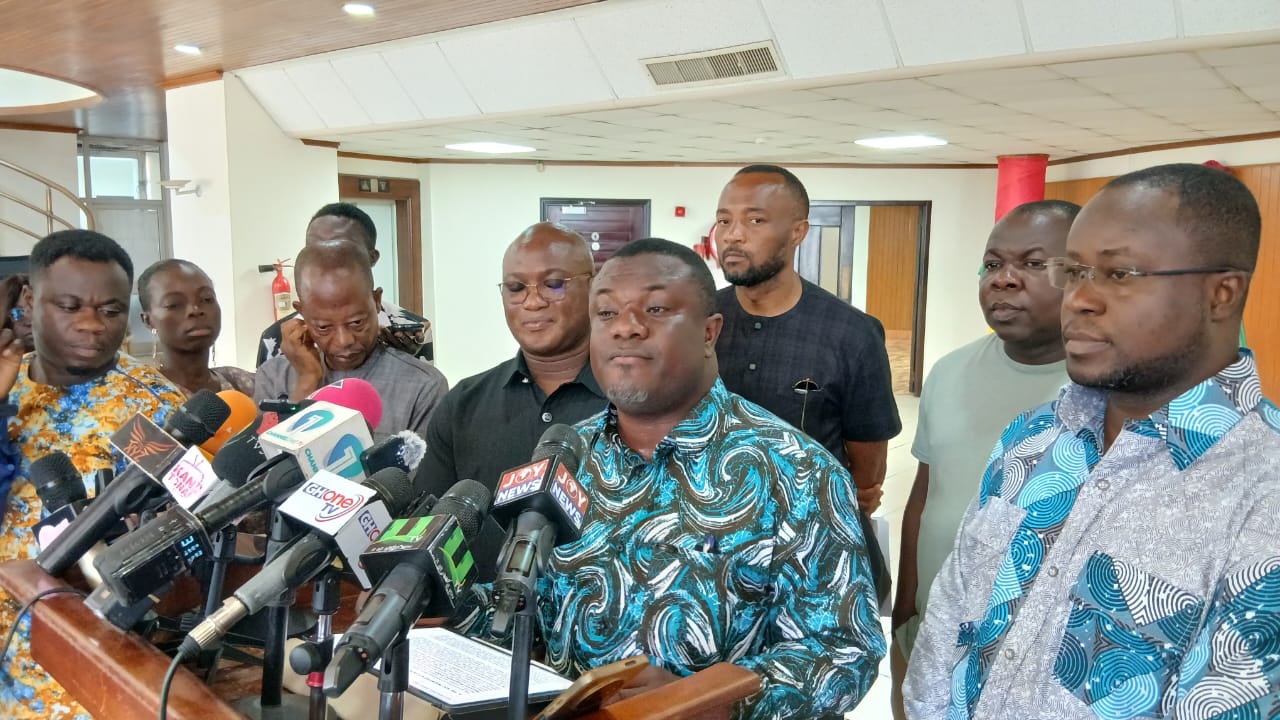
The opposition in Parliament, led by Collins Adomako-Mensah, has called on the government to come clean demanding that, upon Parliament’s resumption, the Minister for Energy and the Minister for Finance present a comprehensive, detailed, and independently verified report on the GH¢1 dumsor levy. This report should include all collections, disbursements, and the outcomes of expenditures related to the fund.
The Minority accused the NDC government of being responsible for the ongoing power crisis, asserting, “Ghanaians are not fools.” They emphasized that the persistent outages are not merely due to routine maintenance but are a result of the administration’s failure to effectively implement the Energy Sector Recovery Programme (ESRP) it inherited.
In a strongly worded statement addressing the worsening power situation, Collins Adomako-Mensah, Deputy Minority Spokesperson on the Energy Committee and Member of Parliament for Afigya Kwabre North, criticized the government for “managing the crisis through spectacle” rather than taking decisive action to resolve what he called a deepening energy emergency.
Accoding to him, “Ghanaians are increasingly frustrated as power outages—commonly referred to as “dumsor”—continue to afflict the nation. Central to this frustration is the unfulfilled promise surrounding the GH¢1 fuel levy, introduced as a dedicated fund aimed at resolving the country’s energy crisis”.
Citizens recall that a special levy of one Ghana Cedi (GH¢1) per litre was imposed on fuel, explicitly marketed as a targeted measure to improve the power sector. Already burdened by high living costs, Ghanaians reluctantly accepted this additional charge, trusting that the funds would be transparently managed and channeled into infrastructure repairs and power generation.
However, months have passed, and there is still no transparency. No report has been presented to Parliament detailing the collection and expenditure of the levy. No public accounting has been made, nor has any independent audit been published to verify that citizens’ contributions are being properly managed.
Questions abound: How much revenue has been collected from the GH¢1 levy since its introduction? Into which accounts have these funds been deposited? What projects or payments have been funded with this money? And what is the current balance of the levy fund? These are fundamental questions that any responsible government should answer without delay.
Adding to public concern is the sector’s financial health. While the Ministry of Finance announced last year that all debts to Independent Power Producers (IPPs) had been cleared and that ECG was on a better financial footing, recent data suggests otherwise. Reports indicate that the government still owes IPPs over $500 million and more than $200 million to fuel suppliers—debts that threaten to undermine efforts to stabilize the energy sector.
If the levy has been collected but not properly applied, Ghanaians have every right to know. If funds have been misappropriated, those responsible must be held accountable.

Collins Adomako-Mensah said they are committed to pressing for transparency and ensuring that the financial integrity of Ghana’s energy sector is restored.