







“The Ministry of Health remains committed to creating recruitment opportunities for all categories of health professionals, as demonstrated in the current process. Quality healthcare delivery in the Health Sector depends on effective teamwork across all professional cadres. Our agenda, spearheaded by the vision of our Minister to ensure that the underserved districts are adequately served with the requisite health professionals is on course”.
The Ministry of Health has announced significant progress in its efforts to expand the country’s healthcare workforce, unveiling details of a nationwide recruitment exercise aimed at hiring over 8,000 health professionals. The announcement was made during a press conference held at the Ministry’s conference room by the Director of Human Resource for Health Development, Frederick Mensah Acheampong.
Addressing the media, Acheampong highlighted the Ministry’s commitment to strengthening primary healthcare delivery, especially in underserved areas, through this large-scale recruitment aligned with the government’s Free Primary Healthcare (FPHC) Policy. The initiative seeks to address the backlog of over 105,000 unemployed health professionals and improve access to quality healthcare across Ghana.
The recruitment process, which received financial clearance earlier this year, prioritizes regions with critical staffing gaps, including districts in the Northern, Upper East, Upper West, and Savannah regions. Notably, districts such as Ada West, Ada East, and Ningo/Prampram in the Greater Accra Region have been prioritized.
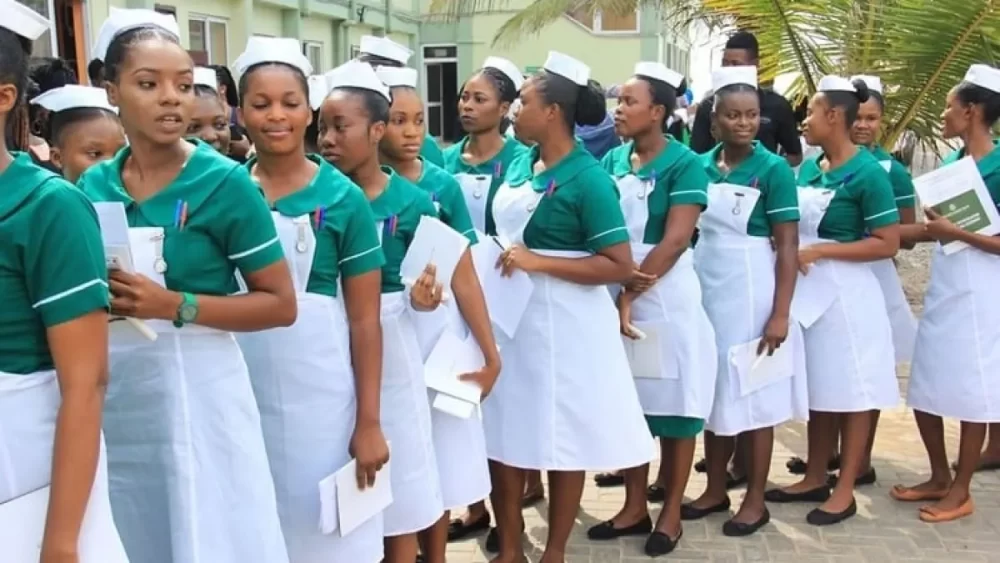
A new online recruitment portal has been introduced to promote transparency and facilitate district-level hiring. So far, the portal has recorded over 53,000 professional profiles uploaded, with applications from diverse health cadres including nurses, midwives, pharmacists, physician assistants, and allied health professionals. The portal registered high application velocities within the first five minutes of opening in regions such as Greater Accra, Eastern, Ashanti, and Bono.
The Ministry announced that successful applicants will be invited for interviews in their respective districts, with onboarding scheduled to begin on July 1, 2026. The process also includes plans for the recruitment of medical officers to fill vacancies in rural and underserved areas, as well as initiating a volunteer program for health professionals to support the FPHC initiative.
Addressing concerns about fraud, the Ministry assured the public that collaborations with security agencies are ongoing to investigate unscrupulous persons attempting to exploit the recruitment process. The Ministry also emphasized that additional financial clearance is expected from the Ministry of Finance later this year to support further recruitment efforts.
In closing, Acheampong reaffirmed the Ministry’s dedication to expanding healthcare access through strategic recruitment and capacity building, emphasizing that effective teamwork and professional collaboration are vital to achieving the country’s Universal Health Coverage (UHC) and Sustainable Development Goals (SDGs).

“The Ministry of Health remains committed to creating recruitment opportunities for all categories of health professionals, as demonstrated in the current process. Quality healthcare delivery in the Health Sector depends on effective teamwork across all professional cadres. Our agenda, spearheaded by the vision of our Minister to ensure that the underserved districts are adequately served with the requisite health professionals is on course”.
The Ministry of Health has announced significant progress in its efforts to expand the country’s healthcare workforce, unveiling details of a nationwide recruitment exercise aimed at hiring over 8,000 health professionals. The announcement was made during a press conference held at the Ministry’s conference room by the Director of Human Resource for Health Development, Frederick Mensah Acheampong.
Addressing the media, Acheampong highlighted the Ministry’s commitment to strengthening primary healthcare delivery, especially in underserved areas, through this large-scale recruitment aligned with the government’s Free Primary Healthcare (FPHC) Policy. The initiative seeks to address the backlog of over 105,000 unemployed health professionals and improve access to quality healthcare across Ghana.
The recruitment process, which received financial clearance earlier this year, prioritizes regions with critical staffing gaps, including districts in the Northern, Upper East, Upper West, and Savannah regions. Notably, districts such as Ada West, Ada East, and Ningo/Prampram in the Greater Accra Region have been prioritized.
A new online recruitment portal has been introduced to promote transparency and facilitate district-level hiring. So far, the portal has recorded over 53,000 professional profiles uploaded, with applications from diverse health cadres including nurses, midwives, pharmacists, physician assistants, and allied health professionals. The portal registered high application velocities within the first five minutes of opening in regions such as Greater Accra, Eastern, Ashanti, and Bono.
The Ministry announced that successful applicants will be invited for interviews in their respective districts, with onboarding scheduled to begin on July 1, 2026. The process also includes plans for the recruitment of medical officers to fill vacancies in rural and underserved areas, as well as initiating a volunteer program for health professionals to support the FPHC initiative.
Addressing concerns about fraud, the Ministry assured the public that collaborations with security agencies are ongoing to investigate unscrupulous persons attempting to exploit the recruitment process. The Ministry also emphasized that additional financial clearance is expected from the Ministry of Finance later this year to support further recruitment efforts.
In closing, Acheampong reaffirmed the Ministry’s dedication to expanding healthcare access through strategic recruitment and capacity building, emphasizing that effective teamwork and professional collaboration are vital to achieving the country’s Universal Health Coverage (UHC) and Sustainable Development Goals (SDGs).