








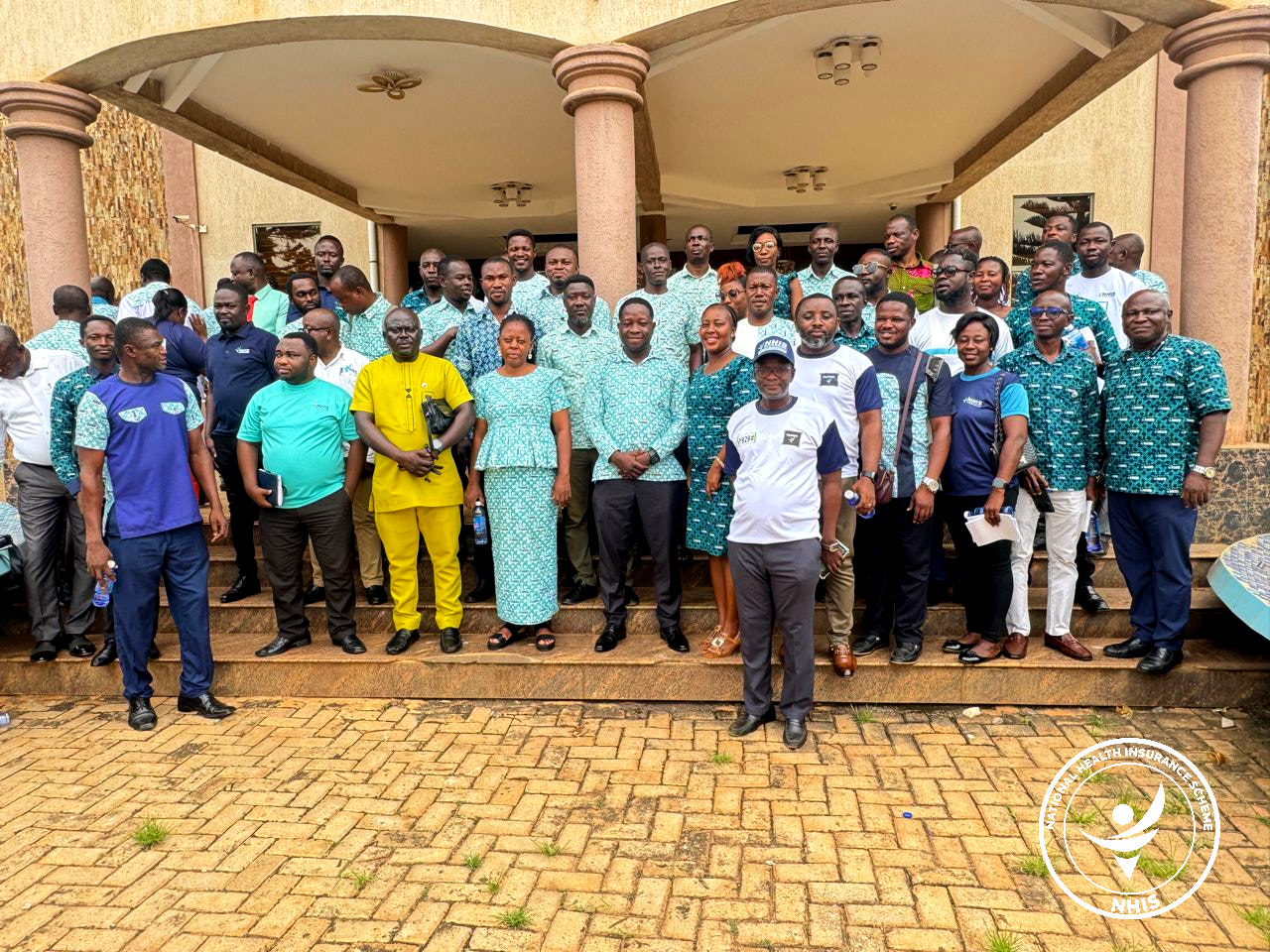
The National Health Insurance Authority (NHIA) has extended its nationwide sensitization drive to the middle and western belts of the country, engaging regional directors, district managers, and key operational staff from the Bono, Bono East, Ahafo, and Western North regions.
The high-level Trainer-of-Trainers ( ) workshop was organized to equip leadership within these zones with the necessary technical knowledge to roll out the Authority’s transformational reform agenda.
) workshop was organized to equip leadership within these zones with the necessary technical knowledge to roll out the Authority’s transformational reform agenda.The workshop featured a comprehensive technical presentation led by Mr. Joe Annor-Danquah, the Deputy Director for Management Information Systems (MIS). Mr. Annor-Danquah took the participants through the nuts and bolts of the new Biometric Membership Authentication System (BMAS).
In his presentation, the MIS Deputy Director explained that the BMAS intervention is a critical tool designed to streamline provider authentication, reduce fraud, and ensure that real-time data is available for decision-making.
The sensitization workshop focused on the NHIA’s four major flagship reform initiatives:
Biometric Membership Authentication System (BMAS)
National Telehealth
E-Pharmacy
Cashless Payment Solution
These programmes are collectively designed to strengthen service delivery, enhance data security, and support the NHIA’s digital transformation drive towards Universal Health Coverage.
Leading the engagement on Public Awareness and Education of our members, the Deputy Director for Provider and Clients Relations Hamdiya Amadu Yakubu charged the Regional and District Managers to take ownership of the new initiatives.
Addressing the participants, she emphasized that the success of these reforms relies heavily on effective supervision at the district level and strong relationship management with healthcare providers and clients. The Directors were tasked with passing what has been learnt at the training to their respective subordinates to ensure a seamless nationwide adoption.
Participants engaged actively in the sessions, raising relevant questions regarding implementation strategies in the rural districts of the participating regions. The forum served as a platform to deepen understanding, ensuring that the Regional Directors and Managers are adequately prepared to lead the subsequent sensitization sessions within their respective regions.

ADVERTISEMENT