







When the World Bank issues a declaration of “misprocurement,” it is usually a death knell for administrative integrity. It is a formal indictment, etched in the cold, clinical ink of international oversight.
Yet, in the labyrinthine corridors of Ghana’s Ministry of Health (MoH), a different reality is being manufactured.
What we are witnessing is not merely a disagreement over numbers; it is a fundamental collision between global standards and local “convenience.” It is a carnival of contradictions where the truth is the first casualty.
In the wake of the World Bank’s stinging rebuke, the Chief Director of the MoH did what bureaucracy does best: he constituted a committee. On 17 December 2025, five individuals were tasked with investigating the $3.8 million void. Their conclusion? A masterclass in institutional gaslighting.
The Committee claims the procurement “achieved value for money” and “fully met contractual requirements.” This is the pinnacle of the absurd.
On one hand, we have a global financier alleging that prices were inflated by 300% to 1100%; on the other, a domestic committee insisting everything was “competitive within the Ghanaian market.”
How does a $1 item become $11 and still be called “competitive”? Perhaps in the distorted economics of our political elite, “market rate” is synonymous with “political markup.” By declaring the World Bank’s findings “inconsistent with documented evidence,” the MoH is effectively telling the lender of last resort that it cannot count.
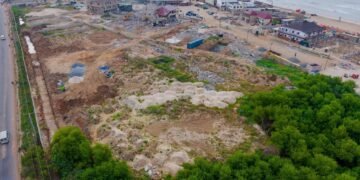
The MoH Report strikes a tone of aggrieved innocence, claiming the World Bank declined to provide the “detailed benchmarking analysis” used to justify the misprocurement. This is the classic “show me your workings” defence, a rhetorical pivot used to stall for time while the facility at Weija-Gbawe remains a monument to stalled hope.
If the World Bank is holding the cards close to its chest, the Government of Ghana is playing a game of blind man’s buff. The path to transparency has become a thicket of technicalities.
We are trapped in a stalemate of “their word against ours,” while $3.8 million in vital capital vanishes like morning mist over the Volta. This is not governance; it is a jurisdictional tug-of-war played with the lives of the people of Weija-Gbawe as the rope.
The Committee’s recommendation, that the Ministry of Finance should “formally engage” the Bank to recall the declaration, is optimistic at best and delusional at worst. One does not simply ask the World Bank to “oops, sorry” a multi-million dollar fraud investigation.
If the government were serious about transparency, it would not wait for a formal recall. It would trigger a forensic audit that is truly independent, not a committee constituted by the very Ministry under fire.
We need a forensic study that looks beyond the “documented evidence” provided by those who signed the contracts. We need to know where the money went, who sanctioned the 11-fold markups, and why the “price reasonableness” of the MoH differs so radically from the rest of the planet.
Criminal liability is not a ghost to be exorcised by a memo; it is a cancer to be cut out by the law.

Perhaps the most cynical turn in this saga is the suggestion that the government should “mobilise resources internally” to complete the project. This is the ultimate face-saving manoeuvre.
When the international community pulls the plug on account of corruption, the administration simply reaches into the taxpayer’s pocket to cover the deficit of its own making.
Completing the facility with internal funds does not “cure” the misprocurement; it hides the crime. It is the equivalent of a man burning down his house, claiming insurance fraud was “inconsistent,” and then asking his children to pay for the new bricks.
As it stands, the path of accountability is not just blur, it is invisible. We are caught between the anvil of international sanctions and the hammer of domestic denial. The “confusion state” is not an accident; it is a strategy. In the fog of competing reports and withheld benchmarks, the truth is allowed to drown.
We are left with a Pediatric Clinic that stands as a symbol of our national malaise. If we cannot reconcile the cost of a bed or a monitor with the reality of the market, we cannot claim to be a nation of laws. We are merely a nation of looters with a very efficient printing press for committees.
The ORAL sun is setting on this administration, and it is leaving behind a shadow so long it threatens to swallow the very light of our democracy.
By Raymond Ablorh