








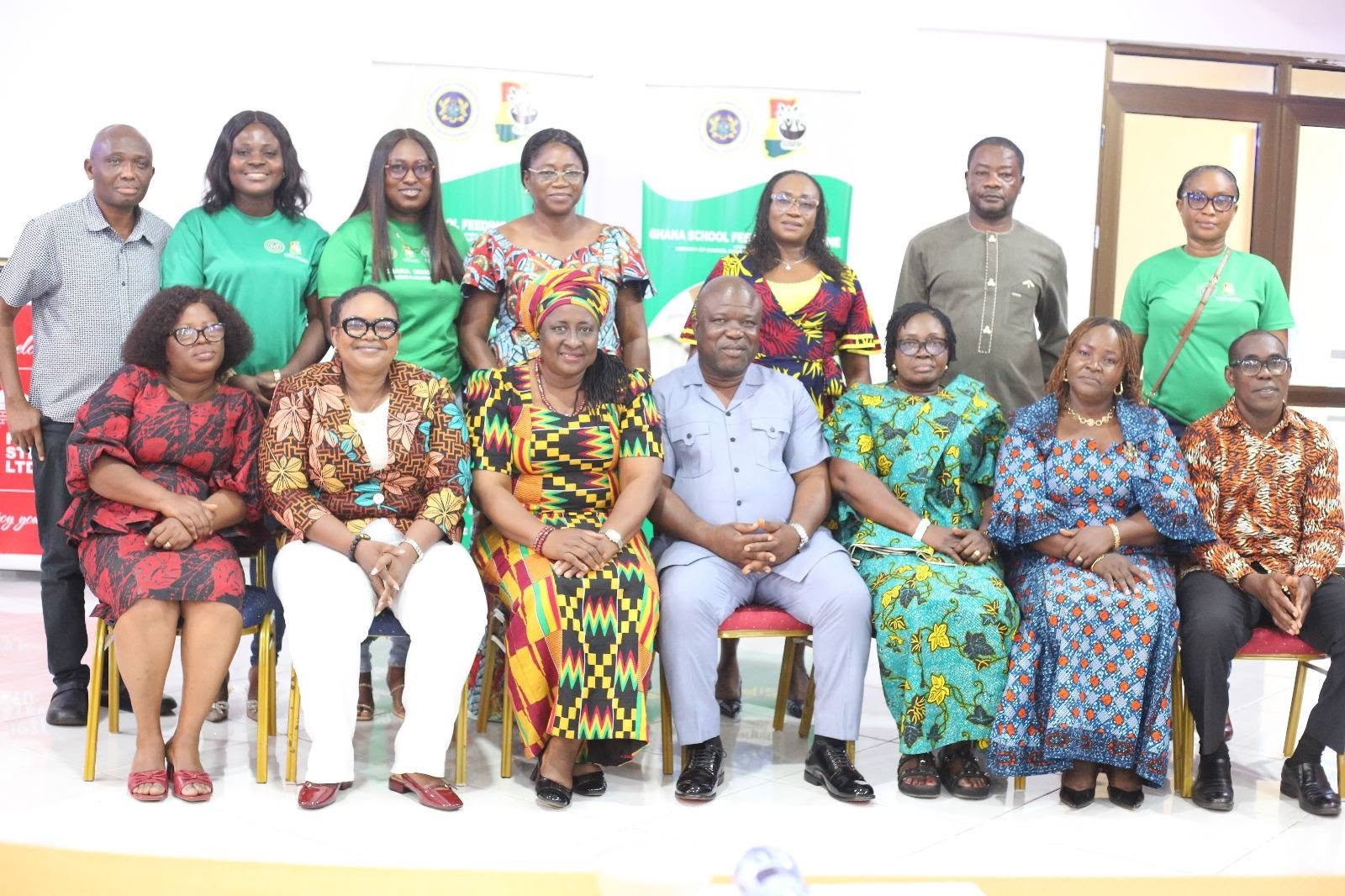
The National Coordinator of the Ghana School Feeding Programme (GSFP), Hajia Forgor has called for stronger collaboration between the Programme (GSFP) and the Ghana Education Service (GES) to enhance the effective delivery and collaboration of the school feeding programme.
Hajia Fati made the call at Ho during a workshop with Regional and District Education Directors from Eastern, Oti and Volta regions, organised to sensitise them on the mandate of the GSFP and strengthen collaboration at the regional and district levels.

The National Coordinator expressed optimism that the Programme would eventually have Coordinators in all districts to facilitate closer engagement with stakeholders and improve monitoring and service delivery.
She noted that the GSFP was also contributing significantly to employment and women’s economic empowerment, explaining that the Programme deliberately awards about 90 percent of catering contracts to women, while about 10 percent goes to men. She stressed that empowering women meant that strengthening a whole household being lifted from poverty.
According to her, the GSFP has contracted about 1350 caterers nationwide, who have in turn engaged approximately 27,000 cooks. In total, about 40,500 people have been directly employed through the Programme, excluding auxiliary and other related services generated by school feeding activities.

The National Coordinator further disclosed that the Programme currently covers about 70 percent of public schools from Kindergarten One to Primary Six, with efforts underway to extend coverage to the remaining 30 percent.
She appealed to GES and basic school headteachers to provide accurate and timely school data, noting that reliable data would help the Programme extend feeding coverage to more beneficiaries.
On funding, she said government had increased the feeding grant from GH¢1.50 to GH¢2.00 per beneficiary pupil since last year and efforts efforts were being by the sector minister to secure further upward adjustments to the grant
She also highlighted the significant government investment in the Programme, indicating that about GH¢1.5 billion is spent annually on school feeding, underscoring the need for all stakeholders to work together to compliment government’s efforts to sustain the GSFP.
The meeting provided an opportunity for the GSFP and education authorities to discuss ways of strengthening coordination, improving data management, and effective monitoring

ADVERTISEMENT