







The Oti Region is currently embroiled in a deepening leadership crisis that threatens to undermine the Region’s development and destabilize the ruling NDC party.
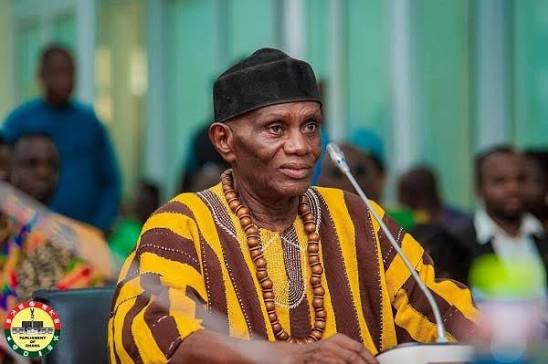
At the heart of this turmoil is Regional Minister John Kwadwo Gyapong , whose controversial actions and political maneuvers have raised serious concerns among the MPs and party supporters alike.
Sources reveal that John Kwadwo Gyapong is reportedly working against all but love just one of the nine MPs representing the Region, with reasons known only to him.
This has created a rift within the local political landscape, with many accusing the Minister of prioritizing personal ambitions over Regional growth and party unity.
An undercover Journalist who engaged with some of the affected MPs uncovered alarming sentiments about the current leadership. One MP, speaking on condition of anonymity, disclosed, “The minister is working against us, undermining our efforts and trying to position himself as the sole benefactor of any political success in the region.”
Another MP expressed frustration, lamenting that the minister’s actions are “not only harming the development efforts but also dividing our party and supporters.”
The discontent among MPs is growing, with many warning that the NDC’s popularity in the Region is waning under Minister John’s leadership.

Several MPs told our undercover journalist that the Minister’s refusal to listen to their concerns and his attempts to consolidate power are causing disillusionment among party members and constituents alike.
Critically, there is widespread concern that if the national leadership of the NDC or the government at large does not intervene, the party could face significant setbacks in upcoming primaries.
Some MPs fear that their own political careers might be jeopardized if the current trend continues, with some predicting that a number of colleagues could lose their seats if the party’s leadership fails to call John Kwadwo Gyapong to order.
Political analysts suggest that this internal strife could have far-reaching consequences not only for the Oti Regions but also for the future of the NDC in the area.
The party’s credibility and unity are at stake, and urgent action from the national leadership is being called for to restore stability and focus on development.
As the situation unfolds, all eyes are on the NDC’s leadership to see whether they will address the growing discontent and take decisive steps to resolve the crisis before it further damages the party’s prospects in the upcoming elections.
Stay tuned for more updates on this developing story.
Background:
The Oti Region is one of Ghana’s six newest administrative regions, carved out of the former Volta Region in 2018 and officially inaugurated in 2019.
With its regional capital located in the historical town of Dambai, it spans approximately 11,066 km² and shares borders with the Republic of Togo to the east.
The Oti Region of Ghana is a highly diverse area comprising around 25 different ethnic groups.
The indigenous populations are primarily Guan-speaking tribes (such as the Krachi, Nchumuru, Akyode, Adele, Buem, and Nkonya).
The region also includes significant populations of migrant settlers, including the Ewe, Konkomba, Kotokoli, and Hausa people.
The Oti Region of Ghana has exactly 9 constituencies: Biakoye, Buem, Akan, Krachi East, Krachi Nchumuru, Krachi West, Nkwanta North, Nkwanta South, Guan.
It has 8 districts namely, Kadjiebi, Jasikan, Nkwanta North, Nkwanta South, Krachi East, Krachi Nchumuru, Biakoye District, Krachi West.
The vegetation consists predominantly of grassland, especially savanna with clusters of drought-resistant trees such as baobabs or acacias.
Investigative Reporter