






From 30th May to 6th June, a high-level delegation of government officials, investors, business leaders, Chambers of Commerce, and strategic institutions, will converge in Accra to explore opportunities in trade, agribusiness, manufacturing, logistics, fintech, tourism, energy, and infrastructure.
The event represents a major step in deepening economic cooperation between Ghana and the United States, particularly between Ghana and the Commonwealth of Pennsylvania.
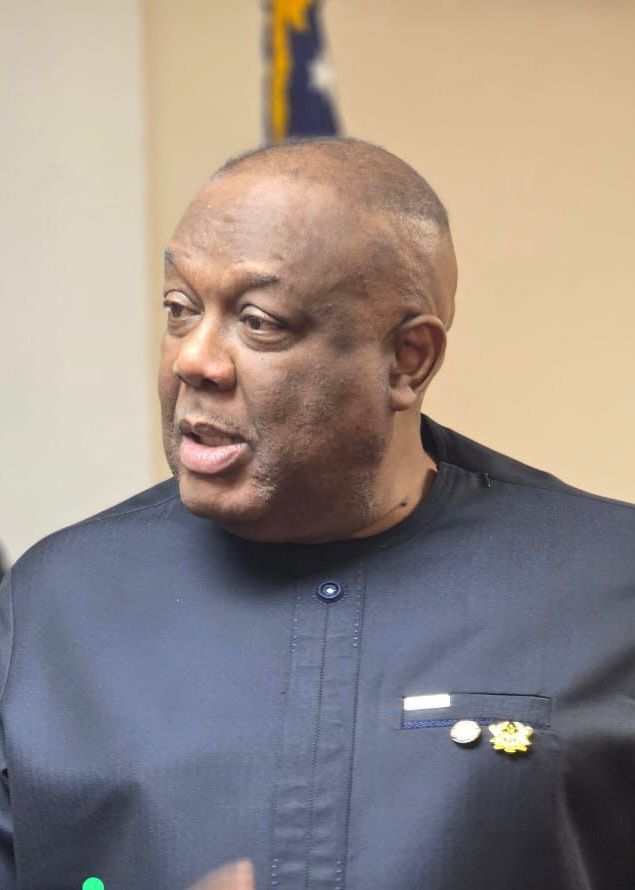
Led in part by Ghana’s Ambassador to the United States, Victor Emmanuel Smith, the mission aligns with Ghana’s broader economic transformation agenda and its positioning as the gateway to Africa under the African Continental Free Trade Area (AfCFTA).
WHY A TRADE MISSION?
1. The mission seeks to strengthen Ghana–U.S. Economic relations, deepen commercial and institutional ties by creating direct engagement opportunities between Ghanaian and American businesses, policymakers, and investors.
2. Position Ghana as an investment destination and showcase Ghana as politically stable, investment-ready, reform-oriented, and strategically positioned as an entry point into Africa’s 1.4 billion-person AfCFTA market. The mission reinforces Ghana’s strategic role as host of the AfCFTA Secretariat, a gateway to regional trade, and a hub for American companies seeking access to African markets.
3. Promote sector-specific partnerships which focus on priority sectors including agribusiness, manufacturing, transportation & logistics, fintech, mining, tourism, renewable energy, SMEs and digital innovation.
4. Encourage diaspora and private sector participation as Ambassador Smith has consistently emphasized, that the diaspora is a bridge for trade, technology transfer, investment facilitation, and risk reduction in cross-border business partnerships.
WHAT GHANA STANDS TO ACHIEVE
The mission is expected to attract increased Foreign Direct Investment (FDI) into Ghana’s strategic sectors, expand bilateral trade through B2B and B2G meetings. This affords Ghanaian companies opportunities to secure strategic partnerships, enter supply chains, promote value-added products and access new U.S. markets.
Several negotiations and partnership discussions are expected to culminate in Memoranda of Understanding (MOUs), investment commitments, technical cooperation agreements, and institutional collaborations.
The mission also provides a platform to present Ghana’s 24-hour economy initiative as a catalyst for industrialization, job creation, exports, logistics efficiency, and manufacturing competitiveness.
Tourism and cultural diplomacy will be enhanced through site visits and cultural engagements. These are expected to strengthen Ghana’s tourism profile and showcase opportunities in eco-tourism, hospitality, heritage tourism, and creative industries.
WHAT TO WATCH OUT FOR
Quality of Investment Commitments – One key issue will be ensuring that discussions move beyond expressions of interest toward bankable projects, investment conversion, financing commitments, and implementation timelines.
Trade Facilitation and Regulatory Efficiency – Potential investors will pay close attention to customs systems, regulatory transparency, ease of doing business, tax administration, land access, and investment protection mechanisms.
Infrastructure and Logistics Readiness – Given the emphasis on transportation, logistics, and manufacturing, investors will assess Ghana’s ports, roads, energy reliability, industrial parks, and supply chain systems.
SME Financing – Access to financing for SMEs and startups remains a critical area requiring stronger collaboration between banks, development finance institutions, and private investors and this aspect will be a major area for discussion.
WHAT MAKES THIS MISSION SPECIAL?
High-Level Political and Diplomatic Participation – The mission involves Ghana government officials, US Embassy representatives, Pennsylvania Senators, Ministers, Ghana Investment Promotion Council, the U.S. Commercial Service, Chambers of Commerce, and private-sector leaders.
Strong Focus on Action-Oriented Engagement – Unlike traditional conferences, the mission emphasizes: matchmaking, B2B/B2G engagements, MOU negotiations, sector roundtables, and site visits.
Integration of Tourism and Culture – The Safari Valley and Eastern Region engagements add a unique dimension by blending investment diplomacy with tourism, cultural heritage, and community engagement.
CONCLUSION

The 2026 U.S. Trade Mission to Ghana represents more than a business delegation – it is a strategic economic diplomacy platform designed to strengthen Ghana’s global partnerships, attract transformative investment, and expand opportunities for businesses and communities on both sides of the Atlantic.
Under the leadership of Ambassador Victor Emmanuel Smith, the mission underscores Ghana’s commitment to building practical, results-oriented partnerships that support industrial transformation, private sector growth, job creation, and turn dialogue into long-term economic partnerships.
Written by
Ethel Codjoe Amissah, Head of Information, Embassy of Ghana, Washington DC
(ethel.codjoeamissah@isd.gov.gh)
And
Mickson Opoku
Head of Trade & Investment
mickson43us@yahoo.com
trade.washington@mfa.gov.gh
Embassy of Ghana, Washington DC