





What every Ghanaian should know about wells, boreholes and groundwater after flooding
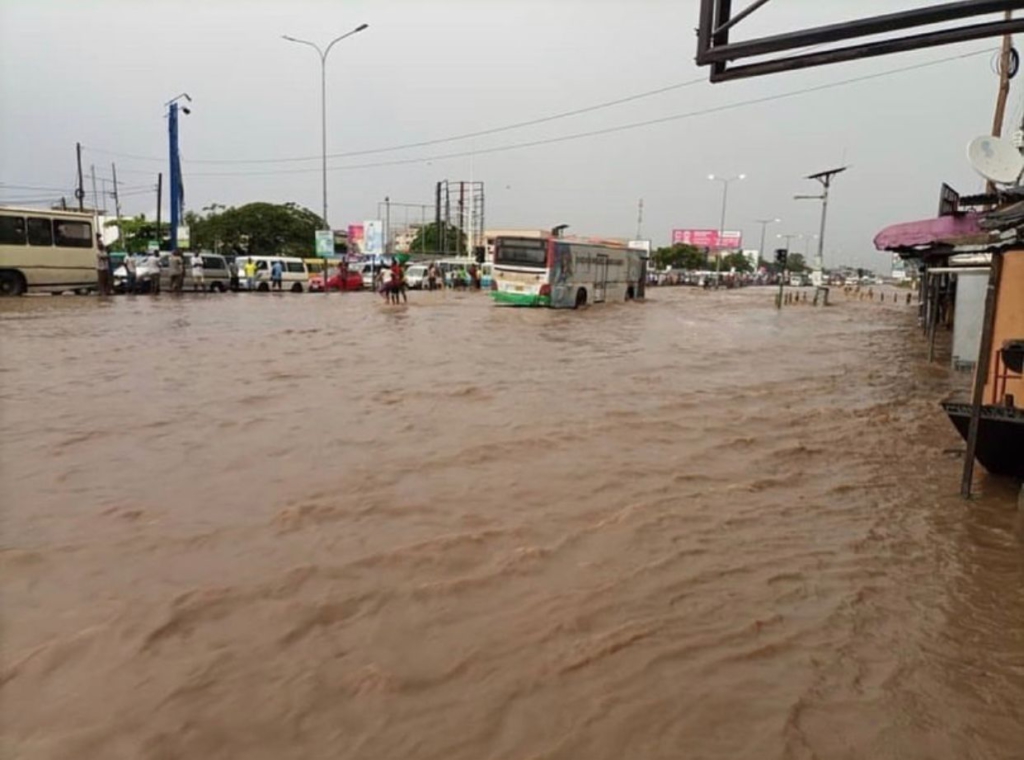
As the floodwater starts to recede, families are busy removing mud from their homes. Mattresses soaked with water are placed outside to dry in the sun. Shopkeepers are assessing their financial losses, while cars undergo repairs and roads are gradually becoming accessible again. In communities hit by the floods, people are striving to restore normalcy to their lives. The president has declared a national day dedicated to cleaning. However, amidst the efforts to clean our homes, roads, and communities and tally the visible destruction, another crucial question arises: Is our drinking water still safe?
This question is significant because several households, schools, churches, hotels, businesses, and communities in Ghana rely on boreholes and wells for their water supply. After a flood, the focus naturally shifts to visible damage: submerged roads, inundated homes, damaged drains, ruined properties, and displaced families. Yet, some impacts might remain concealed underground.
Consequently, the recent floods in the country should prompt us to consider more than just the water on the surface. We must also pay attention to the water beneath us, and it is important to clarify from the outset: flooding does not automatically render every borehole in the affected region contaminated. A borehole that is properly sited, constructed, and protected may still be safe. Deep groundwater is often more shielded from surface contamination compared to shallow wells. However, assuming that a borehole is safe simply because it continues to produce clear water can be a risky misconception.
When floodwater moves, it carries history with it
Floodwater is more than just rainwater. As it travels through a neighbourhood, it might have traversed open drains, garbage dumps, overflowing septic systems, pit latrines, markets, mechanic workshops, fuel-contaminated surfaces, animal-waste zones, cemeteries, industrial sites, and polluted streams. It collects various materials along its path. Some of these are visible: plastic waste, soil, sewage, oil, and debris. However, much remains unseen. Microorganisms that cause diseases and dissolved pollutants do not reveal themselves by altering the appearance of the water.
The World Health Organization cautions that floods can contaminate wells, boreholes, and surface water sources when faecal matter is washed from the ground or when latrines and sewers overflow (WHO, n.d).
This issue is especially critical in densely populated areas of the country, where boreholes, wells, septic tanks, drains, refuse-disposal sites, and homes may all compete for limited space.
Consider a low-lying compound in Accra or Tema. The household has a borehole, and a septic tank is located a few metres away. Heavy rain pours for hours, leading to flooding in the compound. Drains overflow, and the ground becomes saturated. Floodwater rises around the borehole head.
The following morning, the pump remains operational. The water appears clear. The family believes everything is fine. But is it? That is the question.
How can floodwater affect boreholes?
Many individuals assume that a borehole’s depth ensures it is unaffected by surface activities. While a well-constructed borehole does provide significant protection, depth alone does not ensure safety. The borehole’s condition is crucial. Floodwater can pose a contamination threat if the borehole head lacks proper protection, the concrete apron is cracked, the sanitary seal is insufficient, the casing is compromised, the surrounding area is submerged, or if dirty water seeps through gaps around the casing. A borehole should be viewed as more than just a conduit for water; it is also a link between the surface and subsurface. If this link is poorly constructed or maintained, it can become a route for contamination. The geology around the borehole is also significant. Water behaves differently in various soils and rocks. In some areas, thick clay-rich layers may slow down contaminant movement, while in others, sandy materials, shallow groundwater, fractures, or highly permeable zones may facilitate quicker pathways. This explains why two boreholes in the same flooded area might not face identical risks. One might be deep, well-sealed, elevated above the ground, and situated away from contamination sources. Another might be in a low-lying area, have a cracked apron, be near a septic tank, and be surrounded by floodwater. Simply labeling both as “boreholes” overlooks these critical distinctions.
Ghana already has evidence that flooding can affect groundwater quality
This issue is not merely theoretical but a reality in both developed (O’Dwyer et al., 2018) and underdeveloped countries. In Ghana for instance, Dzodzomenyo and his team conducted a study on domestic water sources in flood-prone areas within the Savelugu Municipal and Talensi Districts of northern Ghana. They analyzed water samples both during and right after flooding, comparing these results with those from the dry season. The outcomes of their research hold significance for ongoing discussions in Ghana. The study revealed that groundwater sources experienced a notable increase in contamination by E. coli and thermotolerant coliform bacteria during floods. Although boreholes were generally less contaminated than hand-dug wells and surface water sources, the quality of groundwater still declined during and just after the flood events (Dzodzomenyo et al., 2022). This discovery warrants careful consideration. It conveys two simultaneous messages; i.e., 1) it is crucial to avoid causing unnecessary alarm by suggesting that groundwater becomes unsafe every time flooding occurs and 2) it is equally important not to assume that groundwater is inherently safe simply because it originates from underground. The key lies in thorough evaluation, proper construction, source protection, and regular testing.
The most vulnerable water source may be the one you trust most
One challenge linked to groundwater pollution is psychological. People frequently have confidence in borehole water because it seems clear. When we turn on the tap, we see water without colour. There is no mud or floating debris, and it might not have any odour. Thus, we assume the water is safe. Yet, appearance is not a reliable indicator. Microbial contamination is invisible to the naked eye, and many dissolved chemical pollutants cannot be eliminated. Therefore, the phrase “the water looks clean” should never be considered a test of water quality. Research conducted in Ghana has already highlighted broader issues regarding the quality of certain borehole supplies. For instance, Boadi and colleagues examined borehole drinking water samples in the Kumasi Metropolis and found significant microbiological contamination, along with concerns about nitrate levels and acidity (Boadi et al., 2020). The aim of citing such studies is not to imply that every borehole in Ghana is unsafe. It serves as a reminder that a borehole is merely a water source, not a guarantee of water quality. Water should be deemed “safe” only through proper protection and suitable testing.
Who should be particularly concerned after a flood?
Not all households encounter identical risks, yet certain scenarios should prompt immediate concern.
- Borehole head submersion
When floodwater rises above or surround the borehole head, it warrants close scrutiny. This is especially crucial if the wellhead lacks adequate protection or if the apron is compromised.
- Proximity to flooded sanitation systems
Many households rely on on-site sanitation facilities. In cases of severe flooding, overflowing or damaged systems can create pathways for faecal pathogen contamination. A borehole that has functioned safely for years might face new risks when the ground becomes saturated and nearby sanitation infrastructure is overwhelmed.
- Cracked borehole apron
The concrete platform around a borehole serves more than an aesthetic purpose. A well-designed apron directs contaminated surface water away from the borehole. If it is significantly cracked, sunken, or poorly constructed, water can accumulate near the wellhead.
- Borehole in low-lying areas
Boreholes situated in areas where floodwater naturally gathers may be repeatedly exposed during heavy rainfall. This should concern not only current borehole owners but also those considering new installations. Flood risk should be evaluated before drilling, not after the next flood event.
- Sudden water changes post-rain or flooding
Any abrupt alteration in taste, smell, colour, turbidity, or salinity should be examined. However, the absence of such changes does not guarantee the safety of the water .

- Shallow hand-dug wells
Shallow hand-dug wells are generally more vulnerable to near-surface contamination compared to well-protected deeper boreholes. A hand-dug well that has been directly flooded should be considered potentially compromised until it undergoes proper assessment.
- Presence of fuel, chemicals, or waste nearby
Consider areas like mechanical workshops, fuel stations, industrial sites, dumpsites, and storage facilities. Floodwater can mobilize and redistribute surface contaminants. The specific risk level depends on local conditions, underscoring the importance of post-flood evaluations.
What should a household do after a flood?
In cases where your borehole or hand-dug well is directly affected by flooding, submerged, damaged, or encircled by potentially contaminated floodwater, do not presume the water is safe simply because the pump remains operational. Initially, it is crucial to examine the water source and its immediate environment. Was the borehole’s top submerged? Is there any cracking on the concrete apron? Has the surrounding ground collapsed? Is there any damage to the casing? Did the nearby septic tank overflow? Did floodwater from drains, refuse areas, workshops, or polluted streams reach the borehole? Has there been any change in the appearance of the water, odour, or taste? While these observations are not a substitute for laboratory testing, they can help assess potential risks. If there is a credible concern about contamination, the most prudent action is to seek professional evaluation and conduct water-quality testing before resuming regular consumption. Until the water’s safety is confirmed, households should adhere to guidance from relevant public health and water authorities and, if possible, use an alternative source known to be safe. It is important to note that boiling does not resolve every water issue. While boiling can effectively address many microbial threats when done correctly, it does not eliminate all chemical contaminants, dissolved salts, or metals. Therefore, the response should be tailored to the specific issue at hand. This underscores the importance of testing.
We should also think about schools
We must also pay attention to children as a significant group. Consider a school situated in a region hit by floods. The school grounds become inundated over the weekend, but by Monday or Tuesday, the water has subsided. Teachers and students come back, and since the school’s borehole is operational, regular activities resume without delay.
Was the borehole head submerged in water? Did the storage tank have any impact? Were the pipelines compromised? Did floodwater reach the vicinity of the pump? Has anyone conducted an inspection?
These inquiries are equally relevant for hospitals, clinics, churches, restaurants, chop bars, hotels, hostels, and food-processing enterprises. In the aftermath of a flood, ensuring the safety of water sources should be part of the recovery process, alongside cleaning, repainting, and fixing damaged infrastructure.
A flood can expose weaknesses that were already there
We must confront an unsettling reality. Often, the flood isn’t the root issue; it merely highlights a pre-existing flaw. A poorly constructed borehole was flawed even before the rain arrived. The apron had already developed cracks. A borehole positioned too near a contamination source was already at risk. A community lacking borehole records is already facing a data issue. A water source that has never undergone testing is already shrouded in uncertainty. The flood merely heightened the urgency. Therefore, groundwater protection should not commence when the streets are submerged. It needs to start during the planning phase of the borehole. Where is the ideal location? What is the site’s flood history? Is it naturally low-lying? How far are the sanitation facilities? What is the local geological condition? How shallow is the groundwater? Who oversaw the drilling process? How will the borehole be sealed? Will the headworks be elevated and safeguarded against flooding? Will the water undergo testing? Who will be responsible for its maintenance? These are not mere bureaucratic inquiries; they are crucial public health concerns.
The lesson from northern Ghana should not be ignored
The study by Dzodzomenyo and his team provides another valuable insight. Their research revealed that boreholes were typically less polluted than hand-dug wells and surface water during flooding. This finding is promising, as a well-protected borehole can serve as a crucial resource during crises. However, there is a complication. When certain groundwater sources were inaccessible, families resorted to using more contaminated surface water. The study underscored not only the pollution of water sources but also the risks posed when floods disrupt safer options, compelling people to rely on more hazardous alternatives (Dzodzomenyo et al., 2022). This is particularly pertinent to disaster preparedness. A community that is truly resilient doesn’t just possess a borehole; it has a safeguarded, operational, regularly tested, and well-maintained water supply that remains reliable during extreme events. This distinction is significant.
Climate resilience must include groundwater
In Ghana, discussions about climate resilience frequently focus on infrastructure like drains, sea-defense mechanisms, drought-tolerant crops, flood alerts, and emergency responses. These elements are undeniably crucial. Nonetheless, the role of groundwater should not be overlooked.
While heavy rainfall aids in replenishing groundwater, it also poses risks by potentially spreading contaminants and revealing vulnerabilities in inadequately safeguarded water systems. The dynamics are complex.
As climate change, urban growth, and increased water usage exert more pressure on our communities, boreholes will likely continue to appeal to households, businesses, schools, and institutions. However, relying more on groundwater without proportionate investment in its protection would be a grave error.
We must not applaud every new borehole while neglecting the aquifer’s state. We should not promote private water sources while disregarding water quality. We cannot afford to wait for floods only to realize that the locations of thousands of boreholes are unknown. We must protect more than just the visible water sources.
What should Ghana do now is the question.
In the aftermath of severe flooding, it is crucial to identify boreholes/hand-dug wells that are at risk within the impacted communities. It is essential for District Assemblies, environmental-health units, water agencies, public-health institutions, and community leaders to be aware of which hand-dug wells and boreholes have been submerged or damaged. Sources that pose a high risk should be prioritized for inspection, testing, and necessary remediation. Special attention must be given to schools and health facilities located in flood-affected areas.
Beyond addressing the immediate crisis, Ghana must incorporate flood risk considerations into groundwater development strategies. Prior to drilling a borehole, it is important to evaluate whether the proposed location is susceptible to flooding. Borehole completion records should accurately document the coordinates. Districts need to keep detailed inventories of boreholes/hand-dug wells, and critical public water sources should be mapped in areas known to be at risk of flooding. Borehole construction standards must consider local flood conditions. Existing boreholes in areas that experience frequent flooding should be evaluated and improved as needed. Monitoring of water quality should continue beyond the commissioning of a borehole. It is important to educate the public that a functioning pump does not necessarily equate to safe water.
My message to every household after a flood
When tidying up your house, also examine your water supply. As you clear mud from your room, look at the borehole. While fixing the wall, ensure you check the wellhead. As you drain the flooded shop, inquire about the source of water for drinking and cooking. If your septic tank overflows, don’t overlook the borehole nearby. If floodwater inundates your well, don’t rely on appearances to assess safety. If your borehole is underwater, seek information before resuming its use. Even after a flood, clear water might still conceal traces of where the floodwater has traveled.
Recent floods have once again highlighted the rapid impact water can have on our lives. Within just a few hours, roads may vanish, homes might become inundated, and families could lose what they have spent years creating. The immediate devastation requires our complete focus and response. Yet, recovery efforts must also delve deeper. Not every borehole in a flooded region is contaminated. We should avoid inciting panic, but we must not presume safety without proof, particularly when a water source has been submerged, damaged, inadequately protected, or exposed to overflowing sanitation systems and contaminated floodwater. This is the time to include hydrogeology in public discussions. After the flood, we should not only inquire: Is my home secure? Is my road accessible? Has the water level dropped? We should also consider: Is the water I am consuming still safe? Even when the floodwater has receded from our streets, the narrative may not be complete. The water beneath us might still have more to reveal.
Further Reading
Andrade, L., O’Dwyer, J., O’Neill, E., & Hynds, P. (2018). Surface water flooding, groundwater contamination, and enteric disease in developed countries: A scoping review of connections and consequences. Environmental Pollution, 236, 540–549. https://doi.org/10.1016/j.envpol.2018.01.104
Boadi, N. O., Saah, S. A., Baa-Poku, F., Mensah, E. A., & Addo, M. (2020). Safety of borehole water as an alternative drinking water source. Scientific African, 10, e00657. https://doi.org/10.1016/j.sciaf.2020.e00657
Dzodzomenyo, M., Asamoah, M., Li, C., Kichana, E., & Wright, J. (2022). Impact of flooding on microbiological contamination of domestic water sources: A longitudinal study in northern Ghana. Applied Water Science, 12, 235. https://doi.org/10.1007/s13201-022-01757-6
World Health Organization. (n.d.). Humanitarian emergencies. Retrieved July 11, 2026, from https://www.who.int/teams/environment-climate-change-and-health/water-sanitation-and-health/environmental-health-in-emergencies/humanitarian-emergencies
Written by Prof. Yvonne Sena Akosua Loh
About the author
Prof. Yvonne S. A. Loh is an Associate Professor of Hydrogeology in the Department of Earth Science at the University of Ghana. Her research and professional interests span groundwater resources, hydrochemistry, water quality, climate resilience and sustainable groundwater governance. She is actively involved in teaching, research, policy engagement and public education on groundwater and environmental issues. Through her work, she advocates for science-informed decision-making and the responsible management of Ghana’s water resources.