








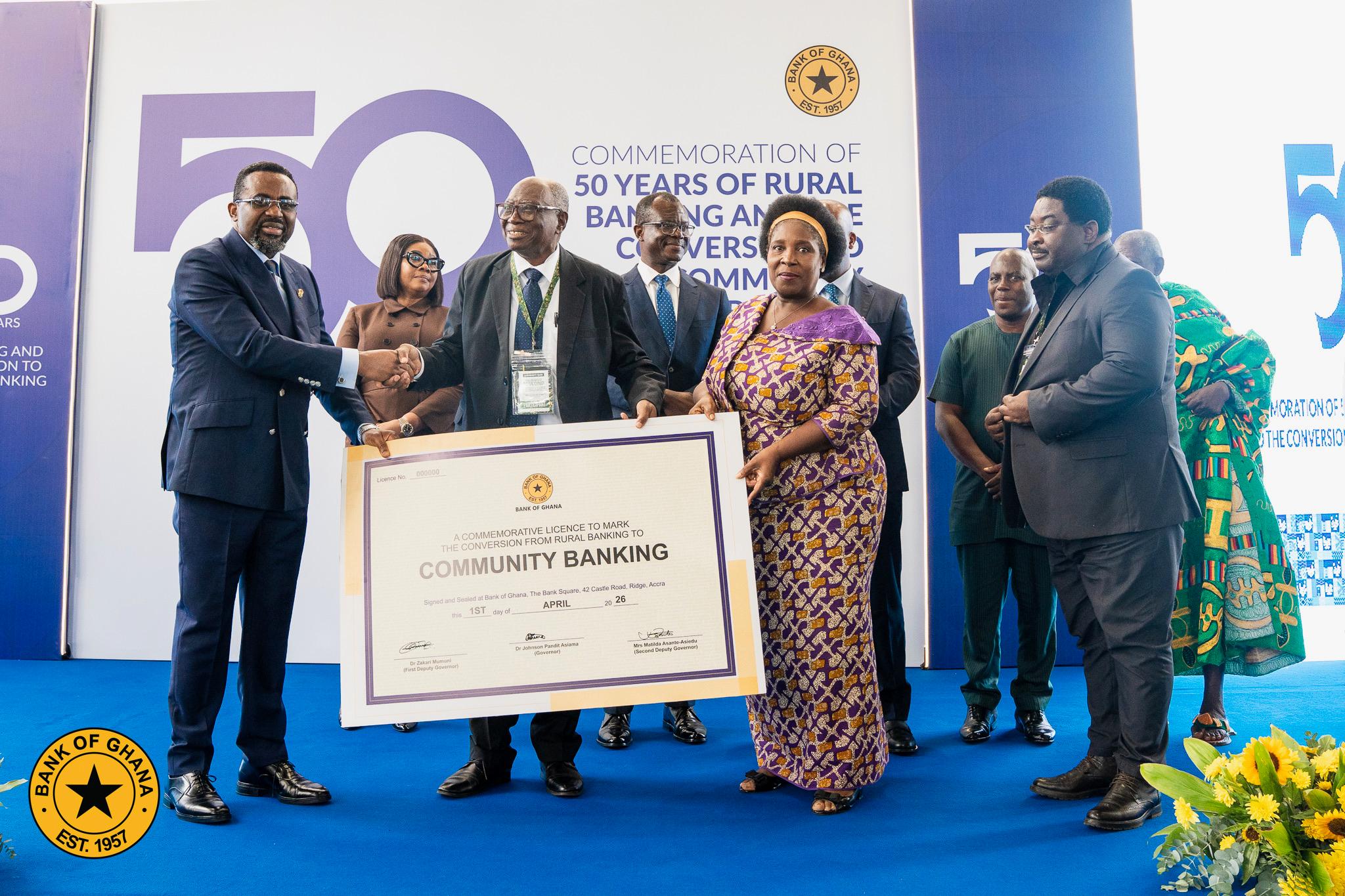
Commemorating the 50th anniversary of Ghana’s rural banking sector, Dr. Johnson Pandit Asiama, Governor of the Bank of Ghana, highlighted the sector’s vital contribution to the country’s economic development and financial inclusion. Delivering the keynote address at Bank Square on Thursday, July 16, 2026, the speech emphasized how community-based banks have transformed local economies over the past five decades.
Established in 1976 with the opening of Nyakrom Rural Bank, the sector has expanded significantly, now comprising 147 licensed institutions, over a thousand branches, and serving more than eight million customers with an asset base of approximately GHS 26 billion as of May 2026. This growth underscores the sector’s success in providing accessible financial services to underserved communities, supporting smallholder farmers, traders, and small businesses that have historically operated outside the formal banking system.

Dr. Asiama pointed out that the sector’s origins lay in a bold idea: communities owning their own banks, which was championed by the Bank of Ghana and the late Governor Amon Nikoi. This approach enabled local savings, facilitated agricultural financing, and supported small enterprise development, thus playing a crucial role in Ghana’s economic fabric.
Reflecting on recent developments, the Governor announced key reforms to modernize and expand the sector. The transition from “Rural” to “Community” Banking recognizes the evolving landscape where many towns and peri-urban centers now demand tailored financial services. The introduction of Urban Community Banking aims to extend financial inclusion into city centers, ensuring small traders, artisans, and entrepreneurs access credit and financial products that support their growth.
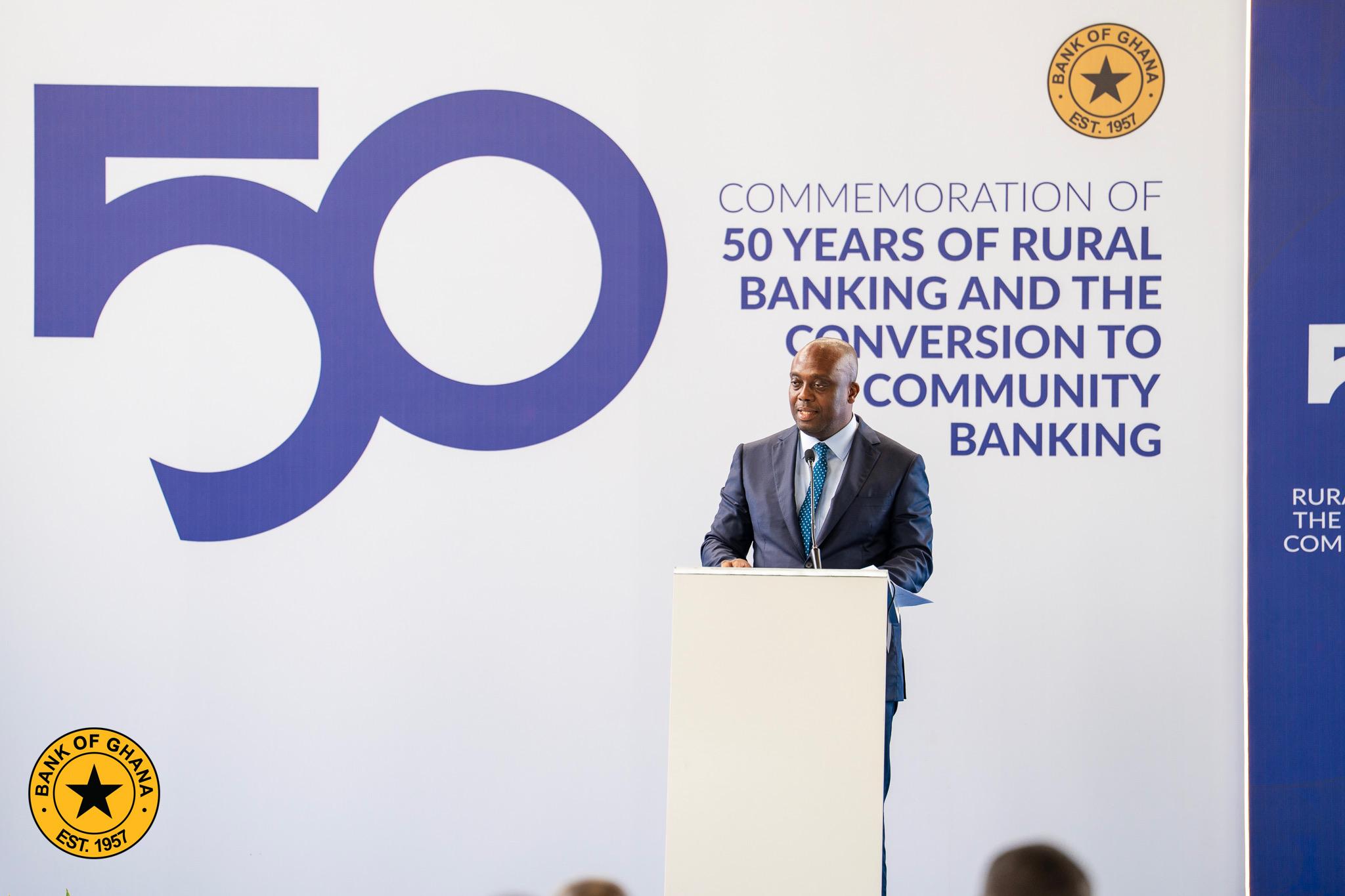
Furthermore, the reforms will reinforce governance, risk management, and professional management standards within community banks, promoting a resilient and sustainable financial ecosystem. These institutions will be empowered to broaden their service offerings, compete more effectively, and potentially grow into larger, nationally recognized banks.

Dr. Asiama emphasized that the values of trust, participation, accountability, and local development—embedded in the sector’s history—must guide its future. The sector’s success over the past fifty years demonstrates its crucial role in empowering grassroots economic activity and fostering inclusive growth in Ghana.
As Ghana celebrates this milestone, the Bank of Ghana’s Governor reaffirmed the government’s commitment to strengthening community banking as a pillar of national development, ensuring that financial services reach where people live, work, and build their futures.