






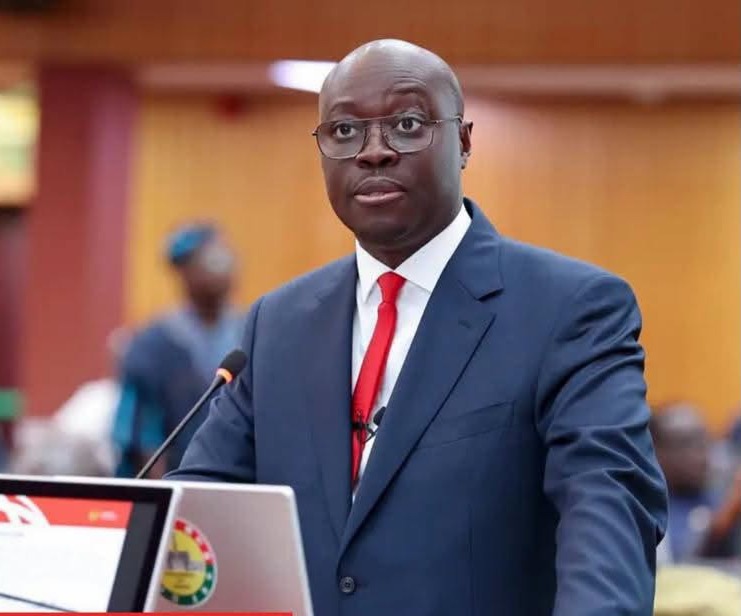
Finance Minister Dr. Cassiel Ato Forson says Ghana’s economy has recorded significant improvements in inflation, economic growth, public debt and fiscal performance over the past 18 months, describing the outcomes as evidence that the government’s economic reforms are delivering results.
Presenting the 2026 Mid-Year Budget Review in Parliament on Thursday, July 23, 2026, Dr. Forson said real Gross Domestic Product (GDP) grew by 6.0% in 2025, the fastest rate of economic expansion since 2019, while non-oil GDP expanded by 7.6%, the highest growth recorded in 14 years.
He said the momentum has continued into 2026, with the economy growing by 6.4% in the first half of the year, exceeding the government’s full-year target.
The Finance Minister also announced that Ghana’s economy had, for the first time, exceeded US$100 billion, while per capita income increased from US$2,527 in 2024 to US$3,385 in 2025, making Ghana the eighth-largest economy in Africa.
On inflation, Dr. Forson said the rate dropped sharply from 23.8% in December 2024 to 5.4% at the end of 2025, before easing further to 5.3% in June 2026.
He further stated that the country’s fiscal position had strengthened, with the primary balance recording a surplus of 2.5% of GDP at the end of 2025 and 0.9% of GDP by June 2026, keeping the government on course to meet its end-year fiscal target.
According to the Minister, Ghana’s debt-to-GDP ratio declined from 61.8% at the end of 2024 to 44.7% by the end of 2025, reaching 45% in June 2026, which he said meets the country’s statutory debt target ahead of schedule.

Dr. Forson also noted that debt servicing had reduced significantly, creating additional fiscal space for public investment, while Ghana’s debt sustainability outlook had improved following a favourable assessment by the World Bank and the International Monetary Fund (IMF).
He said Treasury bill rates and the Bank of Ghana’s monetary policy rate had also declined, lowering borrowing costs for businesses and households and supporting investment and job creation.
The Minister further announced that the IMF Executive Board is expected next week to conclude the final review of Ghana’s Extended Credit Facility programme and approve a new 36-month Policy Coordination Instrument (PCI) to support the country’s next phase of macroeconomic reforms.
Dr. Forson acknowledged that many households continue to face economic challenges but maintained that the government had restored fiscal discipline, improved macroeconomic stability and laid a stronger foundation for sustained economic growth.
He said the administration remains committed to implementing reforms aimed at preserving debt sustainability, strengthening fiscal governance, promoting inclusive growth and maintaining economic stability.
By Julius Blay