







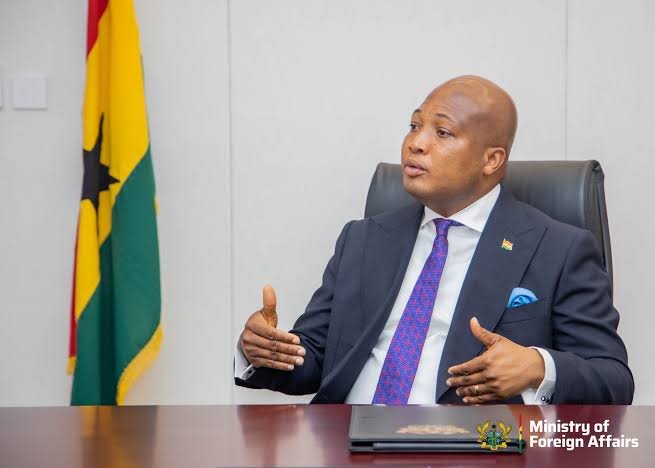
Ghana’s foreign policy is not limited to political and diplomatic representation. At its core is an economic purpose: using diplomacy to expand Ghana’s productive capacity, markets, investment opportunities and international mobility. The Ministry of Foreign Affairs itself identifies economic diplomacy as a principal foreign-policy objective, with the explicit aim of diversifying and increasing Ghana’s export base, seeking markets for Ghanaian products, exploiting preferential and multilateral trade arrangements, and promoting tourism and investment in the hospitality sector. A second important objective is the development of a secure and efficient passport regime that meets international standards and facilitates legitimate international mobility.
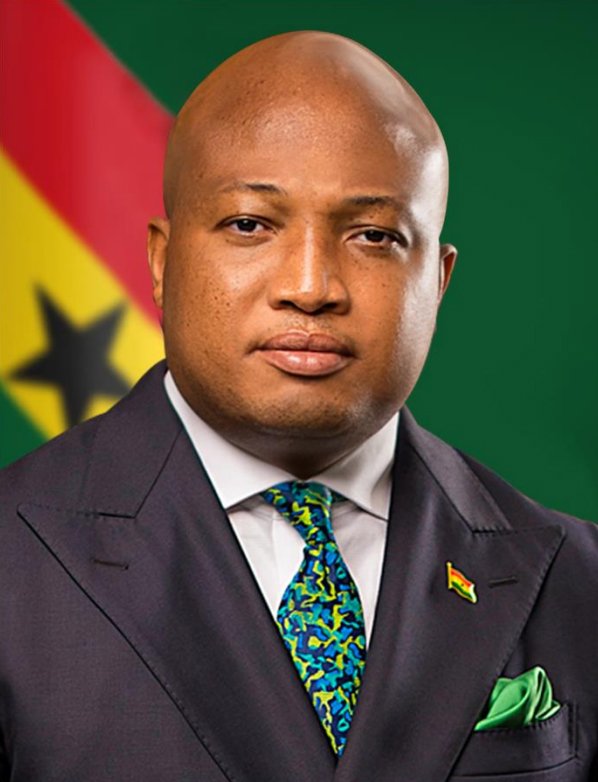
Against these objectives, the early tenure of Foreign Affairs Minister Samuel Okudzeto Ablakwa can be viewed as an attempt to move Ghanaian diplomacy from a predominantly representational function towards a more visibly delivery-oriented and economically focused foreign policy. His approach has combined extensive diplomatic engagement abroad with institutional reforms at home, particularly in passport administration.
Economic diplomacy: moving from representation to results:
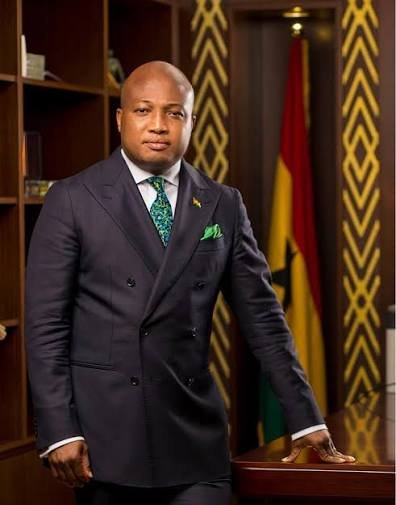
From his first day at the Ministry, Ablakwa explicitly placed economic diplomacy at the centre of his ministerial agenda. He stated that diplomacy should be leveraged to attract foreign investment, promote trade and strengthen economic relationships with international partners, while also introducing performance indicators to ensure that diplomatic assignments contribute meaningfully to Ghana’s national objectives.
This matters because Ghana’s economic diplomacy objective requires more than maintaining cordial relations with other governments. It requires converting diplomatic relationships into markets, investments, tourism flows, technology partnerships and commercial opportunities.
Ablakwa’s extensive international engagements therefore have an economic dimension. His April 2025 working visit to Nigeria, for example, included discussions on regional cooperation and trade under the African Continental Free Trade Area (AfCFTA), while also engaging Ghanaian communities and businesses in Abuja and Lagos.
His May 2025 visit to the United Arab Emirates went further. In addition to high-level political discussions, the Minister met the UAE Minister for Foreign Trade and Investments and leading Emirati business executives to promote economic ties and encourage investment in Ghana. Areas discussed included renewable energy, artificial intelligence, education, healthcare, aviation and labour export.
The significance of these engagements is that they demonstrate the practical meaning of economic diplomacy: the Foreign Minister is using political access to open economic conversations.
The same approach was evident in Morocco. During his June 2025 visit, Ghana and Morocco agreed to strengthen bilateral relations and committed to a visa-waiver arrangement for ordinary passport holders, with the stated objective of facilitating trade, tourism and people-to-people engagement.

That relationship subsequently moved beyond diplomatic symbolism. At the United Nations General Assembly in September 2025, the two sides reviewed the effects of the visa arrangement, agricultural cooperation and opportunities for increased trade and investment. Ghana also acknowledged Morocco’s commitment to provide 40,000 bags of fertilizer and discussed the prospect of a Moroccan business delegation visiting Ghana.
This illustrates an important principle: economic diplomacy is most effective when a diplomatic visit creates a chain of follow-up actions rather than ending with a communiqué or ceremonial meeting.
Using international travel as an economic instrument:
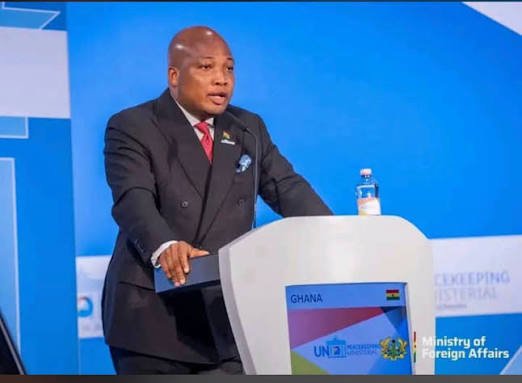
The frequency of Ablakwa’s foreign engagements should therefore not be assessed simply by counting the number of countries visited. The more important question is what the visits are designed to achieve.
His engagement with Japan is a useful example. At the Ghana-Japan Presidential Investment Forum held on the sidelines of TICAD 9, Ghana presented itself as an investment destination and gateway to the AfCFTA market. Ablakwa reinforced the government’s economic-diplomacy message, highlighting Ghana’s improving economic conditions and the presence and experience of Japanese companies in Ghana
Similarly, the Ministry’s subsequent engagement with a Japanese business delegation of 35 companies in January 2026 was explicitly linked to promoting trade and investment between the two private sectors. (mfa.gov.gh)
The broader strategic objective is clear: Ghana’s embassies and foreign-policy machinery can be used not merely to represent the country politically, but to sell Ghana as a place to invest, a source of products, a tourism destination and a gateway to African markets.
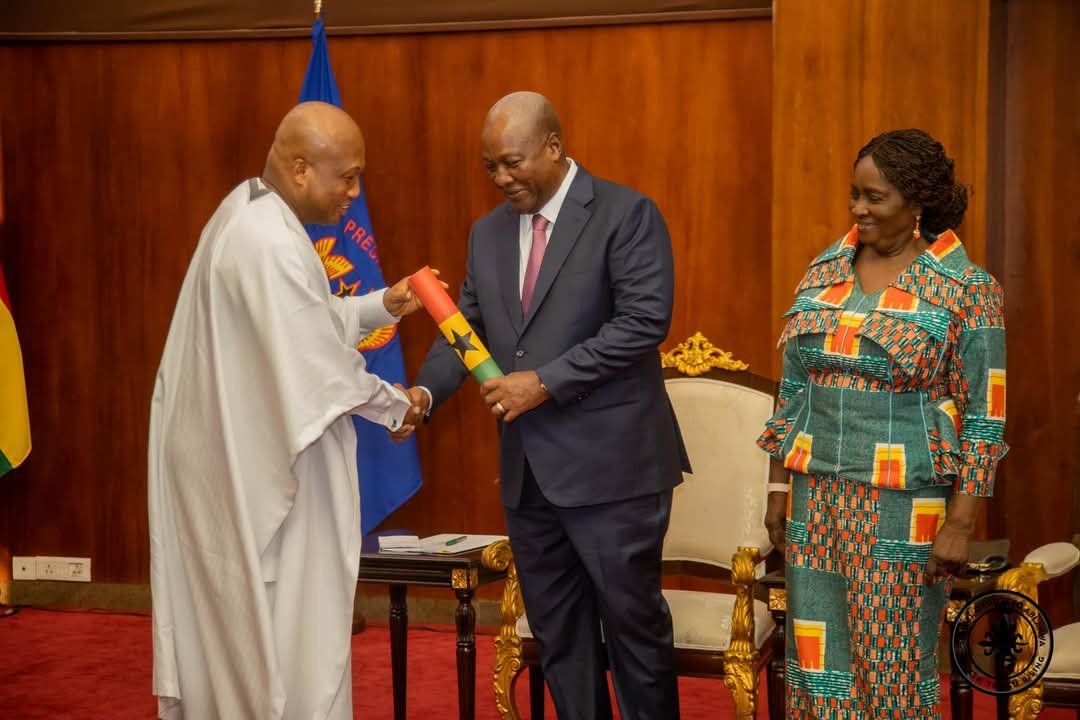
This is particularly relevant to Ghana’s foreign-policy objective of export diversification. A country cannot diversify exports if it does not simultaneously diversify its external commercial relationships. Diplomacy can help Ghanaian businesses identify buyers, investors, distributors and strategic partners in foreign markets.
Diaspora diplomacy as economic diplomacy:
Another important development has been the increased emphasis on the Ghanaian diaspora. The 2025 Diaspora Summit was framed around the idea of the diaspora as Ghana’s “17th Region”, with the Ministry highlighting opportunities in trade, investment, tourism, entrepreneurship, innovation and business-to-business networking.
This is significant economically because the diaspora represents more than remittances. It also represents capital, expertise, networks, technology, market access and international advocacy.
Consequently, diaspora engagement can support the foreign-policy objective of attracting investment and expanding Ghana’s international commercial footprint. A Ghanaian entrepreneur in London, Toronto, Washington or Dubai may be simultaneously a potential investor in Ghana and a gateway to consumers and business networks in those markets.
Passport reform: an economic reform, not merely a consular reform:
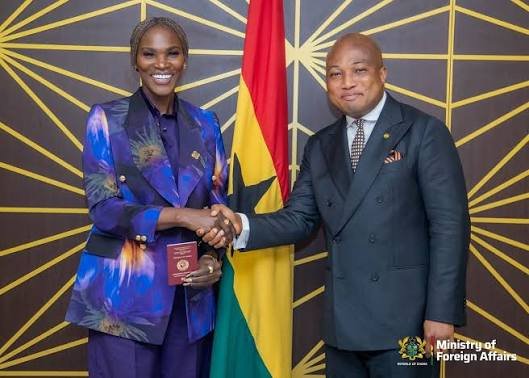
The second foreign-policy objective supplied in the question concerns biometric passports, international standards and improved service delivery. Although passport administration may appear administrative rather than economic, it has a direct relationship with economic diplomacy.
A passport is the basic instrument through which citizens participate in international commerce, tourism, education, investment and professional activity.
Consequently, making passports faster, cheaper, more secure and more accessible can contribute to the broader economic objective by reducing the transaction costs associated with international mobility.
Ablakwa’s passport reforms have been particularly rapid:
When he assumed office in February 2025, he immediately placed passport reform among his priorities. On his first day, he inaugurated a Passport Reform Committee, signalling that the passport system would be treated as a major institutional reform rather than a routine administrative matter.
By April 2025, Ghana had transitioned to a new chip-embedded, ICAO-compliant passport, modernising the country’s travel-document system.
By November, the Ministry reported that more than 215,000 Ghanaians across all 16 regions had received the new passports, while more than 40,000 applications in the backlog had been cleared. The Ministry also reported that applications were being processed in under 15 working days.
These developments are particularly important when viewed against the original foreign-policy objective of ensuring compliance with ICAO and ECOWAS requirements and improving the security and integrity of Ghana’s passport.
The 24-hour passport service and the 24-hour economy:

Perhaps the most visible example of the speed of the reforms is the introduction of a 24-hour passport operation.
In February 2025, Ablakwa announced plans to transform passport administration into a 24-hour operation with three shifts. The stated purpose was to reduce waiting times, improve efficiency and contribute to the government’s broader 24-hour economy agenda.
By November, the Ministry reported that the Passport Head Office was operating 24 hours and that a 24-hour expedited passport service had been introduced at a premium fee of GH¢2,000.
The current official passport platform likewise lists a premium service providing urgent processing within 24 hours.
Economically, the logic is straightforward. A businessperson who needs to travel urgently, an exporter responding to an international opportunity, a student travelling for admission, or a professional required to attend an overseas engagement can lose significant time and money when travel documentation is delayed.
The 24-hour service therefore represents more than convenience. It is an attempt to make a government service operate at a speed more compatible with a modern, globally connected economy.
Decentralisation: bringing passport services to the productive regions:
The second major passport reform has been decentralization.
Historically, citizens in some regions had to travel significant distances to obtain passports. This created direct costs in transport, accommodation and lost working time, while disproportionately affecting people outside major urban centres.
Ablakwa committed to establishing Passport Application Centres in all 16 regional capitals by the end of 2025. The Ministry subsequently reported that centres were opened in Bolgatanga, Dambai, Techiman, Damongo, Goaso, Nalerigu and Sefwi-Wiawso, allowing all 16 regional capitals to have operational passport application centres before 2026.
The Bolgatanga centre was especially significant because residents of the Upper East Region had previously been required to travel to other regions to access passport services.
The official passport system now lists a network of PACs across Ghana, including centres in the newly served regions.
This is an important economic intervention because time is an economic resource. Every unnecessary journey to another region represents transport expenditure, lost working hours and additional barriers to international mobility.
Decentralization therefore makes the foreign-policy objective of facilitating legitimate international engagement more inclusive.

Lowering the cost of international mobility:
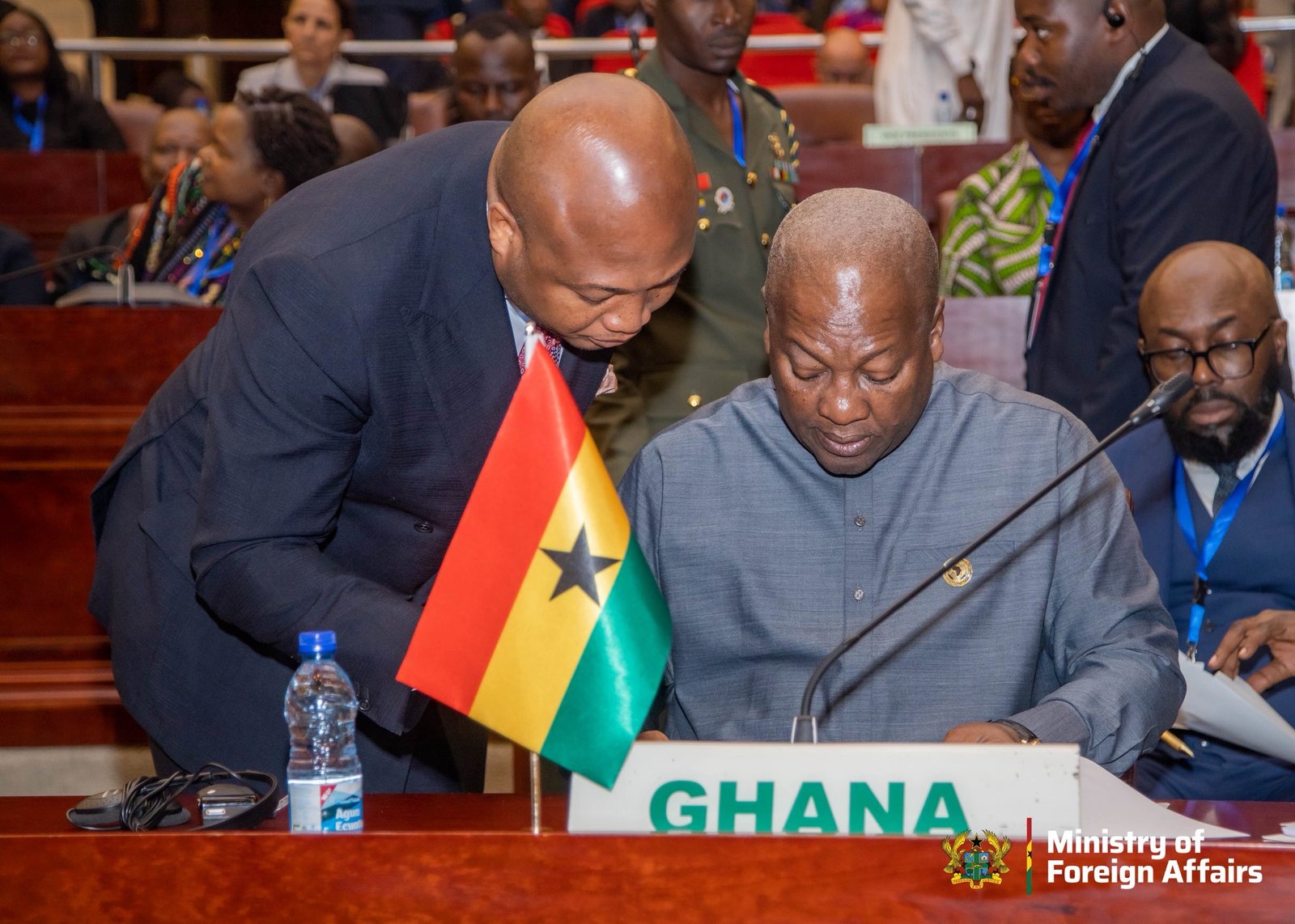
Another reform was the reduction of the ordinary passport fee from GH¢500 to GH¢350, representing a 30 percent reduction. The Ministry announced this alongside the broader passport reforms in November 2025. The significance extends beyond the individual applicant.
Lower passport costs can reduce the financial barrier to international travel for entrepreneurs, workers, students, tourists and professionals. In a country seeking to expand exports, attract investment and increase tourism, the ability of citizens to travel and engage with international markets is economically relevant.
At the same time, the creation of premium and expedited services allows applicants with urgent commercial or personal requirements to pay more for speed, while keeping the ordinary service substantially cheaper.
Technology, tracking and doorstep delivery:
The reforms have also sought to remove unnecessary physical interaction from the passport process.
The Ministry introduced electronic tracking so applicants could monitor their applications from approval through printing and delivery. It also introduced nationwide courier delivery, meaning applicants no longer necessarily need to return to a Passport Application Centre simply to collect their documents. (mfa.gov.gh)
This is another example of how administrative reform can support economic productivity.
The economic benefit of digital government is not always measured in government revenue. It can also be measured through time saved by citizens and businesses.
If a citizen can apply, track and receive a passport without making repeated trips to a government office, the government has effectively reduced the transaction cost of accessing a public service.
The connection between passport reform and economic diplomacy:
The two foreign-policy objectives should therefore not be viewed separately.
Economic diplomacy creates the external opportunities; efficient passport administration helps Ghanaians take advantage of them.
The relationship can be expressed simply:
Diplomacy → markets and investment opportunities → international mobility → business activity → exports, tourism, jobs and investment.
A Ghanaian exporter cannot pursue an overseas market efficiently if travel documentation is unreliable. A tourism entrepreneur benefits when Ghana is easier to access and when international mobility is facilitated. A Ghanaian professional cannot readily pursue international opportunities without a functioning travel-document system. Likewise, foreign investors and business partners benefit from a diplomatic environment in which movement between Ghana and partner countries is progressively easier.
This makes passport reform part of the wider architecture of economic diplomacy.
Why the pace of implementation is significant:
What distinguishes Ablakwa’s early record is not necessarily that every individual reform is unprecedented. Many of the objectives—ICAO compliance, decentralisation, digitalisation and improved passport administration—were already established policy goals.
The more notable feature is the speed with which several of these objectives were moved from policy statements into operational programmes.
Within his first year in office, the Ministry had:
- introduced the new chip-embedded, ICAO-compliant passport;
- introduced a 24-hour passport operation and premium emergency service;
- reduced the ordinary passport fee;
- cleared a reported backlog of more than 40,000 applications;
- introduced electronic tracking;
- expanded doorstep passport delivery;
- established PACs in the previously underserved regional capitals; and
- pursued visa arrangements and diplomatic engagements designed to facilitate trade, tourism and investment. (mfa.gov.gh)
The significance is therefore institutional: foreign policy is being connected more visibly to the everyday economic experience of citizens.
Conclusion
Measured against Ghana’s stated foreign-policy objectives, Samuel Okudzeto Ablakwa’s early tenure presents a strong case for a more activist and delivery-focused economic diplomacy.
His international engagements have increasingly been used to pursue trade, investment, tourism, diaspora engagement and market-access opportunities. His meetings in Nigeria, the UAE, Morocco and Japan demonstrate an approach in which diplomatic relationships are expected to generate economic conversations and practical follow-up.
At the same time, his passport reforms have addressed the domestic side of international engagement. The introduction of chip-embedded passports, 24-hour operations, expedited processing, lower ordinary fees, electronic tracking, doorstep delivery and Passport Application Centres across all 16 regional capitals represent a substantial attempt to modernise the machinery through which Ghanaians participate in the global economy.
The strongest economic argument, therefore, is that Ablakwa has sought to make Ghanaian foreign policy useful both outside and inside the country: outside through economic diplomacy that seeks markets, investors, partnerships and mobility arrangements; and inside through administrative reforms that reduce the cost, delay and geographic barriers preventing citizens from taking advantage of international opportunities.
There is still a need to measure the long-term outcomes—particularly actual increases in non-traditional exports, foreign direct investment, tourism receipts, business deals and jobs—rather than equating diplomatic activity with economic impact. But on the evidence available, the speed of implementation is noteworthy.
In that sense, the emerging model is clear: economic diplomacy should not end when the Foreign Minister leaves the airport; it should ultimately be felt by the exporter seeking a market, the investor seeking an opportunity, the tourist choosing Ghana, and the ordinary Ghanaian who needs a passport quickly enough to participate in the global economy.
By Edzorna Francis Mensah/mfa.gov.gh/rabat.mfa.gov.gh/Ghana Passport Services