







Freedom is never voluntarily given by the oppressor; it must be demanded by the oppressed, or, in rarer and more luminous moments of history, engineered by a statesman who understands that a muffled nation is a dying nation.
On the night of June 6, 2026, the Ghana Journalists Association (GJA) did not merely hand out a plaque at the World Press Freedom Day Honours Night.
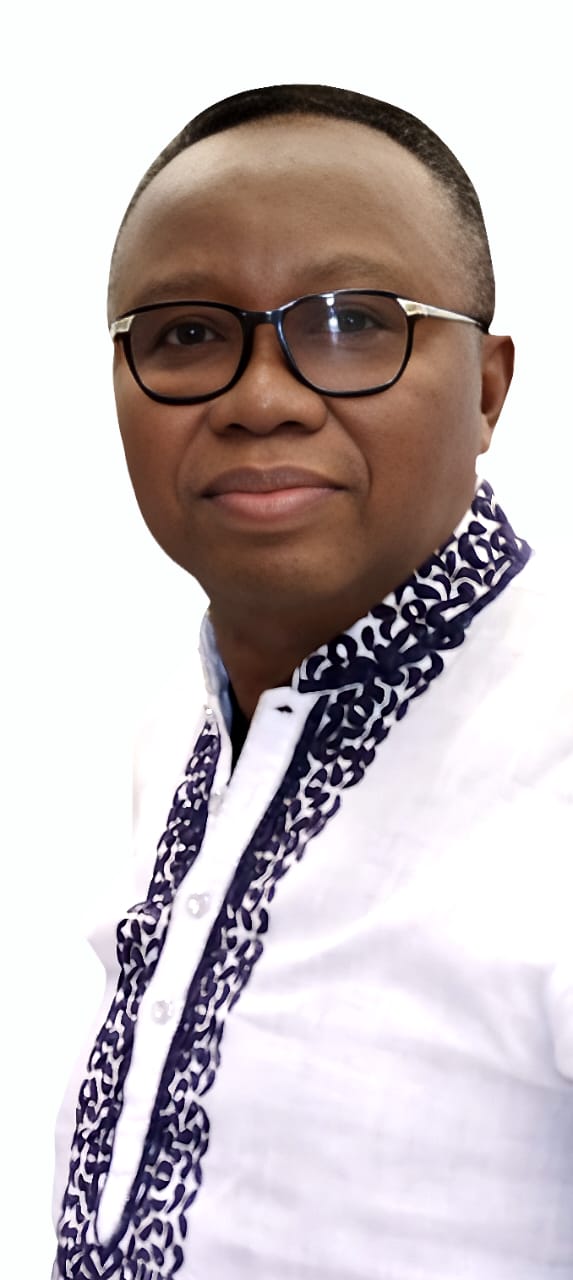
They paid a debt. In presenting the prestigious Media Development Award to Kofi Totobi Quakye, the fourth estate did not just honour a man; they institutionalised a legacy.
To look upon the citation presented by GJA President Albert Kwabena Dwumfour is to gaze at a blueprint of modern Ghanaian democracy. It is a testament to a time when the airwaves were not a crowded marketplace of ideas, but a silent, locked fortress.
There was an era in Ghana’s political evolution where the microphone was an instrument of state monopoly, and the printing press was a guarded gate.
To dissent was to gamble with destiny; to broadcast without sanction was an impossibility. Yet, bridging the tumultuous waters between military rule and civilian constitutionalism stood Totobi Quakye.
As Information Secretary and later Minister, he navigated a landscape marked by severely limited civic space.
Where others saw the media as a threat to state security, Quakye recognized it as the ultimate oxygen of public accountability.
”During a period marked by limited civic space, you created room for the media to function, allowing constructive criticism, public accountability, and responsible engagement with government.”
His tenure became the crucible in which Ghana’s broadcasting revolution was forged. The liberalisation of the airwaves was not an accidental byproduct of history; it was a deliberate, bold constitutional test of media freedom.
By striking down the requirement for state licences to establish media outlets, Quakye shattered the monolith. He turned the monologue of the state into the vibrant, chaotic, and beautiful symphony of a pluralistic democracy.
History is captured in moments of grand policy, but it is remembered through its symbols. The citation delightfully resurrects a legendary piece of Ghanaian political folklore: the landmark encounter with Mr. Wereko Brobbey, whose audacious broadcasting exploits earned him the immortal nickname “Tarzan”—coined by Quakye himself.
There were terrible conflicts between independent media people and the establishment during the military era and the early days of the Fourth Republic, however, they always found a path to compromise and consensus to preserve the media systems and polity.
This was not merely political theatre; it was the friction that sparked the flame of an open society. It exemplified a minister who could engage with fierce independent actors not with the iron fist of censorship, but with the sharp wit and strategic foresight of a true statesman.
Quakye’s legacy is fundamentally anchored in constitutional clarity. He understood that a constitution is not just a scroll of parchment to be admired in a glass case, but a shield to be wielded in defence of the citizen.
His firm stance on the constitutional right to free expression during the fragile, early days of media expansion became the bedrock upon which today’s media empires stand. If journalists can speak truth to power today without fear of the midnight knock at the door, it is because Totobi Quakye built the fortress that protects them.
What is the ultimate measure of a public servant? It is not the titles held, nor the offices occupied, but the enduring health of the ecosystem they left behind.
Today, Ghana’s media landscape is a vibrant tapestry of diverse voices, investigative fearlessness, and relentless public discourse. This ecosystem is Totobi Quakye’s living monument.
The GJA Honours Night was a poetic closing of a circle. By reintroducing the GJA Awards during his time in office,
Quakye revived a culture of recognition and motivation for journalistic excellence. Decades later, that same culture turned its eyes back to its architect, offering him the very gratitude he taught the nation to practice.

Kofi Totobi Quakye remains a distinguished statesman, a master communicator, and a peerless strategist.
His family, loved ones, and generations of media practitioners can look at this honour not as a final chapter, but as an eternal inscription in the annals of West African liberty.
He did not just manage the information of a nation; he liberated its soul.
By Raymond Ablorh