









The National Health Insurance Authority (NHIA) has outlined a roadmap for implementing its revised service tariffs, linking the rollout to the mandatory introduction of risk-control systems to safeguard the National Health Insurance Scheme (NHIS).
The roadmap involves the operationalisation of accountability controls, which the Authority says has become unavoidable to prevent the Scheme from collapsing due to significant financial leakages within the claims management cycle.
The Authority outlined the roadmap and its implementation timelines during a courtesy call by the Private Health Facilities Association of Ghana (PHFAoG) on the Executive Management of the Authority and its management team in Accra last Friday.
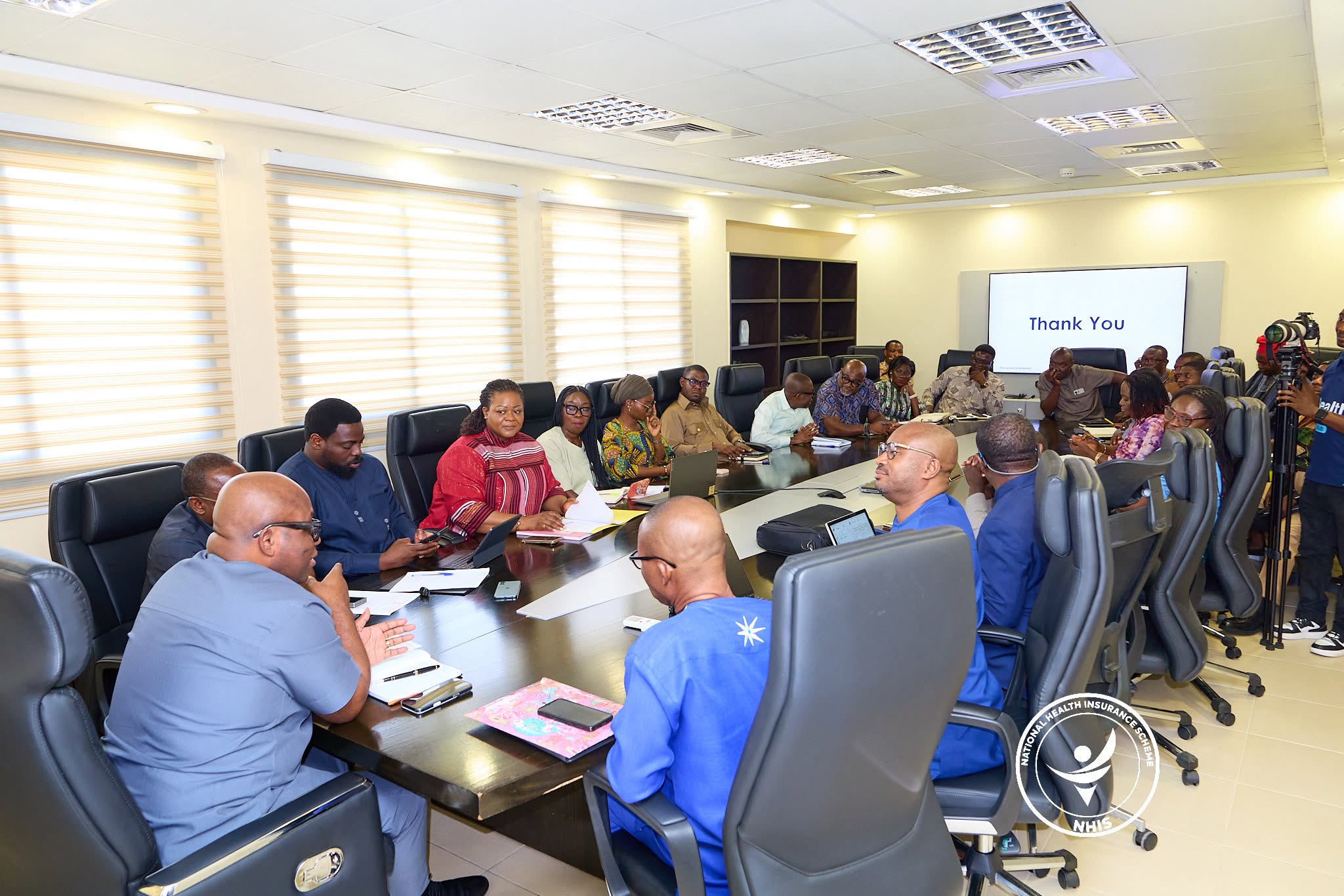
The meeting focused on five critical issues: the delayed implementation of service tariffs, claims payments, concerns regarding clinical audits, credentialing challenges, especially for facilities led by Physician Assistants, illegal co-payments and perceived inequities in the enforcement of sanctions.
The NHIA indicated that full implementation of the revised tariffs is projected for October 2026, subject to the successful deployment of control systems, particularly the One-Time Attendance Code (OTAC).
A partial roll-out in August 2026 is being considered as a fallback option, with full implementation expected by the end of the year if delays occur.

The Authority explained that the delay is not due to hesitation but is informed by evidence that at least 15 percent of claims paid may be ineligible, amounting to about GH¢400 million annually.
It warned that if the trend continued and the tariff increase is implemented, potential losses could rise to nearly GH¢1 billion annually without corrective measures.

ADVERTISEMENT