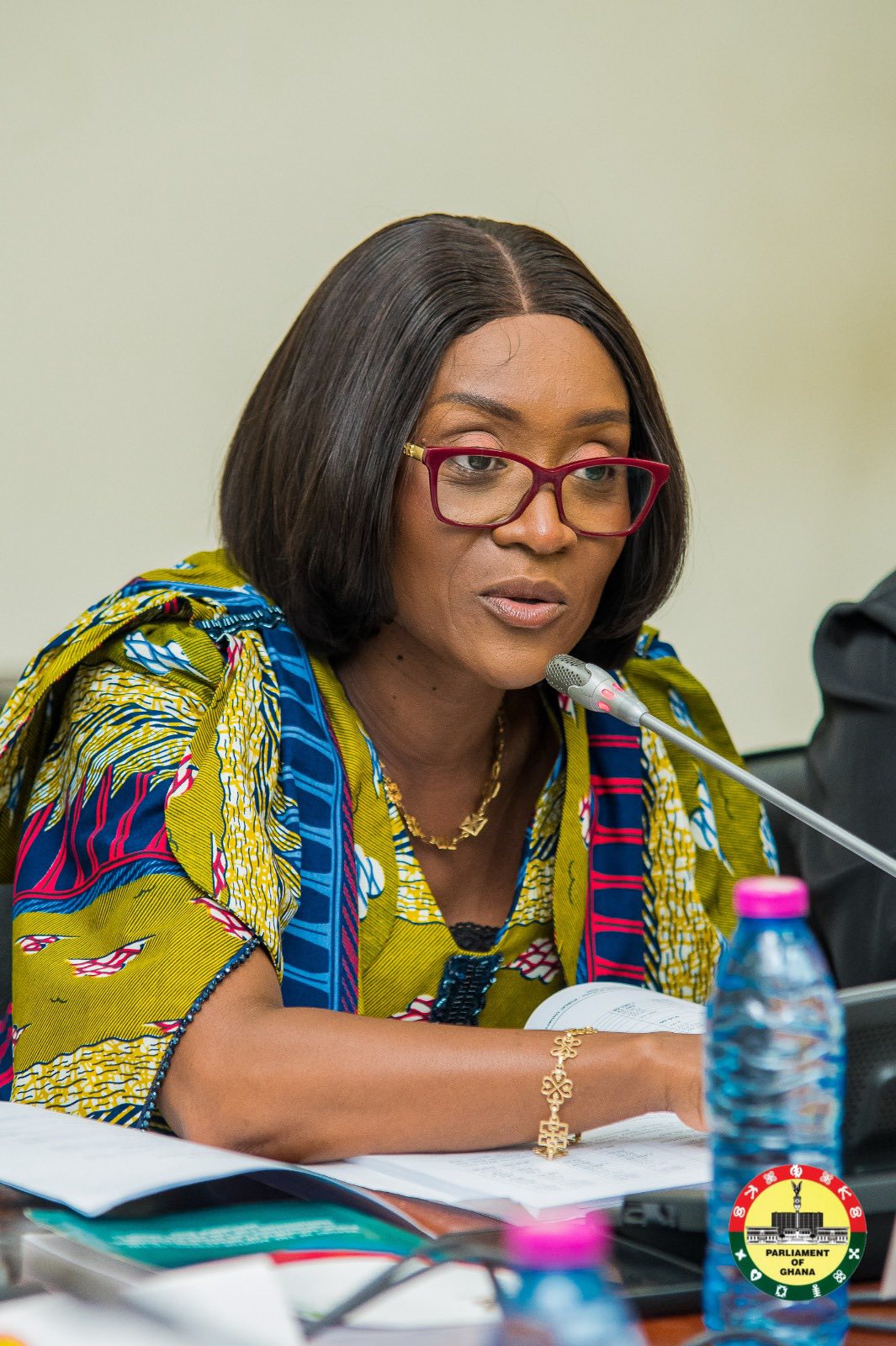







Dr. Zanetor Agyeman-Rawlings has pledged to strengthen coordination among government agencies and ministries as part of efforts to tackle illegal mining and its devastating impact on Ghana’s environment and human health.
Appearing before Parliament’s Appointments Committee, the Klottey-Korle MP and Environment Minister-designate said the fight against illegal mining must be treated as an “all-of-government and all-of-society imperative.”
She said effective collaboration among the Ministries of Environment, Lands and Natural Resources, Local Government, the Environmental Protection Authority (EPA) and other relevant agencies would be critical to avoiding what she described as a “silo effect.”
Dr. Agyeman-Rawlings said, subject to approval, her immediate priority would be to engage the relevant ministers and agencies to obtain a comprehensive briefing and establish a coordinated approach to the fight.
On the persistent attrition of scientists and technical personnel within institutions under the ministry, she said Ghana was facing a serious brain drain that required urgent attention.
She proposed improving conditions of service for scientists, providing research institutions with adequate equipment and financial resources, and creating predictable career paths to retain skilled personnel.
However, she stressed that the solution must be developed through engagement with scientists who remain in the system to better understand their challenges.
On the implementation of the legal framework governing the sector, Dr. Agyeman-Rawlings acknowledged that she could not provide a specific timeline for the full operationalisation of the relevant legislation without first engaging the agencies responsible for its implementation.
She also addressed Ghana’s participation in the global carbon market under Article 6 of the Paris Agreement, cautioning that carbon trading must be carefully managed to ensure the country does not sacrifice its future development needs.
According to her, Ghana has already entered into bilateral arrangements with countries including Switzerland and Sweden on the exchange of carbon dioxide equivalents, but the financial benefits must be balanced against Ghana’s national development priorities.
On climate finance, she said Ghana must explore South-South cooperation and strategic partnerships while leveraging the African Continental Free Trade Area to access climate finance and green technologies.
Dr. Agyeman-Rawlings further disclosed that one of the key environmental measures expected within the next six months is a ban on polystyrene, with discussions also expected around single-use plastics.
She proposed increased investment in research into environmentally friendly alternatives, including materials derived from hemp and cassava.
The nominee’s responses received strong commendation from some members of the committee, who highlighted her advocacy and experience in climate change, environmental protection and technology.

Minority Whip Dr. Dominic Ayine, who praised her record in environmental advocacy and her work at the Pan-African Parliament, also questioned her on climate finance, plastic waste management and Ghana’s ability to translate international environmental commitments into practical outcomes.
By Julius Blay