








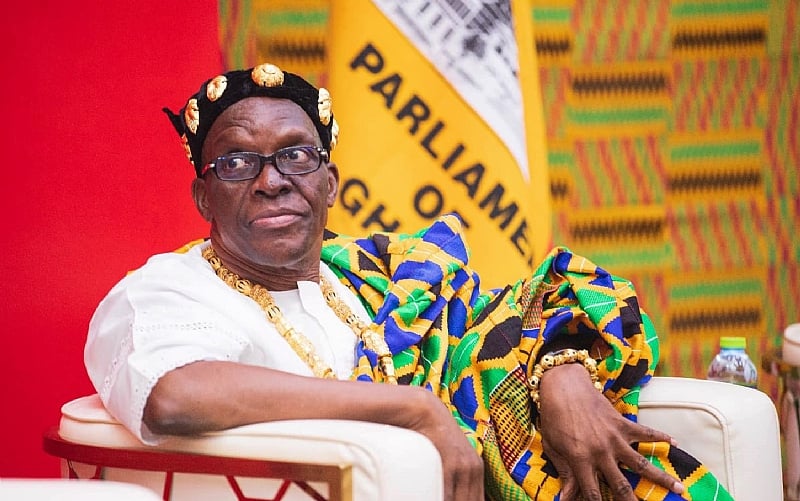
The Speaker of Parliament Alban Sumana Kingsford Bagbin on Tuesday 2 June 2026 held Members of Parliament spellbound when he raised concerns about the passage of Human Sexual Rights and Family Values Bill, 2025 into law by the Parliament of Ghana last Friday.
According to the Speaker Bagbin, a number of critical articles were overlooked during the passage of the Bill when his First Deputy Speaker, Lawyer Benard Ahiafor was presiding on that fateful day.
He maintained that the Bill was to have gone through a Second Reading with the Third Reading, a day after before, it could have been passed.
However, this was overlooked by The Presiding Officer, and the Bill was passed into law without recourse to such critical articles.
For well over 20 minutes that he delivered his speech members were held spellbound, as there was stone silence in The House as never before.
The Speaker who was visibly unhappy with this situation remarked at the end of his speech “You may see that my mood today is not as usual. You may not see smells again. If even you have to refer to me as a dictator, fine. Sometimes it is good to be a dictator. We have got to take our Parliamentary business serious”.
After this, the moody Speaker left the Chair for the First Deputy to take over.

In his statement, the Speaker commended Ghanaians for their broad support and acknowledged the efforts of traditional, religious, and civil society leaders in advocating for a comprehensive law that reflects the evolving dynamics of human sexual rights and family values. He also praised the bipartisan sponsors, committee members, and contributors involved in the legislative process.
However, Rt. Hon. Bagbin expressed concerns about the procedural aspects of the Bill’s passage. He highlighted that certain parliamentary Standing Orders — specifically Orders 170, 171, and 172 — were not fully adhered to during the final stages of the Bill’s consideration. These provisions are designed to ensure that amendments are accurately incorporated, that Members have adequate opportunity to review the final text, and that at least one sitting day elapses before a third reading.
The Speaker emphasized that these procedural safeguards are vital for maintaining transparency, legislative integrity, and public confidence. He noted that there are questions as to whether Members had sufficient access to the final, amended version of the Bill before its passage, which could impact its legitimacy.
Furthermore, Bagbin pointed out that the final text of the Bill, as passed, may not fully reflect the bipartisan consensus initially promoted, nor the unanimity suggested in the Committee’s report. While he refrained from passing judgment on the validity of these concerns, he underscored their importance in upholding the integrity of the legislative process.
The Speaker also addressed the international significance of the Bill, especially its implications on LGBTQ+ issues, and cautioned that the law must withstand legal and constitutional scrutiny. He stressed that legislation of such national importance should be rooted in broad parliamentary support and procedural correctness.
In light of these concerns, Bagbin called on Parliament to reconsider the Bill’s passage. He urged Members to revisit the final text and amendments, emphasizing that doing so would not reject the Bill’s objectives but would reaffirm Parliament’s commitment to due process, transparency, and legislative legitimacy.